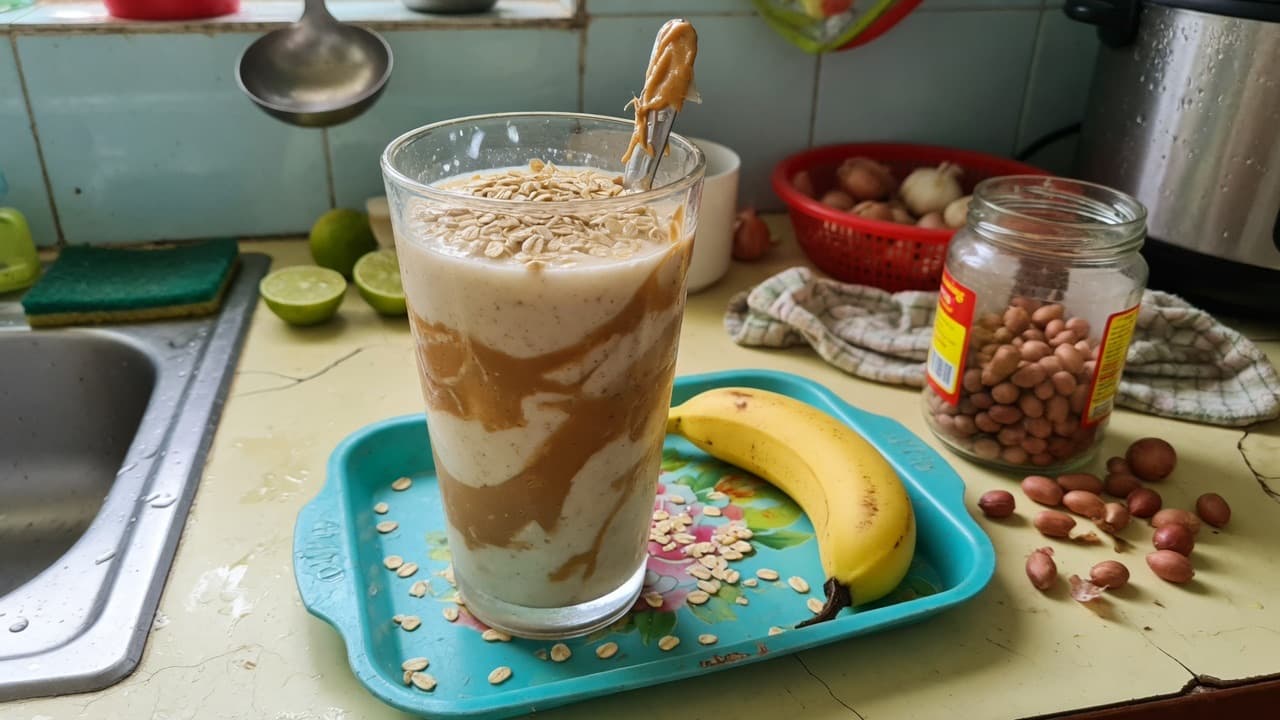
Skinny hard-to-eat people often miss calories between solid meals. A smoothie from milk, banana, peanuts, and oats can add about 450–600 kcal without syrup or poured sugar. Drink between meals or after training — do not fully replace rice if you can still eat main meals.
A broader surplus frame is in 7-day Vietnamese surplus menu and weight gain for skinny hard-to-eat people.
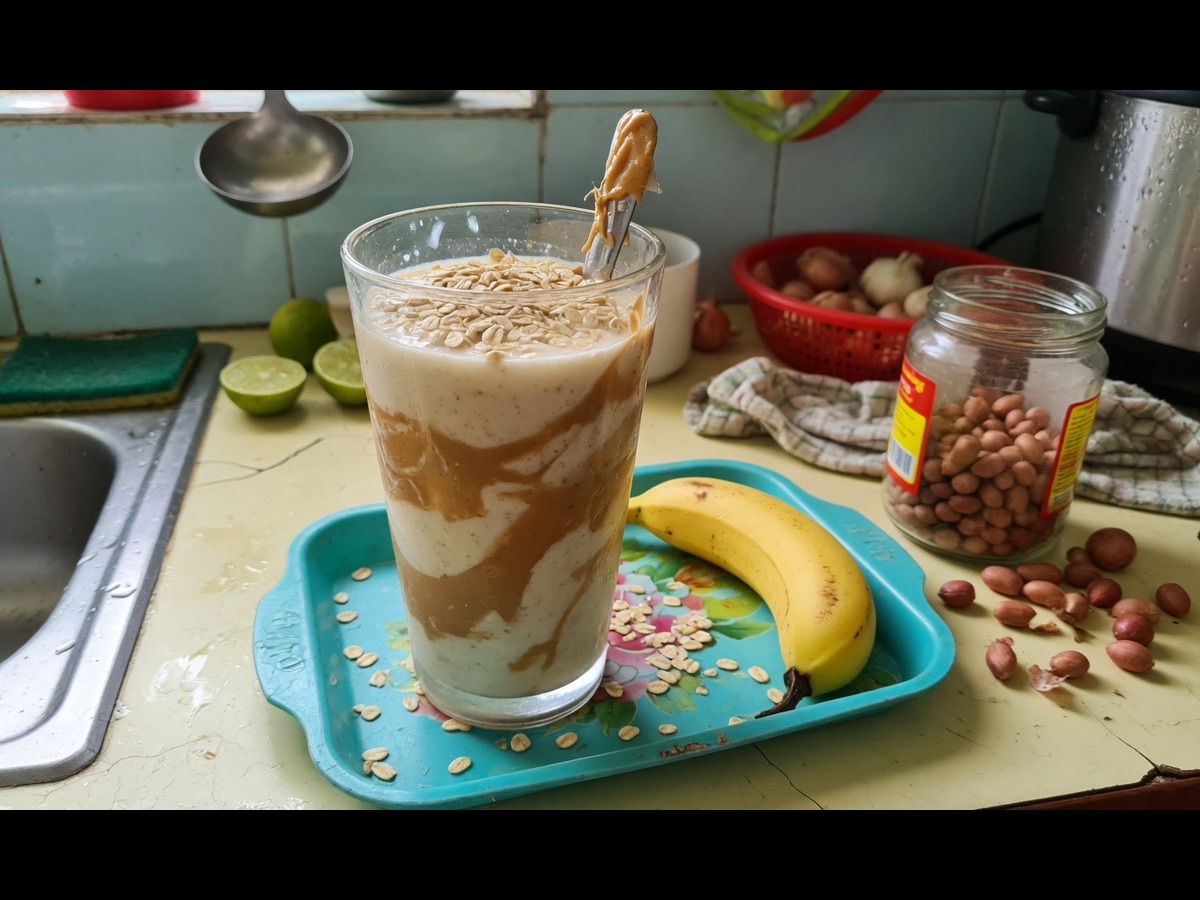
Base recipe (1 large glass)
- ~300–350 ml dairy or soy milk
- 1 ripe banana
- 40–50 g rolled oats
- 20–25 g peanut butter or ground roasted peanuts (about 1 heaping tablespoon)
- Optional: 1 well-cooked soft-boiled egg yolk / yogurt, or 1 scoop whey if protein is short
- Ice or a little water if too thick
Sweetness from a ripe banana is enough. Syrup and table sugar usually only add empty calories and a sweet habit.
Rough estimates
| Component | Estimated kcal | Notes |
|---|---|---|
| 350 ml milk | ~150–220 | Depends on whole/skim |
| 1 banana | ~90–110 | Riper is sweeter |
| 45 g oats | ~170 | Thickens; more filling than water |
| 20–25 g peanut butter | ~120–150 | Energy-dense |
| Approx total | ~450–600 | Adjust milk/peanuts up or down |
Need more calories: richer milk or +10 g peanuts. Need leaner: cut oats to 30 g.
When to drink
- Between breakfast and lunch if breakfast was light.
- 30–60 minutes post-workout when rice is not ready yet.
- Mid-afternoon instead of sugary milk tea.
- Avoid a huge thick glass right before dinner if it makes you skip rice–meat — the goal is added calories, not replacing solid protein.
Low-added-sugar variations
- 5–10 g unsweetened cocoa + banana.
- Thick yogurt + a little honey (if needed) instead of syrup.
- Mashed cooked sweet potato for part of the banana.
- 5–10 g chia if you want thicker — count the calories.
Lactose intolerance: lactose-free or higher-protein soy milk, still keep banana–oats–peanut butter.
Mistakes that make a “sweet empty” glass
- Bottled juice + sugar + little banana.
- Shop toppings and syrup.
- Only fruit with no fat/oats — short fullness, not enough surplus calories.
- 2–3 sugary glasses while skipping training — mostly fat gain and a sweet habit.
Healthy weight gain pairs with lifting and enough daily protein. The smoothie is a dense-calorie tool; main meals still need eggs, fish, meat, legumes.
Safety and storage
Drink within 1–2 hours of blending or keep sealed in the fridge. Do not leave it all day on a hot desk. Wash the blender well after milk and peanut butter.
Track weight 2–3 weeks: slow gain ~0.25–0.5 kg/week usually sticks better than jumping numbers then crashing.
Prep at night: portion oats and peanuts into a jar; morning only add milk and banana to the blender. Lower friction matters for people who “forget to eat.” Leave the bottle at the desk and sip over 30–45 minutes if chugging fills you uncomfortably.
Do not use a smoothie to replace sleep or training. Surplus calories become muscle tissue when there is resistance stimulus and enough daily protein. If you gain 0.5 kg/week but strength is flat and waist rises fast, cut 100–150 kcal from peanuts/milk and recheck main-meal protein.
Hotel trips: many places have milk and bananas; pack oat packets and a small peanut-butter jar. Shake in a bottle for a snack — still less added sugar than minibar soft drinks.
FAQ
1. Need honey?
Not required if the banana is ripe. Add 1 tsp when it helps drinkability — do not pour into a heavy sweet habit.
2. Does a smoothie replace whey?
It can add protein if you include yogurt/egg/whey. Banana–oats–peanuts mainly supply calories and carbs/fat.
3. Does drinking at night make you fat?
Day totals decide. Night is fine if you are still under calories; reduce if you are already over and digestion is hard lying down.
Energy-boost recipe suggestions only — not treatment for malnutrition or medical advice. People with diabetes, kidney disease, or peanut/milk allergies need ingredient adjustments with a professional.