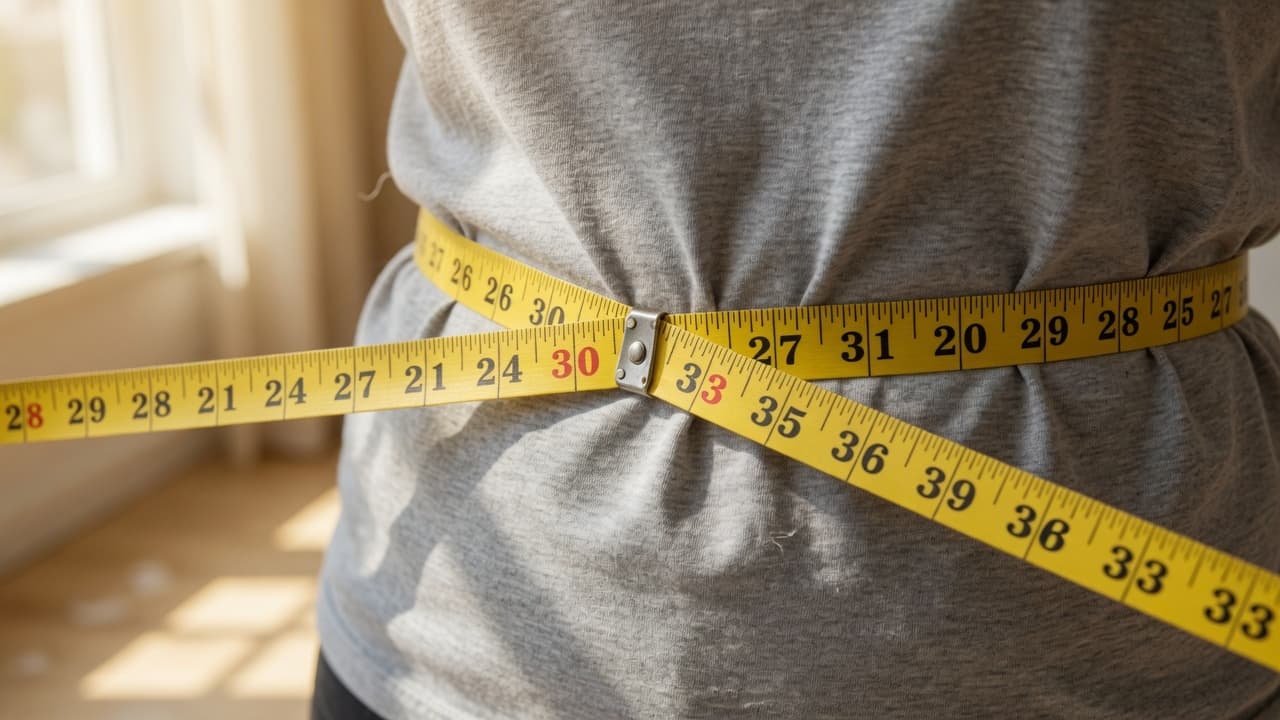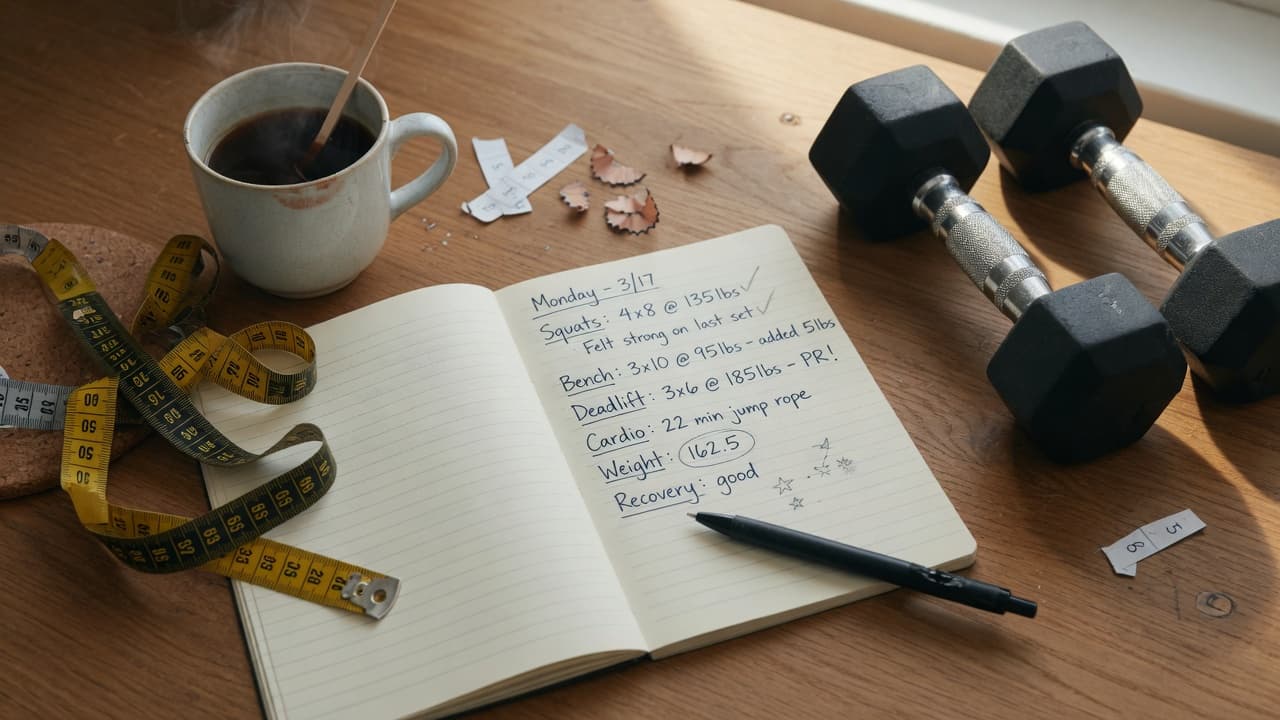
The bathroom scale is convenient, cheap, and… very easy to misread. It jumps with salt, glycogen, cycle phase, bathroom timing, and stress. If you anchor self-worth to one morning number, every week invents a reason to quit. A more durable approach is a small metric set: waist, strength log, weekly average weight, and how clothes feel.
This article shows how to record enough to see trends without turning measurement into an obsession.
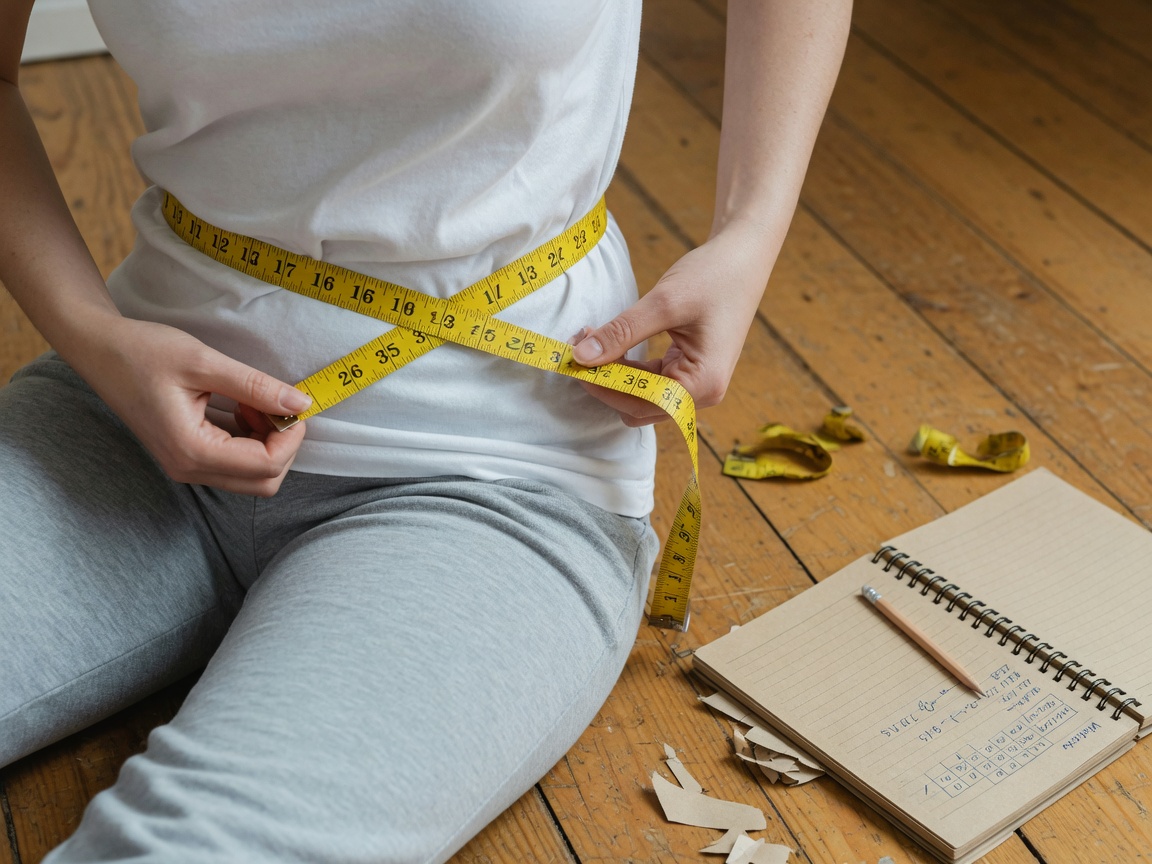
Metric 1: waist (plus maybe one secondary site)
Pick a fixed landmark — usually at the navel or the narrowest point — and always measure the same spot. Measure in the morning, after using the bathroom if possible, before eating, natural exhale, no sucking in. Keep the tape level with the floor, not angled.
- Measure every 1–2 weeks, not every day.
- Write the number immediately; do not “remeasure until it looks good.”
- You can add chest or hips if aesthetics matter, but stay at 2–3 sites max to limit noise.
A slow downward waist trend in a mild deficit is a strong signal even when weight oscillates. If you are in a week-3 crisis, pair this with the script in don’t quit in week 3.
Metric 2: strength log
Each session jot a few lines for main compounds: lift, load, sets × reps, rough RPE (e.g. “moderately hard, 2 reps left”). No complex spreadsheet required.
Real progress signs:
- Same load, more clean reps.
- Same reps, a small load increase.
- Same load–reps with lower RPE or cleaner form.
People losing fat can still gain some strength if protein and sleep are solid — especially on plans that combine strength with controlled cardio like the 5-day fat-loss plan: strength and cardio. The lifting log shows the body is still adapting, not only “wasting away.”
If weight is flat but squats edged up and waist is down, you are winning the long game — do not let one Monday morning erase a month.
Metric 3: weekly average weight
Weigh most mornings (or 4–7 days/week) under similar conditions, then average. Compare this week’s average to last week’s — not Monday to Friday.
Minimal method:
- Log every number in one column.
- At week’s end, sum and divide.
- Accept day-to-day swings of ±0.5–1 kg as normal for many people.
If daily weighing clearly stresses you (mood wrecked all day, extreme eating behaviors), switch to 2–3 weigh-ins/week or temporarily lean on waist and clothes. Tools should serve you, not the reverse.
Metric 4: clothes and standardized photos
Pick one pair of pants and one moderately fitted shirt as reference. Every 2 weeks note: looser / same / tighter at waist, thighs, shoulders. Photos: same mirror, same distance, similar light if possible, natural pose without max flexing if you want a fairer body-comp comparison.
Photos are not for posting; they stop your brain from forgetting the old version. Many people see progress in photos before the scale budges.
How to log without obsessing
- Cap frequency: weigh on schedule; waist 1–2×/week max cadence every 1–2 weeks; photos every 2 weeks; lifting log every session.
- One place only: a notebook or one phone note — avoid five apps nagging each other.
- 10-minute rule: measure, write, close the book; no midnight re-analysis.
- Action threshold: change the plan only when a 3–4 week trend is clearly bad and adherence was solid.
- Separate feelings from numbers: write the number first, feelings after if needed — do not let feelings edit the number.
If you start skipping meals to “look good on tomorrow’s scale,” you are measuring too hard. Step back immediately to slower metrics (waist, photos, lifts).
Suggested frequency summary
| Metric | Frequency | Purpose |
|---|---|---|
| Body weight | Most mornings → weekly average | Long-term water + tissue trend |
| Waist | Every 1–2 weeks | Trunk fat trend |
| Strength log | Every training session | Neuromuscular progress |
| Photos / clothes | Every 2 weeks | Real shape change |
Read trends, not one emotional data point
Healthy example: average weight −0.2 kg vs last week, waist −0.5 cm in two weeks, deadlift +2 reps — keep the plan.
Check-adherence example: average weight +0.8 kg, waist unchanged, lifts weak, poor sleep week and lots of eating out — fix sleep and execution before cutting calories.
Maybe-adjust-one-variable example: 4 solid adherence weeks, every metric flat — trim calories slightly or add steps; do not touch training schedule and diet at the same time.
Things you do not need daily
- Body-fat % from cheap bioimpedance scales (swings hard with water).
- Watch “calories burned” estimates that wander high and low.
- Five girths plus BMI plus a selfie every morning.
The more noisy metrics you have, the easier it is to pick whichever flatters today’s mood. The four-metric set above is enough for most fat-loss or recomposition goals.
FAQ
Do I need a fancy scale or expensive tape?
No. A stable scale and a soft cloth tape are enough. Using the same tools under the same conditions matters more than gadget “smartness.” Cloud sync does not replace measuring correctly.
How often should I take photos?
Every two weeks suits most people. Daily is noisy from light and puffiness. Monthly works if you are patient, but biweekly catches change earlier without obsession.
When does strength matter more than weight?
When the goal includes keeping muscle/performance, or when you are newly returning to training. Strength up with a stable waist is usually worth keeping more than forcing very fast scale drops while lifts crash. Even people who only want the scale down should watch strength to know if too much muscle is leaving.
Disclaimer: Progress-tracking guidance is general education — not a clinical body-composition diagnosis or treatment advice. History of eating disorders or weight-related anxiety — consider limiting daily weighing and seek appropriate professional support.