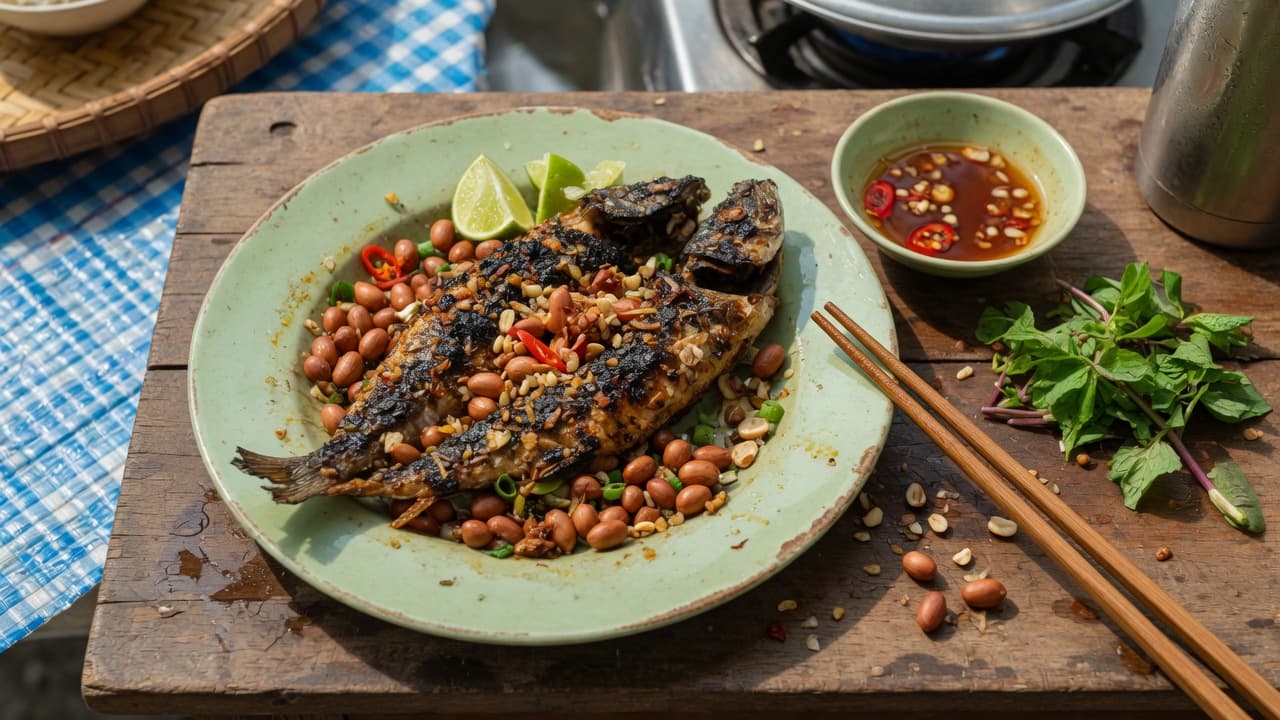
“Healthy fats” are often misunderstood as buying expensive oil or imported nuts every day. In Vietnamese meals you already have many good sources if you choose and portion them: sea fish, plant oils used properly, peanuts, sesame, eggs, and seasonal avocado when available. The goal is not fearing fat, nor pouring freely — it is preferring less ultra-processed sources and keeping total calories on target.
What fat does for training and health
- Carries fat-soluble vitamins and supports hormones (in an adequately fueled diet).
- Helps you stay full longer with protein and vegetables.
- Provides dense energy — easy to overshoot calories if you “drizzle freely.”
A common starting point for trainees is fat as a portion of the diet that keeps you full and makes shopping easy — often a few hundred kcal/day depending on TDEE — without obsessing over every gram if eating is varied. Daily totals should still anchor to hand-calculate TDEE.
One extra spoon of oil per stir-fry meal can add hundreds of kcal/day without looking like “more food” on the plate.
Fat sources friendly to Vietnamese meals
| Source | How to use | Notes |
|---|---|---|
| Mackerel, tuna-style fish, salmon, scad | Light braise, steam, pan-sear with little oil | Prefer over deep-frying |
| Soybean, olive, sesame oil | 1–2 teaspoons/stir-fry or salad | Measure — do not “eyeball generously” |
| Peanuts, sesame, cashews | 10–20 g snack or salad sprinkle | Salt and sugar coatings skew things |
| Eggs, tofu | Boil, steam, light tomato sauce | Yolks need not be dropped if the day total fits |
| Avocado (when in season) | 1/4–1/2 fruit with a meal | Dense calories — portion it |
What to limit in practice
- Deep-fried takeout many times/week.
- Pork skin and uncontrolled fatty broths.
- Creamy pastries and high-sugar milk tea as “regular snacks.”
- Believing switching to one expensive oil lets you eat twice as much.
Animal fat is not “absolutely banned” in traditional Vietnamese cooking; frequency and portion matter. One peppery braised-pork weekend meal inside a calorie frame beats fried-shop weeks.
Fitting fat-loss or maintenance days
- Pick one “anchor” fat source per main meal (measured oil or fatty fish or peanuts).
- Keep clear protein and full vegetables–soup for fullness.
- Nut snacks: weigh 15–20 g instead of a big handful.
- Salads: sesame oil/vinegar/lime instead of thick sweet fish sauce and lots of sweet oyster sauce.
The sample ~2,200 kcal menu already has room for oil and fish: 2200 maintenance menu. On training days, keep pre-session fat moderate for easier digestion — see eating before and after training.
Shopping and storage
- Store oil cool, away from sun; do not reuse oil that has smoked black repeatedly.
- Quality frozen fish is fine if the cold chain is good — often cheaper and more convenient than unclear “fresh.”
- Home-roast unsalted peanuts; avoid heavily sweet–salty flavored packs.
You do not need five “superfood” oil bottles. Moderate variety and portion control beat one expensive label used badly.
FAQ
1. Must I drop all cooking oil when losing fat?
Not required. Cutting spoonfuls of oil and fried food is usually enough. Cutting all oil makes food dry, hard to stick with, then you blow out eating.
2. Do egg yolks raise scary cholesterol?
For healthy people, eggs in a varied diet are usually fine. People with lipid disorders or a doctor’s specific order should follow personal advice.
3. Is olive oil mandatory over soybean oil?
Not mandatory. Plant oils used at moderate heat and measured still help. Olive is great for cold dressings; do not let it become a reason to pour twice as much.
General nutrition information only — not a prescription for lipid disorders or heart disease. Ask a doctor if you take lipid-lowering drugs or follow a specially restricted-fat diet.