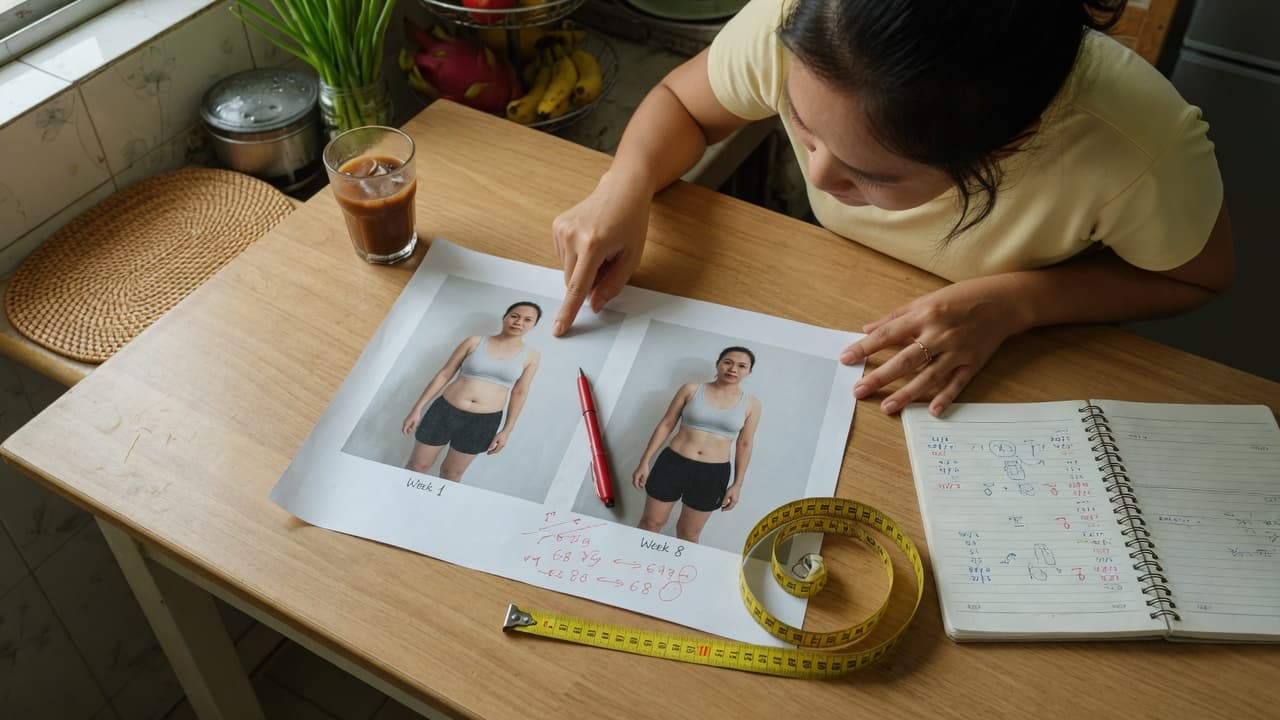
The weekend 80/20 rule: about 80% of the time eat to plan, 20% is deliberate flexibility — usually two meals (for example Saturday dinner and Sunday lunch) without wrecking the whole week. It is not free-for-all eating for 48 hours and then a “Monday purge.”
Pair it with restaurant plate edits in eating out while still in a deficit and portion skills in tracking calories for 4 weeks.
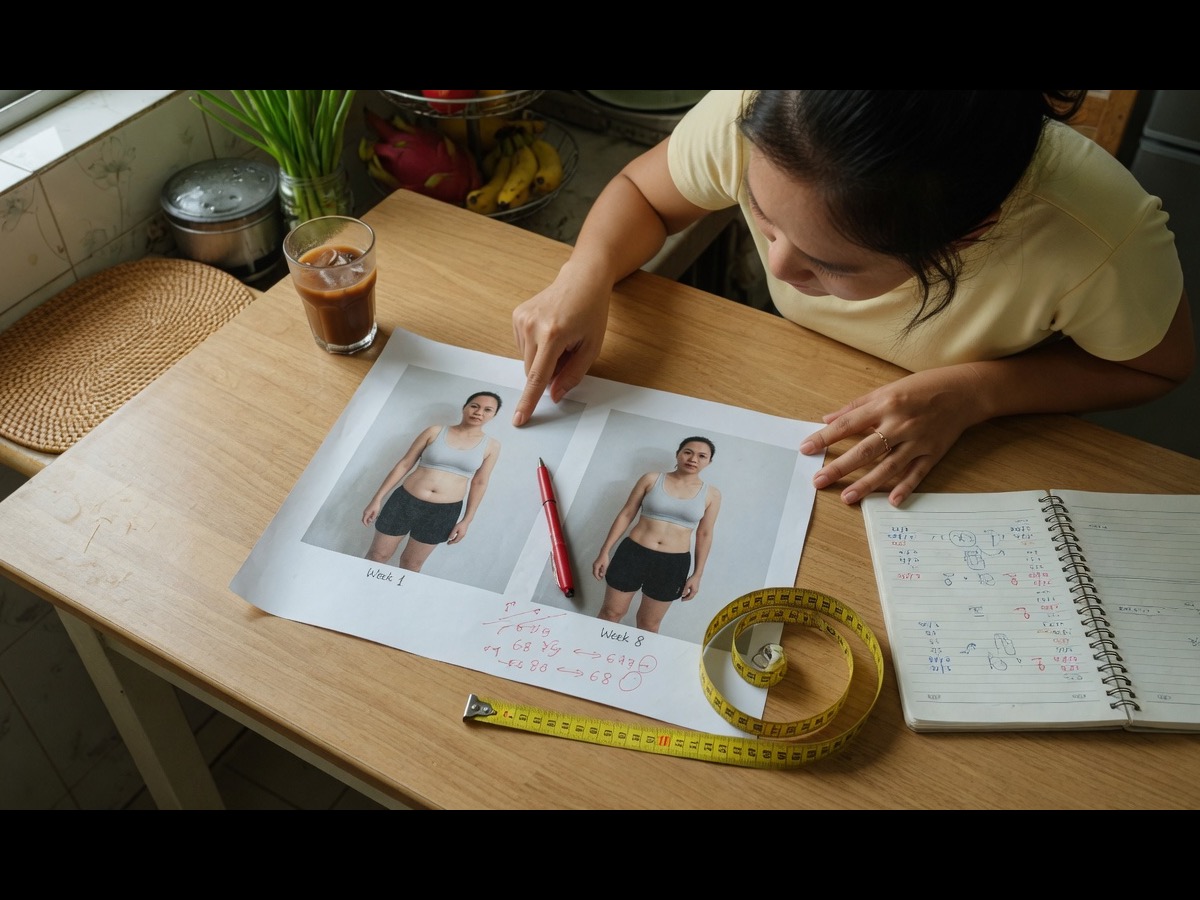
Weekly calorie budget, not a perfect day
Say your average target is 1,700 kcal/day → ~11,900 kcal/week. Five cleaner days around 1,600–1,700 plus two higher flexible meals can still land on the same average if the other meals stay tidy and you are not drinking sweet drinks all day.
- Pick two meals in advance that get “flexible” status.
- Other weekend meals still include vegetables–protein–moderate rice.
- Keep water; alcohol and milk tea count toward the flexible budget.
Scheduled flexibility beats “natural” eating until you are exhausted and hate yourself.
How to run two flexible meals
- Friday night: eat like a normal day — avoid opening the floodgates early.
- Saturday lunch or dinner: one fun restaurant/family meal; still ask for vegetables, stop at ~80% full.
- Sunday: one social meal; the other meal is a light meal-prep plate.
- Sunday afternoon: prep next week’s boxes instead of lying around planning Monday fasting.
| Behavior | Healthy 80/20 | Week wrecker |
|---|---|---|
| Loose meals | 1–2 | Every meal all weekend |
| Drinks | 1 counted sweet/alcohol serving | Many uncounted glasses |
| Next day | Eat normally | Skip breakfast + punishment cardio |
| Mindset | Planned | Lost control then guilt |
You can still edit inside a flexible meal
- Order extra vegetables; share fried dishes.
- Eat protein before dessert.
- Stop at peak enjoyment, not when the plate is empty out of guilt.
- Walk 10–15 minutes after — for digestion and habit, not to “burn it all off.”
Buffet: limit dessert rounds. Grill places: lean cuts and vegetables first. Late phở/bún: medium bowl, skip fried dough if you already had beer.
No Monday purge
Compensatory fasting drives hunger, rebound overeating, and ugly feelings around food. On Monday return to normal plates, drink water, train as scheduled. The scale may rise from salt–carbs–water — not 2 kg of fat from one meal.
If every weekend blows far past budget, shrink flexibility to one meal, or move the “treat” meal home where portions are easier to control.
Tie it to long-term goals
Sustainable fat loss needs weekly averages pointing the right way for a month, not a 10/10 score every day. 80/20 lets you do weddings, birthdays, and reunions without quitting. Journal the feeling: did you actually enjoy those two meals, or eat from table pressure?
People with eating disorders or in recovery should work with a professional — an 80/20 frame can be a poor fit if it triggers bingeing.
Write the two flexible meals into your calendar the same way you write training times. When joy has a slot, the other meals are easier to hold because your brain does not feel infinitely banned. If one meal already overshot hard, the second flexible meal can shrink to “moderate” instead of forcing yourself to use up a wreck-quota.
Big family tables: agree on shared dishes with vegetables and protein, and keep fried/pastry items as small shared portions. You still join the fun without a separate “diet plate” that draws attention.
FAQ
1. Does 20% mean 20% of calories from sweets?
Here it means a share of flexible behavior/meals, not a mandatory exact 20% of macros from “cheat” food. What matters is a deliberate limit.
2. If I train more on the weekend, can I eat more?
You can bump carbs a bit around the session, but do not use cardio hours to “buy” unlimited cake. Keep fullness awareness.
3. Monday scale is high — problem?
Usually water. Look at the weekly average or a 2–3 week trend. Do not slash calories from an emotional reaction.
This article is general eating-behavior strategy, not eating-disorder therapy. If you often lose control or feel heavy guilt around food, seek professional support.