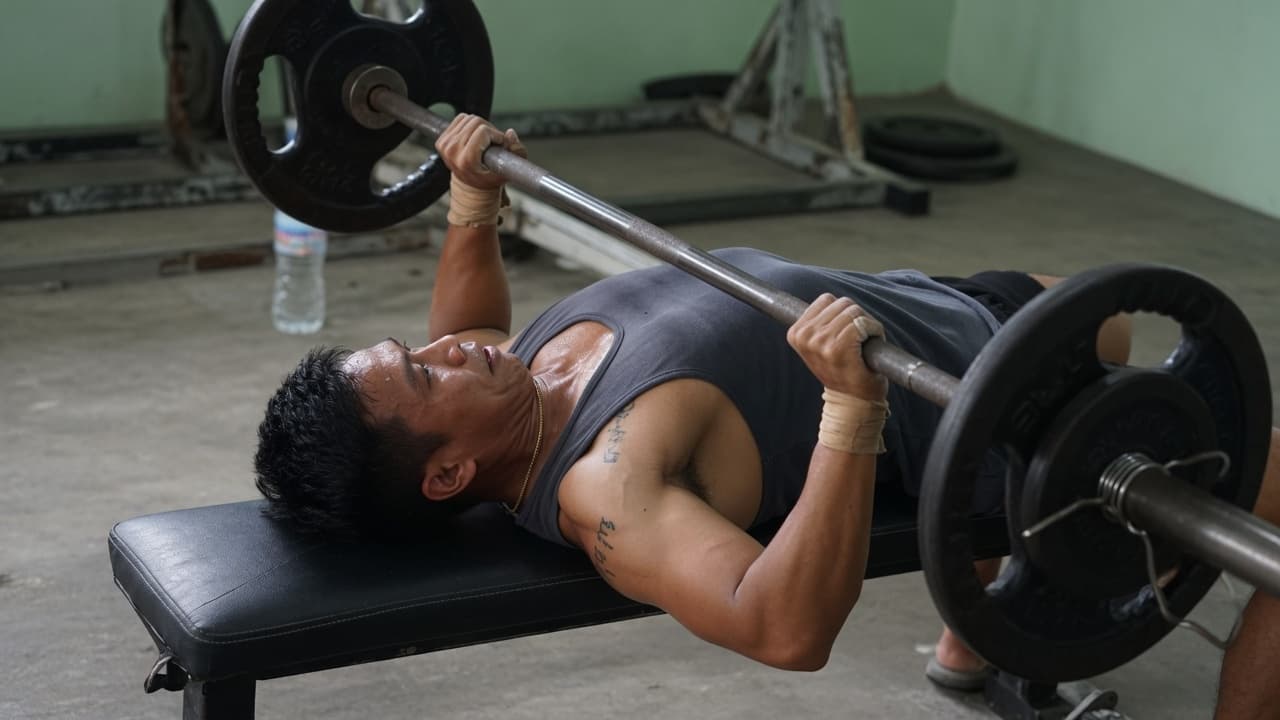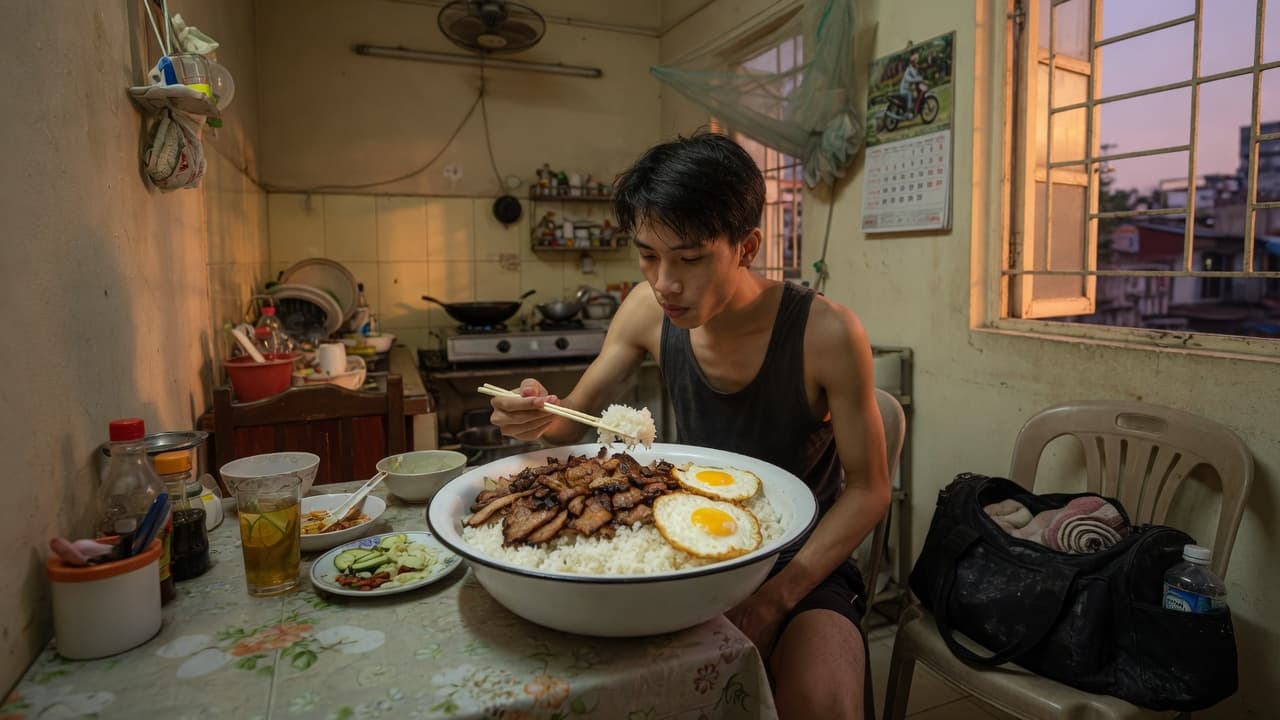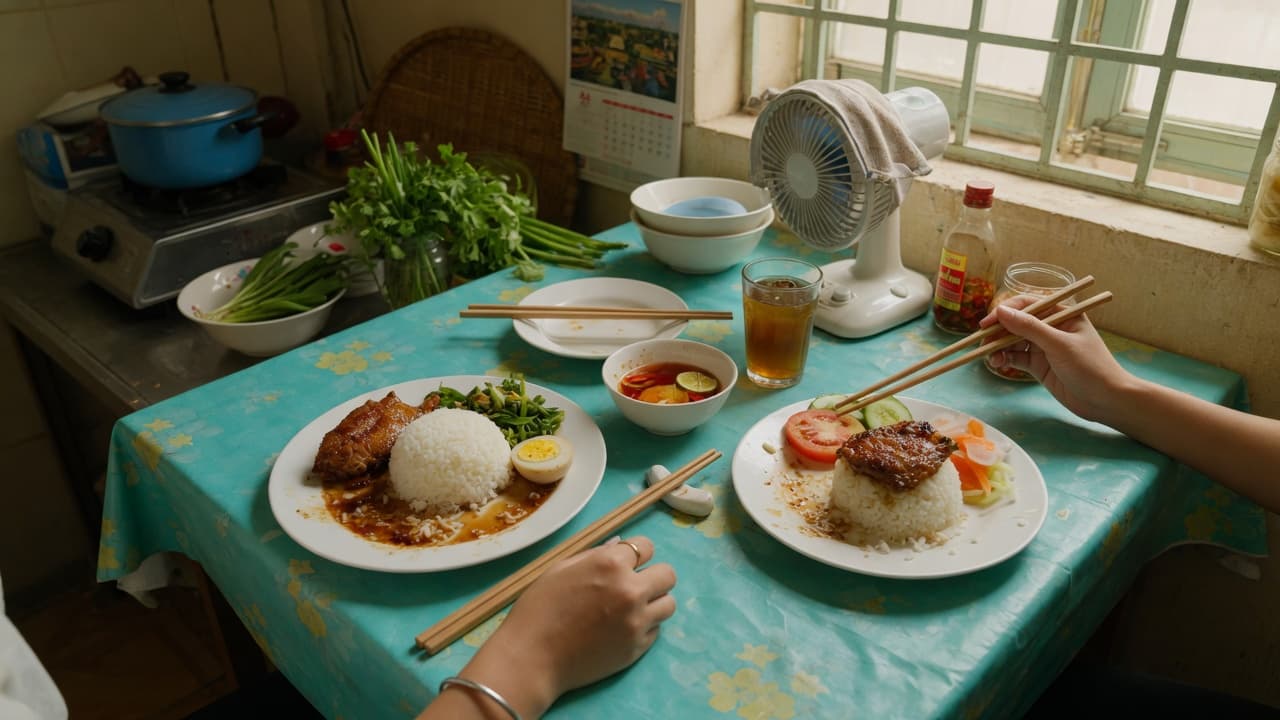
Two people living together often cook one pot with different goals: one cutting fat, one building muscle or maintaining. You do not need two fully separate menus. The practical approach is shared protein–vegetables–soup, then separate rice and oil on each plate.
This frame pairs with 90-minute meal prep if you want weekend batching. The person cutting calories can also use volume tips in eat full while still in a deficit.
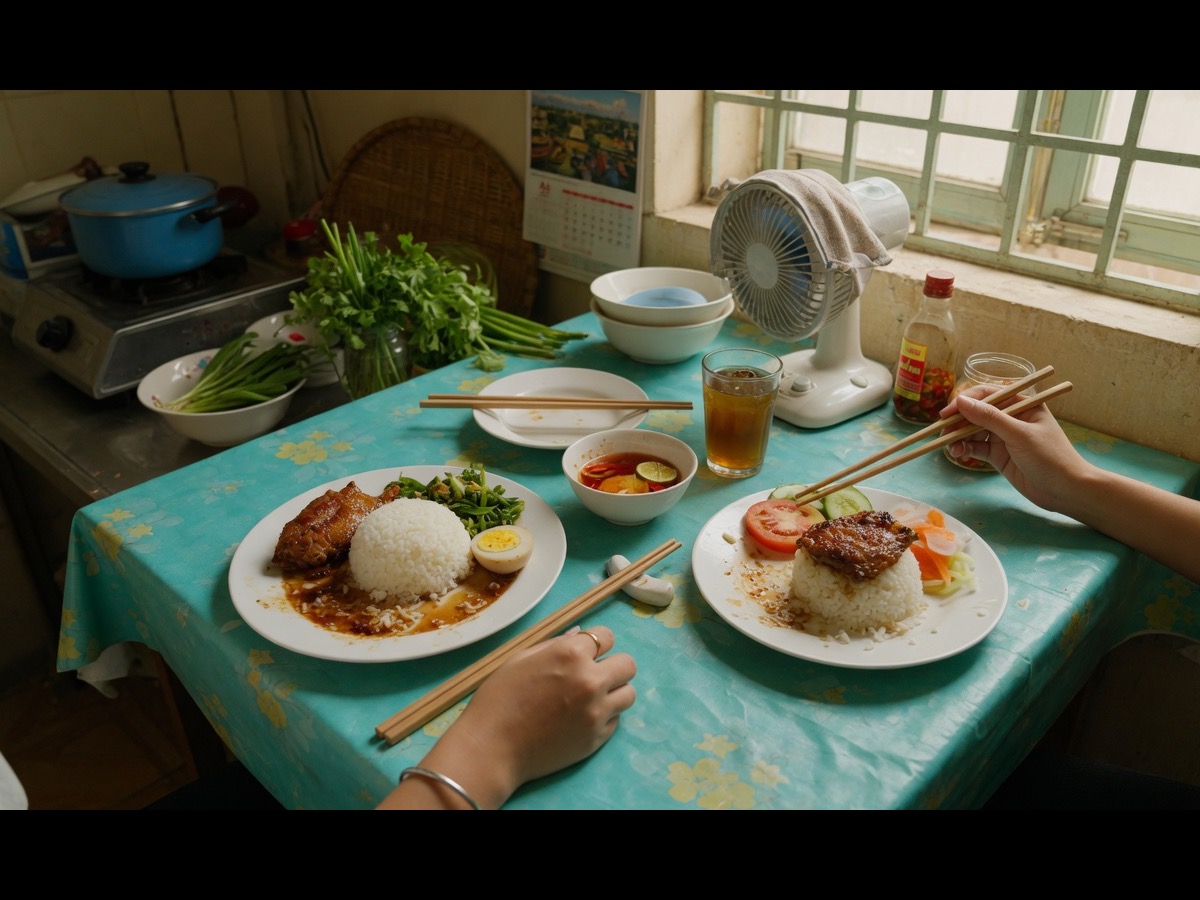
One-pot, two-macro principles
- Shared protein: chicken, fish, tofu, eggs — split by need (the gaining person often takes a bit more).
- Shared vegetables and soup: low calorie, both can eat freely.
- Rice/noodles portioned separately: the main energy dial.
- Oil and dipping sauces: the cutting person dips lightly; the gaining person can add 5–10 ml oil or a few peanuts.
Do not argue about who eats “cleaner.” Argue about the portions on your own plate.
Quick estimates without an app every meal
| Component | Cutting (~lower target) | Gaining / maintaining |
|---|---|---|
| Cooked rice | 100–140 g | 180–250 g |
| Cooked protein | 100–130 g | 130–160 g |
| Vegetables + soup | Lots | Lots |
| Extra oil | 0–5 ml | 8–15 ml or nuts |
Grams are estimates to train the eye. Weigh a few times the first week; then use small vs large rice bowls or a fixed scoop.
40–50 minute cook flow for two
- Rinse rice for the larger portion (the gainer), or cook enough and split with a scale.
- Marinate one tray of protein; roast, lightly braise, or steam — avoid deep-frying if one person is cutting hard.
- Boil/lightly stir-fry a large batch of vegetables; make a clear soup.
- Plate: vegetables–soup first, protein by agreement, rice last.
- Seasonings on the table: cutter uses lime–chili–dilute fish sauce; gainer adds sauce or a little sesame oil if calories are needed.
Dinner example: braised fish + water spinach + gourd soup
Plate A (cut): 120 g fish, 120 g rice, lots of greens, soup, no floating oil. Plate B (gain): 150 g fish, 220 g rice, same greens–soup, plus a spoon of oil or 15 g roasted peanuts. Same family flavors, clearly different energy totals.
When one person is vegetarian / low-meat
Cook extra tofu or mushrooms in the same sauce pan. The meat-eater takes fish/chicken; the vegetarian takes tofu + eggs (if lacto-ovo). Rice and vegetables still share the pot. Plant protein details appear in FitPath’s Vietnamese food protein articles.
Eating out and delivery with the same logic
Order one large portion and split at home: the cutter takes more vegetables, less noodle/rice; the gainer keeps enough starch. Avoid buying two fried portions “for fairness” — fairness is nutrition for each goal, not equal calories.
- Phở/bún: extra herbs, enough meat in one bowl; cutter less noodle, gainer more noodle or an egg.
- Cơm tấm: skip or minimize crispy skin ribs, add fried egg and pickles; adjust take-home rice.
- Grill: choose lean cuts, limit sweet marinades and sweet drinking sauces if cutting sugar.
Avoiding small kitchen conflicts
Agree ahead: who washes boxes, who scoops rice, whether a shared scale exists. Use two differently colored measuring bowls if needed. Weekend review of weight and hunger — adjust rice ±30 g instead of blaming the “shared pot for wrecking the plan.”
If both lift, heavy leg days can raise rice slightly for both; rest days the cutter keeps the lower portion while the gainer still eats enough. Macros are weekly, not every meal perfect.
FAQ
1. Does shared cooking “contaminate” the cutter with oil?
Yes if you stir-fry glossy with oil then split evenly. Cook drier/steam/light braise, and leave extra oil on the table for whoever needs calories.
2. Do we need two rice cookers?
Not required. One pot, two measuring bowls is enough. Two pots only help when one eats brown rice, one white, and neither will mix.
3. The gainer fears eating too little like their partner?
Add snacks: milk, banana, egg bread, or a smoothie — without wrecking the dinner pot. See Vietnamese surplus articles if denser calories are needed.
Family portion-layout education only — not a doctor or dietitian prescription. People with kidney disease, diabetes, pregnancy, or eating disorders need personalized menus.