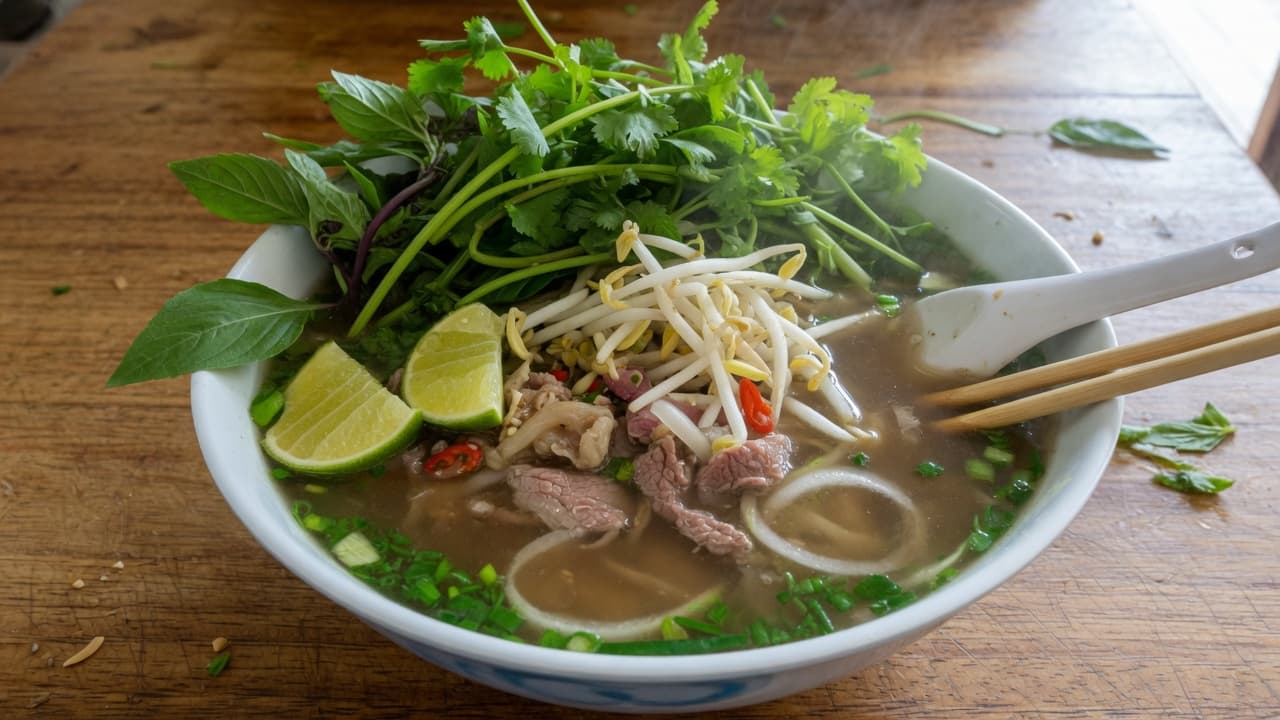
Phở fits a calorie plan when you order enough lean meat, lots of herbs, little fried dough (quẩy), and controlled noodles and fatty broth. A typical bowl lands around 500–800 kcal depending on the shop and toppings — enough for a main meal, no need for “salad only.”
Post-salty scale swings explained in salt and body weight. Extra vegetable–soup volume: stay full longer with soup and nộm.
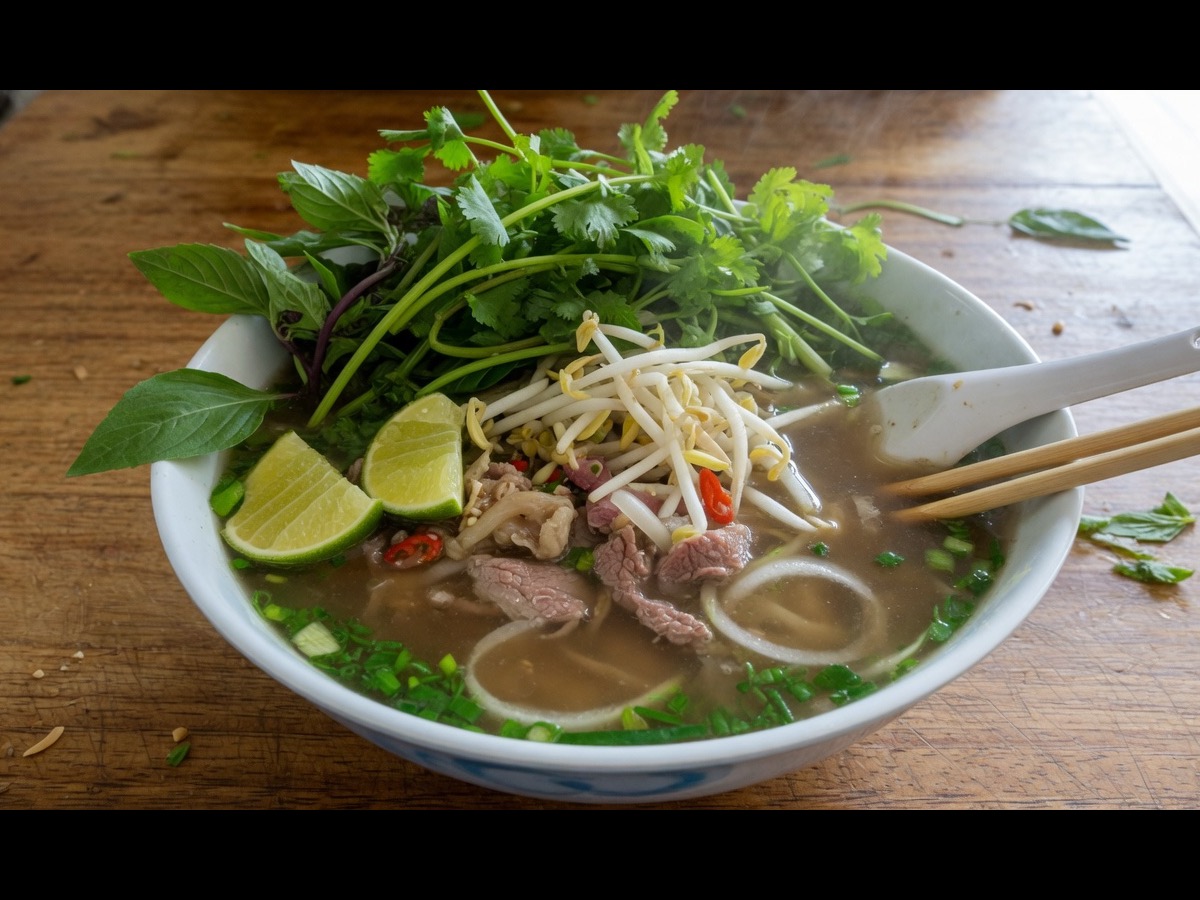
Phở calories — practical estimates
| Component | Impact |
|---|---|
| Rice noodles | Most of the carbs; ask for less if the shop fills the bowl |
| Rare, brisket, tendon, tripe | Good protein; brisket/tendon fill longer; limit excess attached fat |
| Fatty brisket, meatballs, blood | Calories and fat rise fast |
| Fried dough (quẩy) | Easy +150–250 kcal if you finish it |
| Broth | Sip moderately; skim floating oil on a hard cut |
| Herbs, bean sprouts | High volume, low calorie — ask for more |
A “rare + brisket + egg + greens, less noodles, no quẩy” bowl is usually friendlier to a cut than fatty brisket with quẩy and sugar iced tea.
How to order inside budget
- Choose rare, brisket, tendon or add egg if available — raise protein.
- Ask for extra herbs, sprouts, scallions.
- Less noodles or leave some if you fill early — eat meat and greens first.
- Skip or share quẩy; do not auto-order it.
- Unsweetened iced tea / water instead of soda.
- Go easy on sweet black–chili sauces if you track sugar.
Chicken phở and vegetarian phở
- Chicken phở without skin, more breast — often easier to control fat than some fatty-beef bowls.
- Vegetarian: watch oil and fried tofu; steamed/pan tofu beats deep-fried golden chunks.
Slotting phở into a fat-loss week
2–4 bowls/week are fine if other meals keep vegetables–protein–moderate rice. On heavy training days, phở is convenient carbs before or after. On low-activity days, choose fewer noodles and skip quẩy.
- Morning training: medium bowl 60–90 minutes before, or a light bite then phở after.
- Office lunch: fits; do not arrive so hungry that afternoon salty snacks never stop.
- Late dinner: okay if no sugar tea and you still sleep on time.
Broth sodium can raise next-morning weight — water, not failure. Use weekly averages as in the salt article. If blood pressure is high, limit finishing the broth and ask about saltiness when you can.
Weekend home phở: simmer bones and skim fat, keep meat separate, portion noodles. You control oil and sodium better than shops, plus boxes for a few days. Broth does not need restaurant depth — enough aroma from charred onion, ginger, and moderate spices.
Group outings that auto-order quẩy and soda? Call shared herbs to the table and one shared quẩy order — social fun without silently doubling calories.
Log bowls for two weeks
First two cut weeks, jot quickly: toppings, quẩy yes/no, noodles low–medium–high, fullness after 2 hours. You will learn which nearby shop bowls truly “fit budget” — the same “rare + brisket” label still varies wildly. After 4–5 solid sample bowls, just repeat the order; no need to weigh noodle grams forever.
Holiday or special bowls (extra meatballs, fatty brisket): treat as a flexible meal, keep the rest of the day high vegetable–protein, low oil. One festive bowl does not wreck a month if the weekly average stays in deficit.
FAQ
1. Is phở too high in sodium for fat loss?
Sodium causes temporary water retention; calories decide fat. Sip moderately, add greens, watch the weekly average.
2. Beef phở or bún bò?
Bún bò often comes with blood cake, sausage, and an oil layer — easier to run high if fully loaded. Compare specific orders more than dish names.
3. I only feel full after finishing the noodles?
Add rare beef/egg/greens first; if you still need noodles, keep them and cut quẩy–sweet sides. Protein and volume fill longer than noodles alone.
Reference portion estimates — not medical or clinical nutrition advice. Gout, hypertension, kidney disease, or diabetes: adjust broth, organ meats, and carbs with a professional.