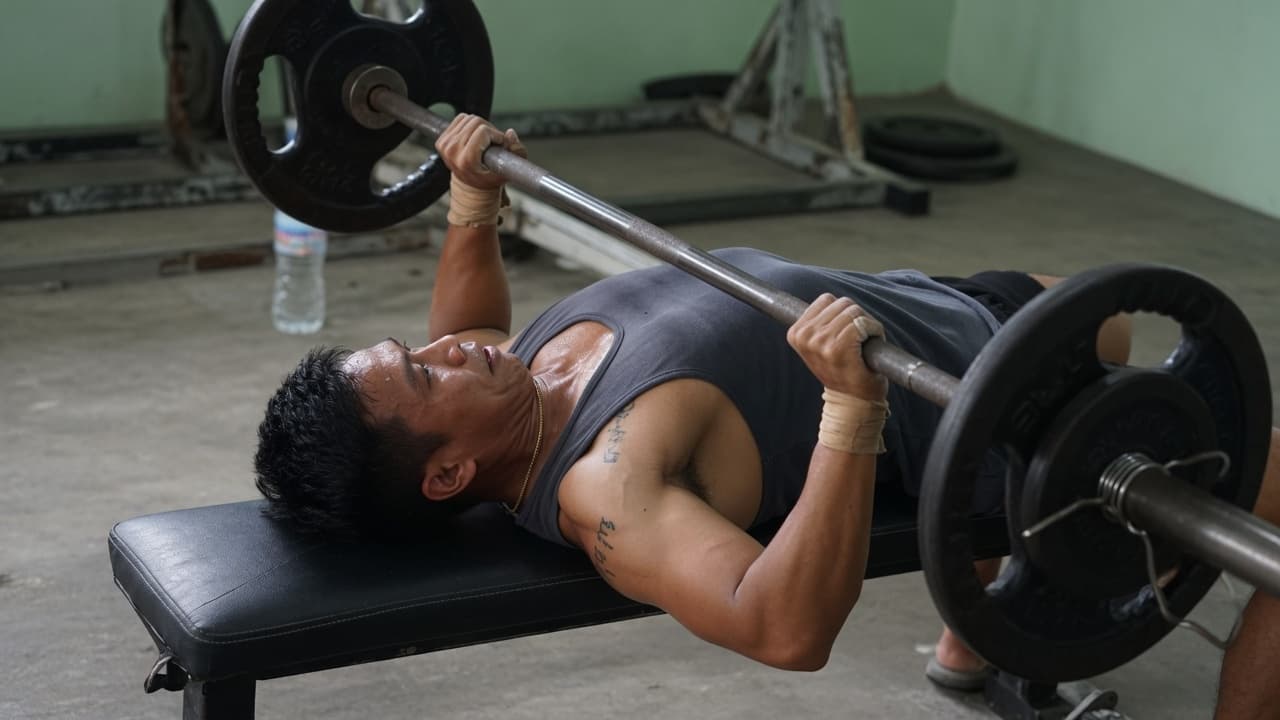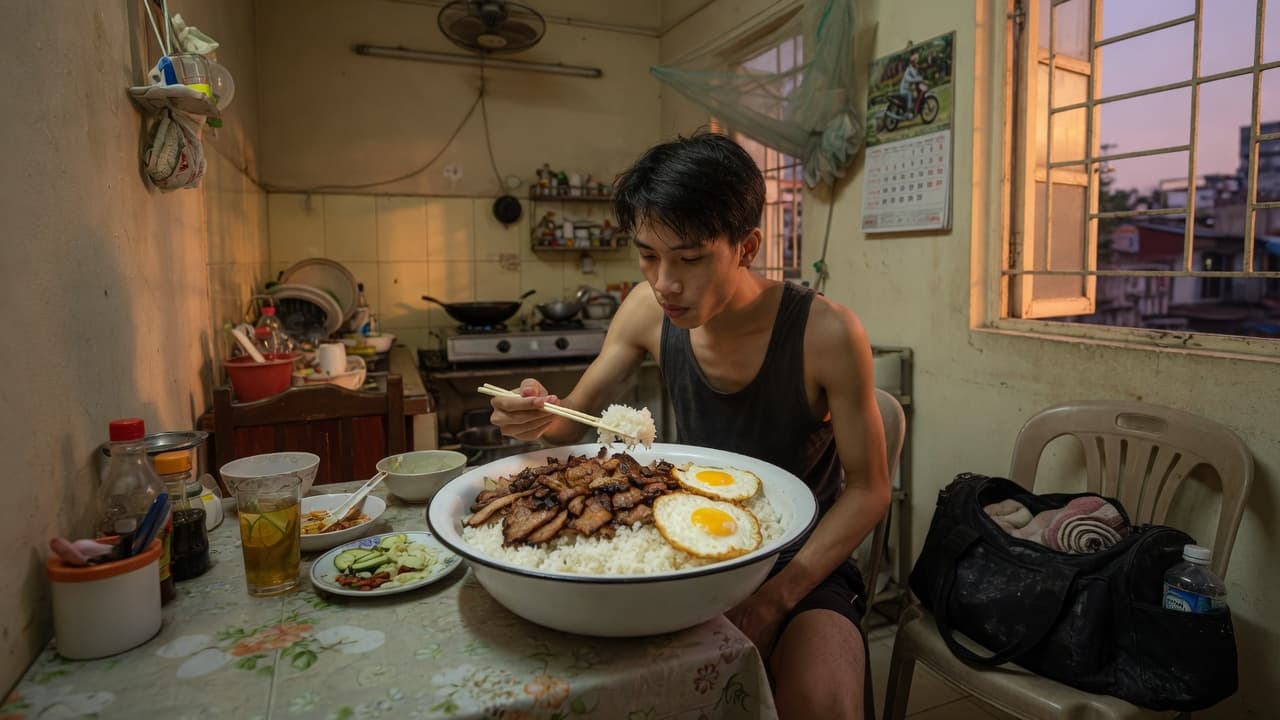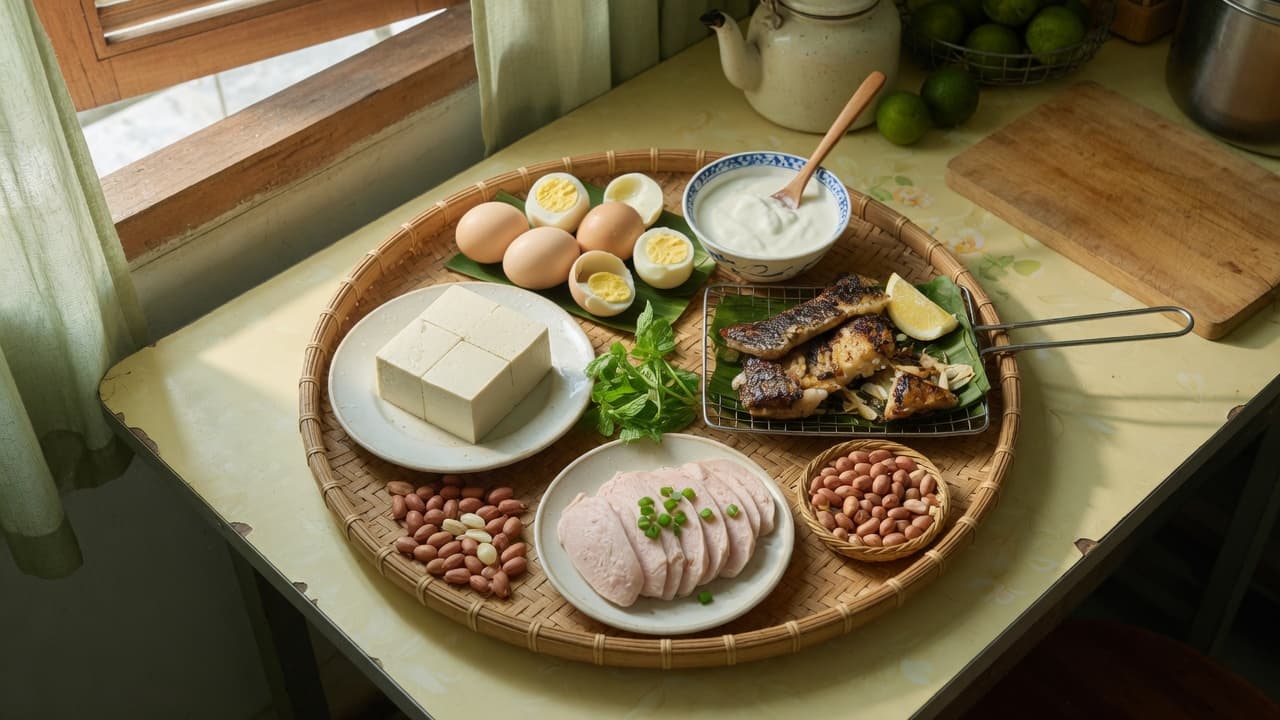
Many women think “getting toned means drinking whey every day.” In reality, you can hit about 1.6 g protein/kg body weight/day (a range often enough for people who lift) from eggs, fish, chicken, lean meat, đậu hũ (tofu), yogurt, shrimp — familiar Vietnamese foods. Generic whey is only optional when you are busy, traveling, or short ~20 g at day’s end; it is not a requirement for muscle and curves.
The broader Vietnamese protein foundation is also in protein from Vietnamese food without mandatory whey. Apply it to a muscle week: Vietnamese-style muscle menu for women. Busy office schedule: meal prep for busy office women.
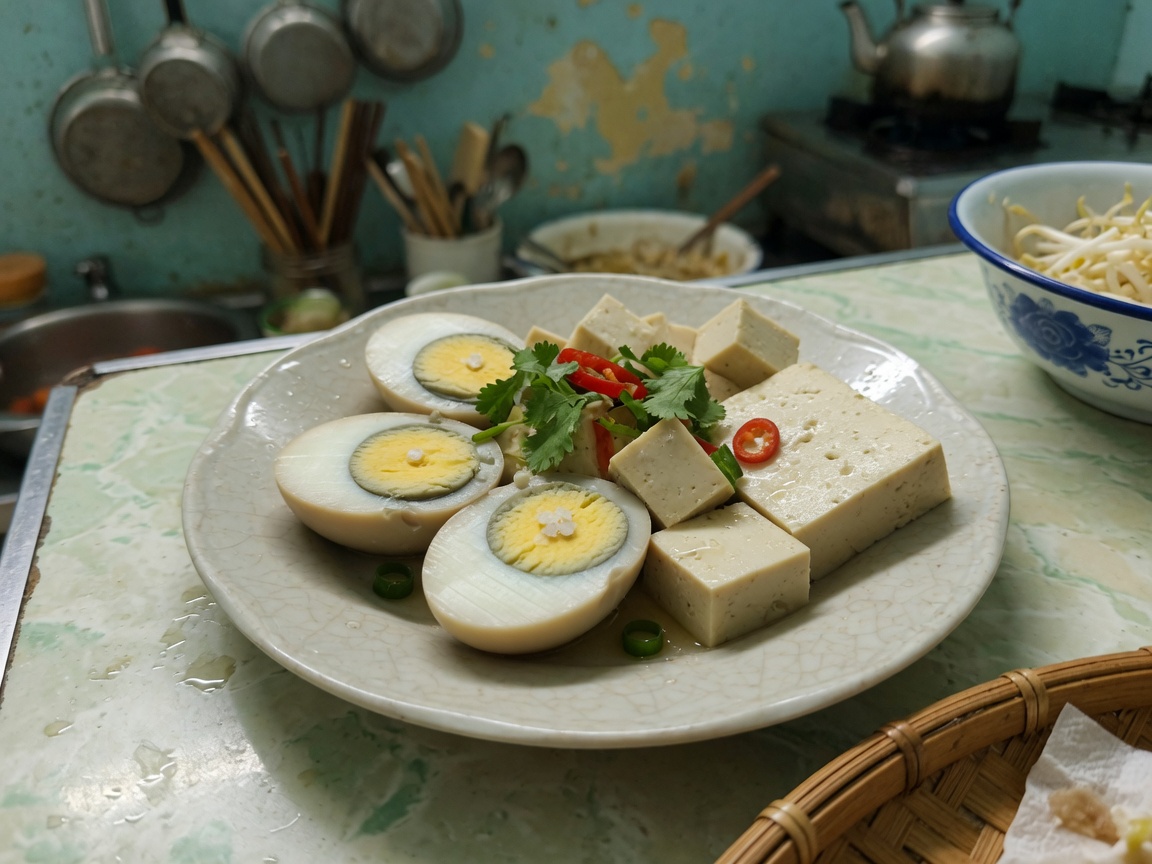
What does 1.6 g/kg mean in grams?
For women who lift regularly, about 1.6–2.2 g/kg is often cited in sports-nutrition references. Use 1.6 g/kg as a livable anchor; in a deep cut or when prioritizing muscle retention, you can push toward 2.0 g/kg if digestion is fine.
- Woman 52 kg × 1.6 ≈ 83 g protein/day; × 2.0 ≈ 104 g.
- Woman 65 kg × 1.6 ≈ 104 g protein/day; × 2.0 ≈ 130 g.
Spreading across 3–4 hits (~20–35 g estimate each) is usually more filling and achievable than dumping everything into dinner.
Vietnamese food table — estimated protein
| Food | Typical portion | Protein (estimate) |
|---|---|---|
| Chicken eggs | 2 eggs | ~12–13 g |
| Chicken breast (edible) | 100–120 g | ~25–35 g |
| Lean pork | 90–100 g | ~18–22 g |
| Basa / mackerel | 120–140 g | ~22–30 g |
| Shrimp | 100 g | ~20–24 g |
| Firm tofu | 150 g | ~12–18 g |
| Plain yogurt | 150 g | ~5–8 g |
| Fresh milk | 250 ml | ~8 g |
| Roasted peanuts | 20–25 g | ~5–7 g |
| Cooked mung beans | 100 g | ~7–8 g |
| Cooked white rice | 150 g | ~3–4 g |
Numbers are average estimates; skin, bone, tofu dryness, and cooking change results. Weigh a few times early to learn women’s portions (often smaller than “guy gym plate” photos online).
Sample day — woman 52 kg (~83 g)
- Breakfast: 2 eggs + vegetables + yogurt 120 g → ~18–20 g
- Lunch: moderate cơm (steamed rice) + fish 120 g + vegetables → ~25–28 g
- Snack: yogurt 150 g or 200 ml milk → ~6–8 g
- Dinner: rice + chicken breast 100 g or tofu 150 g + egg → ~28–32 g
Total easily lands ~80–90 g. On a lacto-ovo vegetarian day: add eggs and tofu; use thicker yogurt.
Sample day — woman 65 kg (~104 g)
- Breakfast: 2–3 scrambled eggs + yogurt 150 g → ~22–28 g
- Lunch: rice + chicken 130 g or lean pork 110 g → ~30–36 g
- Post-workout / afternoon snack: milk 250 ml + banana + 15 g peanuts (protein mostly from milk/peanuts) or add 1 boiled egg → ~12–18 g
- Dinner: fish 140 g + tofu 80–100 g + vegetables → ~35–40 g
Short ~20 g at day’s end? One scoop of mild/generic whey in water or milk is enough — do not turn the whole diet into a “powder diet.”
Tips for women: filling, convenient, not afraid of “eating a lot of meat”
- At every main meal ask: “Where is the protein piece?” — if it is only vegetables + rice, add egg/tofu/fish.
- With phở/bún, ask for more meat and less noodles when cutting; when building muscle keep noodles moderate and add meat.
- Sweet bone broth does not replace the meat portion; ladle extra fish/meat into the bowl.
- Weekend meal prep of chicken–fish–tofu helps office days not “forget protein.”
- During your period, sweet cravings rise: prefer yogurt + fruit before cake — still contributes protein.
Moderate-high protein does not make women “as bulky as men” overnight; muscle still needs lifting, time, and often a calorie surplus. “Toned” means muscle present + fat gradually lower.
Where does whey fit?
Useful when: the next meal is too far after training, long meetings, travel, or a mild illness with poor appetite. You do not need exclusive branded “weight-loss” products; generic whey/casein — or simply more eggs and yogurt — is usually cheaper and enough. Poor lactose tolerance: prioritize eggs, fish, chicken, tofu, and lactose-free yogurt if needed.
FAQ
1. Does high protein harm women’s kidneys?
Healthy people usually tolerate normal training ranges well. If you already have kidney disease or a doctor advised limiting protein, follow medical orders — do not self-escalate.
2. Is tofu alone enough?
Tofu alone is hard to hit targets and gets boring. Combine eggs, yogurt (if used), legumes, and grains; strict vegan needs a clearer plan or plant powder when short.
3. Must I drink whey right after training?
Not required. Daily protein total and enough calories matter more than a golden minute. A protein-containing meal within a few hours of training is fine for most recreational lifters.
This is general nutrition education; the author is not a doctor or dietitian. It does not replace diagnosis or a therapeutic meal plan. Caution if pregnant, with an eating disorder, PCOS, kidney disease, or on special medication — ask your healthcare professional.