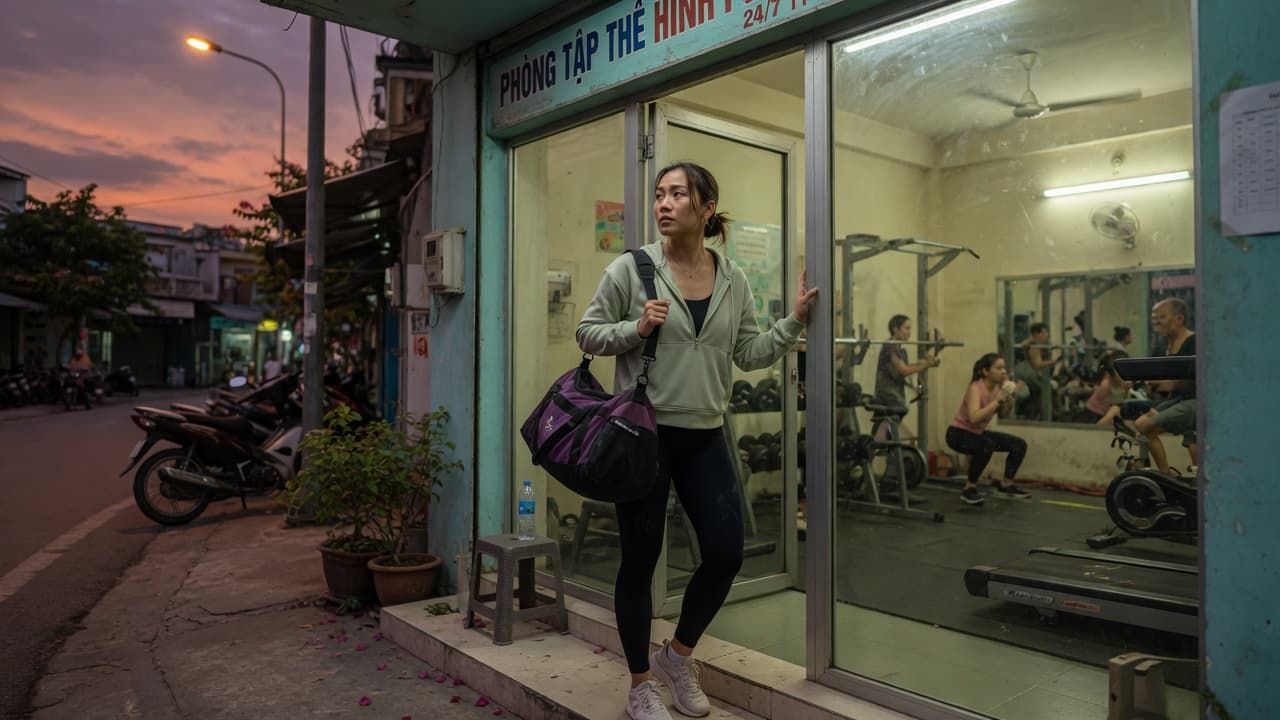
The first time many women walk into a gym, they worry about “not knowing which machine,” “being stared at,” or “weights making me bulky.” Feeling awkward is normal — and it fades fast if you have a 20-minute checklist: what to bring, which zone to start in, how to ask to share a rack, and a few safety basics. This article does not replace a coach; the goal is enough confidence to finish session one instead of hovering in a corner and leaving.
Once the floor feels familiar, follow the beginner gym plan for women. For the “weights make me bulky” fear: does lifting make women bulky?.
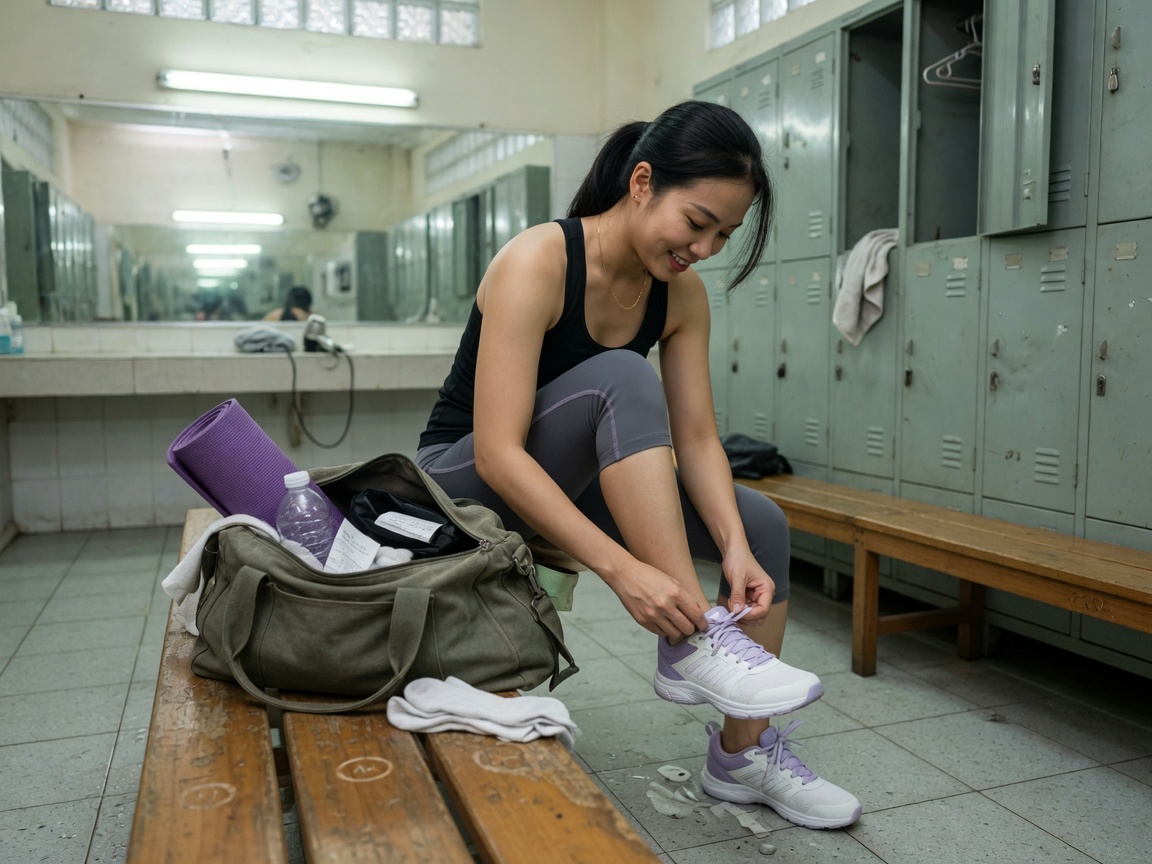
What to bring (a 5-minute bag before you leave)
- Supportive trainers with grip — skip flip-flops for leg presses or light deadlifts.
- Clothes you can move in; expensive gear optional; bring a layer if the floor is cold.
- Small towel + water bottle; some gyms require wiping machines after use.
- Headphones (if you like): help focus, not a mandatory “shield” — still hear the room near other people’s heavy lifts.
- Phone with the workout saved offline or a notebook with 4–5 first-session moves.
- Locker lock if available; valuables in a locker, not dumped on a machine.
Session one: 4–6 moves, enough rest, leave with energy left — winning means finishing, not setting a PR.
20 minutes to learn the floor (arrive a bit early)
- Minutes 0–3: Front desk / app check-in; ask about lockers, restrooms, wipe paper.
- Minutes 3–7: Walk a loop: cardio zone, guided machines, plate/barbell and bench area, functional/mat zone.
- Minutes 7–10: Pick a warm-up spot: bike/treadmill 5 minutes or joint circles on a mat.
- Minutes 10–20: Try 1–2 single-joint machines (e.g. chest press, seated row) at a very light load to learn seat adjustments — then dumbbells if you are ready.
Guided machines are usually easier than free weights on day one. Barbells and racks need more skill; do not be shy about an empty bar or very light dumbbells.
Machines vs free weights — where should you stand?
- Machines (cable, leg press, chest press…): stable, easy load changes, good for learning push–pull paths.
- Dumbbells / kettlebells: flexible, take little space, easy to share a zone.
- Barbell + rack: efficient but you need to know safety pins (if any), how to unrack–rerack, and not block someone mid-set.
Sessions 1–2: 70% machines + 30% dumbbells is totally fine. The goal is technique and the habit of showing up — not proving anything to anyone.
How to politely ask to share a machine / rack
- Step into their sightline; wait until the set finishes — do not pull pins or grab plates while someone is breathing between sets.
- Ask briefly: “Mind if I work in?” / “How many sets left?”
- If yes: change load cleanly, do your set, return near their working weight if agreed.
- Wipe sweat off the pad before you leave.
- Peak hours: have a plan B (equivalent machine) so you do not wait 15 minutes.
Minimum safety — remember before adding load
- General warm-up + a light feeler set for the main lifts.
- Do not hold your breath until your face turns red; sharp joint pain / dizziness → stop, do not “force one more.”
- Deadlift/squat: learn form (trustworthy video or coach) before loading plates.
- No bare feet in the free-weight area; tie your laces.
- Tell staff if a machine is broken or you see harassment — you have a right to train safely.
Headphones are handy, but drop one side or keep volume moderate near people lifting heavy so you can react if something goes wrong.
Social fear: a few realistic angles
Most people on the floor are worrying about their own sets. Outfit “not perfect” matters less than arriving on time and finishing the list. If looks feel hostile or someone bothers you, change zones, tell staff, or change hours — it is not your fault for showing up.
Fear that “lifting will make me bulky immediately” almost never happens after a few sessions; women’s muscle grows slowly and needs a surplus plus months of progress. Session one is just learning the floor.
FAQ
1. Do I need a trainer for session one?
Not required, but 1–3 sessions with a reputable coach to set machine seats and basic form is often worth it if you have never lifted. No coach: start with guided machines + solid form videos.
2. Should women avoid the free-weight area?
No. You can use every zone during open hours. Start light, pick quieter hours if that feels better, then shift to the time that fits your life.
3. How long should the first session be?
30–45 minutes including warm-up is enough. Wanting to come back next week matters more than a 90-minute wreck on day one.
This article orients gym habits and basic safety — it does not replace a coach or medical advice. The author is not a doctor. Injury, pregnancy, chest pain/dizziness with effort — ask a clinician before resistance training.