Heel pain after a “I’m finally going to run” season or after jump–cardio on shoes with paper-thin hard soles is common in Vietnamese gyms. Conversely, not every squatter needs expensive carbon-plate shoes. This piece helps you pick a sole that matches the goal (lifting, machines, walking), know when to change shoes, and what to reduce first when the Achilles is irritable — not a tendonitis diagnosis article.
Shoes are one link beside volume, floor surface, and recovery. Do not expect a new pair to cure every heel ache if you jump rope daily on concrete.
Lifting shoes and running shoes are different jobs
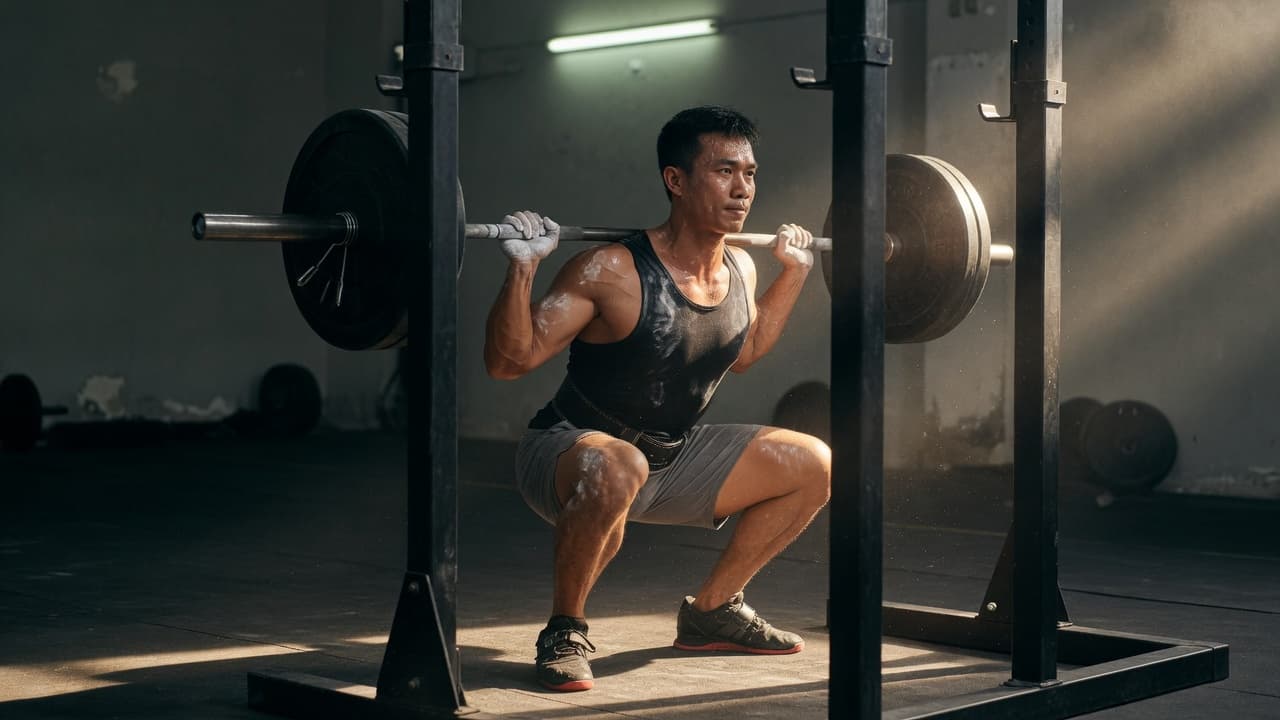
Squat, hinge, standing press: need a relatively firm, stable sole that does not “sink” like max running cushion. Many people use flats or moderately firm soles; some like a slight heel raise (dedicated squat shoes) if ankles are limited — a technique choice, not mandatory for beginners.
Running, long incline-machine cardio: cushion and drop that match your mileage matter more. Using thin running shoes for heavy deadlifts can make the foot and heel complain at high volume.
Machines, cables, recovery walks: comfortable, clean, non-slip shoes are enough. No expensive plate needed.
Carbon plates help racing; they are rarely what you lack to learn a clean goblet squat.
Signs to revisit the pair you are wearing
- Sole worn unevenly, cushion “dead,” or holes.
- Heel slipping during presses or direction changes.
- Heel/Achilles ache rising after a sudden switch to zero-drop — or the opposite.
- Arch pain after high jump volume in shoes that are too soft or too hard vs what you are used to.
Changing shoes: transition over a few easy sessions; do not test a 1RM and intervals on the same day in a brand-new pair.
When the heel or Achilles is irritable
- Reduce or temporarily drop jumps, rope, and sprints.
- Keep flat conversational-pace walking if it does not increase pain.
- Prefer machines and controlled ranges over plyometrics.
- Avoid aggressive stretching into a hot/swollen tendon.
- Watch 3–5 days: if sharp pain rises, swelling appears, or ankle push-off weakens — unload and consider getting checked.
Separate calf muscle soreness from fixed-point tendon pain with the frame in soreness vs injury. Foam-roll calves only lightly if it does not provoke the Achilles — see limits in foam roller mistakes.
Practical buy-and-wear checklist
- Try shoes in the evening (feet slightly swollen), wear real training socks.
- Stand, bodyweight squat, walk on the store mat if allowed.
- Prioritize width fit; do not buy the wrong size for a sale.
- Keep one “lifting” pair and one “cardio” pair if budget allows — two luxury brands are not required.
- Clean the soles; sand and worn rubber get slippery on wood/PU floors.
Office-worker legs and high step counts
If you wear hard dress shoes all day then jump to minimalist soles for HIIT at night, heels overload easily. Transition gradually and add recovery walking instead of intervals while aching — spirit of leg training for office workers and walking after meals.
Stress week: cut jumps before cutting all protein. New shoes are not a mandatory deadline reward.
FAQ
Do I need dedicated squat shoes from day one?
No. Learn form with a stable sole you already have. Raised-heel shoes are a tool when ankles or technique priorities call for them — not a gym entry fee.
Is barefoot training better?
Some light technique work on a clean mat is fine for people used to it. Public gyms: hygiene and sharp-object risk; heavy barefoot deadlifts are not a default safer choice. Decide by environment and heel–foot tolerance.
Morning heel pain — is it only the shoes?
Not necessarily. Many mechanical and medical causes exist. Shoes and load are sensible self-adjustments first; lasting or worsening pain needs a professional, not just another sole change.
Disclaimer: General shoe and loading ideas for healthy trainees — not diagnosis of Achilles tendinopathy, plantar issues, or heel disease. Lasting pain, swelling, weakness, or post-injury cases need appropriate care.