Sitting 8–10 hours a day shortens the hip flexors, “turns off” the glutes, and makes the low back cover work the pelvis stabilizers should own. Leg training for office workers is therefore not just “bigger thighs” — it is reopening the hip hinge, waking the glute med, and choosing variations like split squats and RDLs so end-of-day backs feel better. This article gives a minimum 2-day/week plan plus walking.
If you are relearning squats because knees feel cranky, pair this with the cues in squat form that spares the knees before adding load.
What long sitting does to hips and back
- Hip flexors stay shortened → stiffness when you stand, pelvis tends to tip forward.
- Glutes (especially glute med) rarely get called → knees cave on stairs or squats.
- Low back compensates → end-of-day ache even when you “didn’t train hard.”
The fix is not hundreds of desk crunches. Alternate sit–stand–walk, then train the right leg–hip patterns twice a week.
Three weekly buckets
1) Open hip flexors and chest (short, daily)
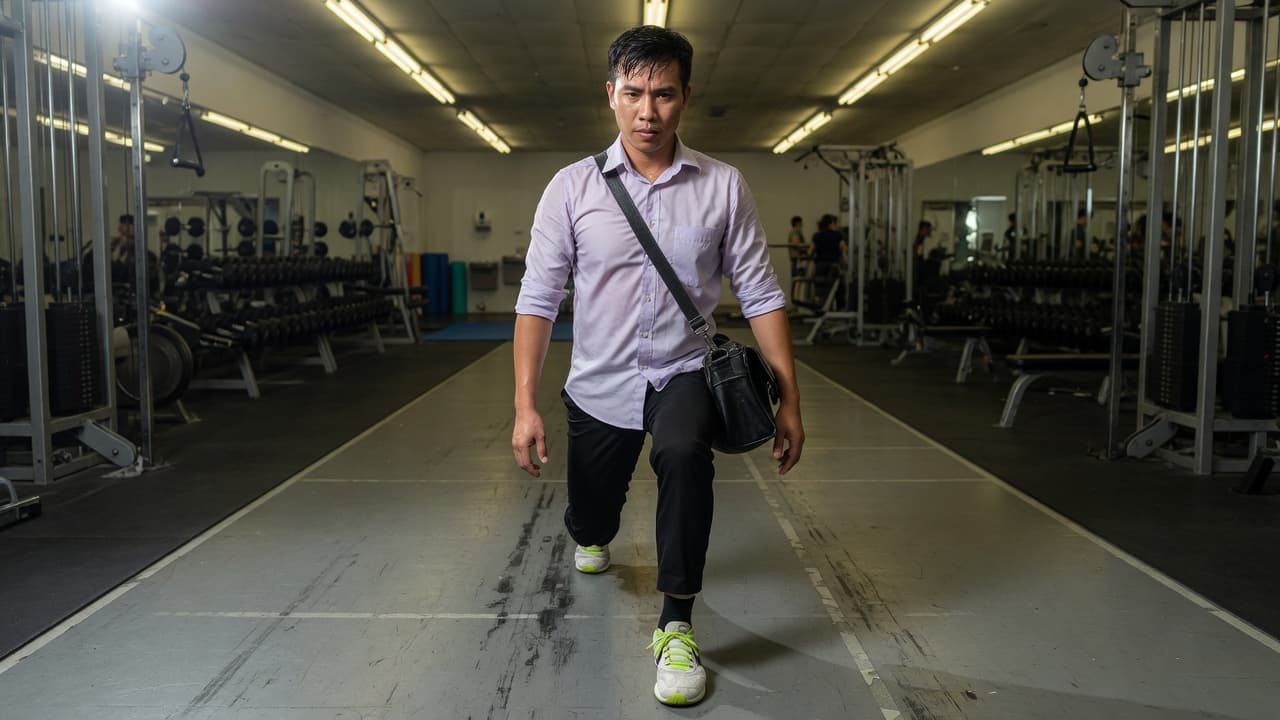
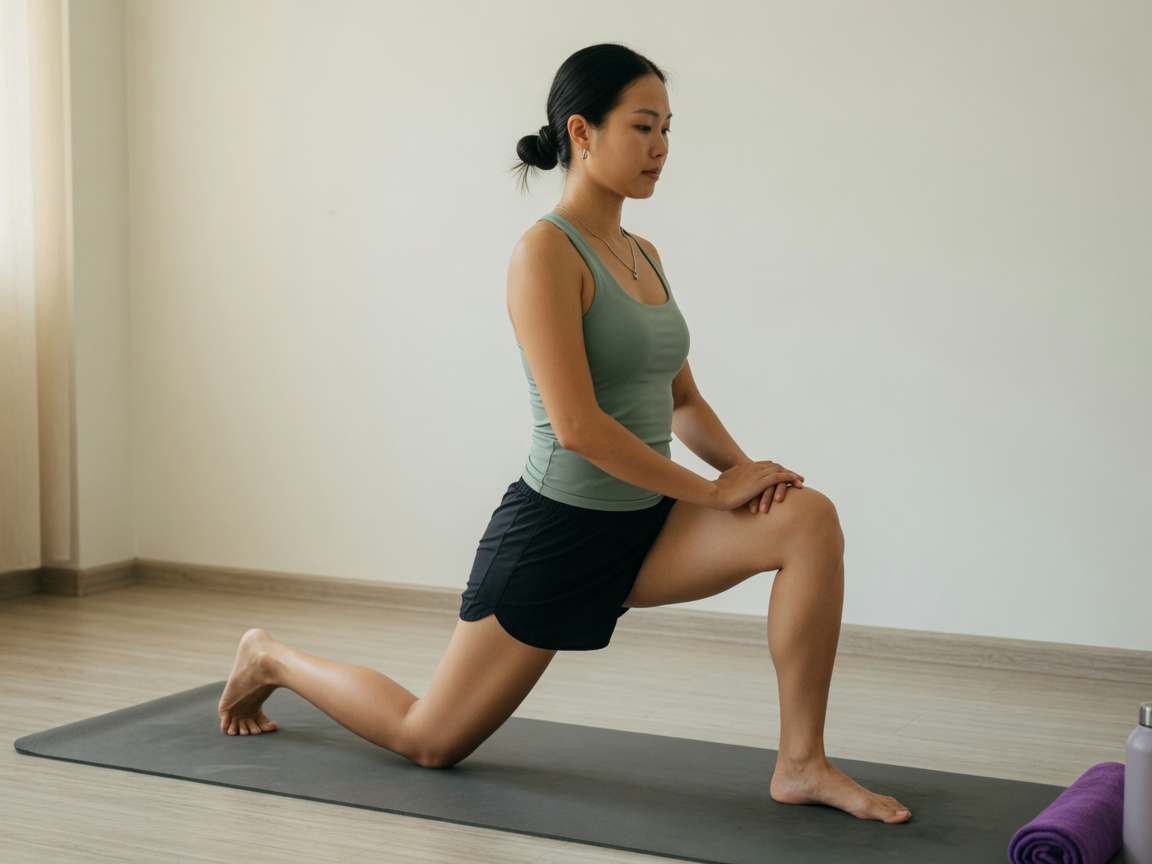
- Long in-place step to open the front hip 30–45 seconds per side.
- Sit-to-stand from the chair every 45–60 minutes of work.
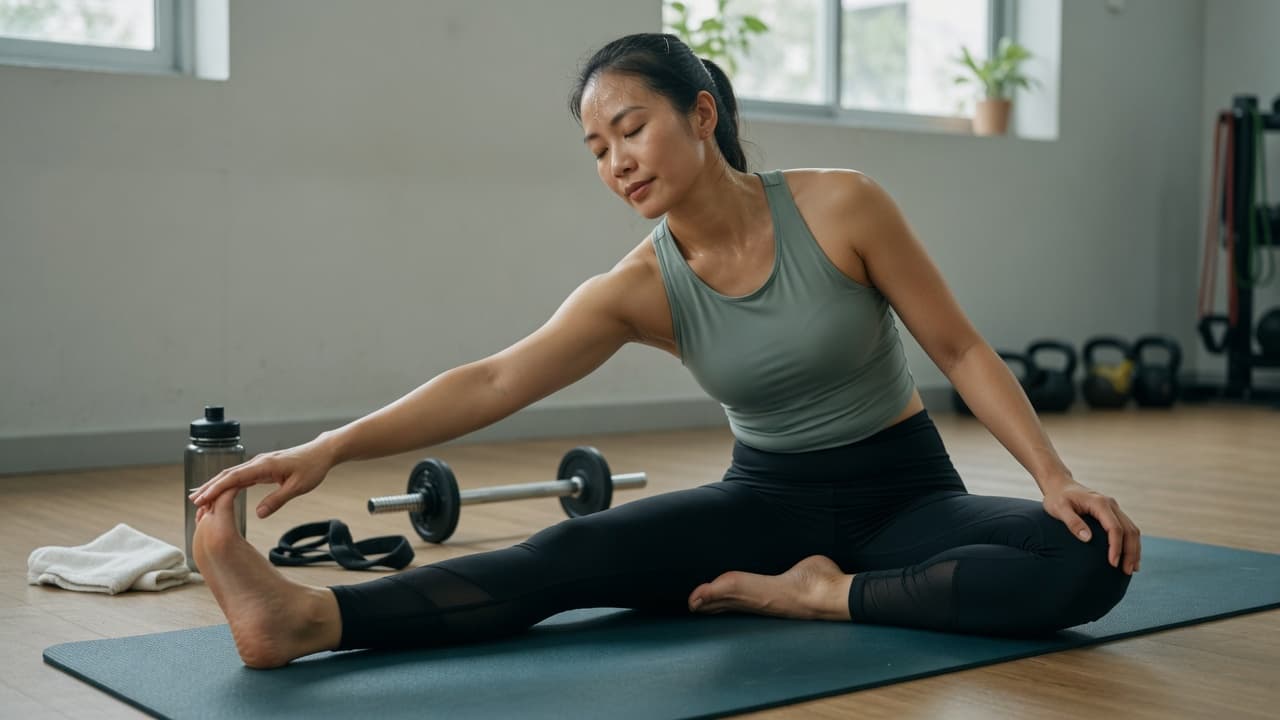
- Light post-session stretch: see post-workout stretching for hips–chest–hamstrings.
2) Wake the glute med
- Side-lying clam or band side step: 2×12–15 per side.
- Glute bridge: 2–3×10–12, 1-second pause at the top, no over-arching the low back.
3) Single-leg strength and hip hinge
- Split squat or low step-up: 3×8–10 per leg.
- Romanian deadlift (dumbbells or light bar): 3×6–10.
- Shallow–moderate goblet squat: 2–3×8–10 if knees allow.
Minimum plan: 2 sessions/week
| Day | Content (~35–45 minutes) | After work |
|---|---|---|
| Session 1 (e.g. Wed) | Bridge 2×12 → Split squat 3×8/leg → RDL 3×8 → Goblet squat 2×10 → Band side step 2×15 | Walk 15–20 minutes |
| Session 2 (e.g. Fri) | Clam 2×12 → Step-up 3×8/leg → RDL 3×6–8 → Slow unloaded hip hinge 2×10 → Side plank 2×20 sec/side | Hip–hamstring stretch 5 minutes |
| Other days | Stand every hour + 7–8k steps | No 2-hour unbroken sitting |
Rest 90 seconds between strength sets. Choose loads that let you control a 2–3 second lower — especially on RDLs; do not “lift with the back.”
RDL cue: “push the hips back, keep the weight close to the legs, spine long like a sheet of paper that does not fold in the middle.”
In the first 10 minutes, do not jump to heavy loads. Circle ankles–knees–hips, do 10 unloaded bridges, 8 unloaded hinges in a mirror, then start working sets. All-day sitters often need to “wake” foot grip: try 10 heel raises and gently track the knees toward the toes before squats or split squats.
If you only have 20 minutes between meetings, prioritize bridge + split squat + a hallway walk. Do not treat a shortened session as failure — small weekly repeats beat one perfect session a month.
Why split squats suit office workers
A front–back stance forces each side to work, exposes the weak side, and asks for less deep mobility than a bilateral squat when hips are still stiff. Holding a chair at first is fine. Lower straight down, front knee tracks the toes, slight torso lean, back knee aims at the floor.
Sharp front-knee pain: shorten range, elevate the front heel slightly, or switch to low step-ups. Sharp back pain: lower RDL load and check whether you are rounding on the way down.
Walking is part of “leg training”
After sitting, 20–30 minutes of brisk walking helps circulation and “calls” the glutes through the gait cycle. Aim for 7–8k steps a week average; ramp up if you are at 3–4k. A few short 2–3 floor stair bursts beat one all-out treadmill session followed by three days of no walking.
While walking, think lightly “push the floor with the back foot” instead of shuffling. Stable-sole shoes on flat or mild hills both work. If knees ache, split into 3×10 minutes instead of one continuous 40 minutes on hard surfaces.
Progress after 4 weeks
- Weeks 1–2: learn range, prioritize form, light load or bodyweight only.
- Weeks 3–4: add 2–4 kg on RDLs or +1–2 split-squat reps per leg when control is solid.
- Rate end-of-workday back feel (0–10) each week — many people see it drop as glutes and hinges get used evenly.
- Side photos or video of RDL and split squat every 2 weeks to catch faults early.
What to avoid
- Only hundreds of leg extensions while skipping hinges and glutes.
- Forcing max-depth squats on day one while hips are still stiff.
- Sitting right after a heavy RDL without walking 5 minutes.
- Bouncy aggressive stretching during sharp pain — prefer controlled range.
FAQ
My low back aches on RDLs — must I quit them?
Not necessarily. Shorten the range (only hinge back while the spine stays long), lower the load, or do unloaded hinges in a mirror first. If pain radiates down the leg, numbness appears, or it lasts many days, stop and get checked.
Are two leg days enough when I sit all day?
Enough to start improving strength and hip feel if you also stand and walk during the day. Once adapted, add a full-body or upper–lower day.
Do I need special shoes?
Stable soles that are not overly soft like max-cushion running shoes usually make squats and RDLs easier. More important than the shoe is the foot gripping the floor without uncontrolled heel lift.
This is general movement guidance for people who sit a lot — not a spine or knee treatment plan. Seek medical advice for radiating pain, numbness/weakness, or a history of injury.