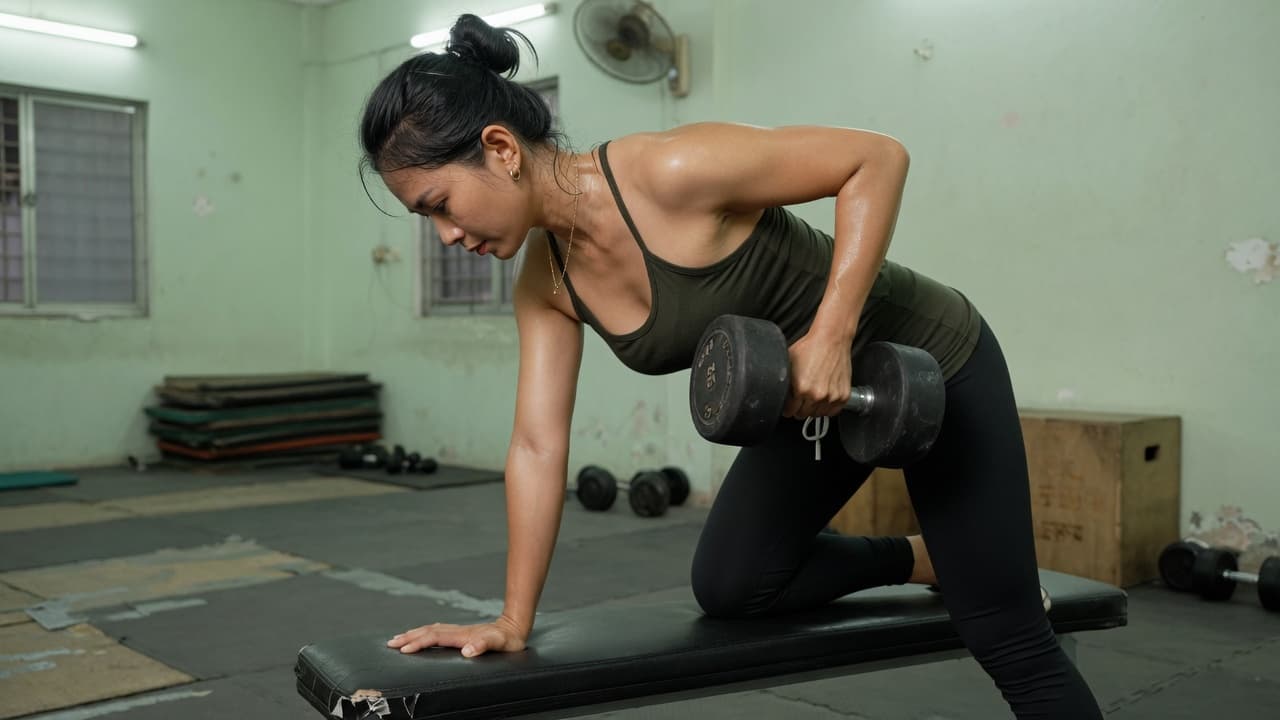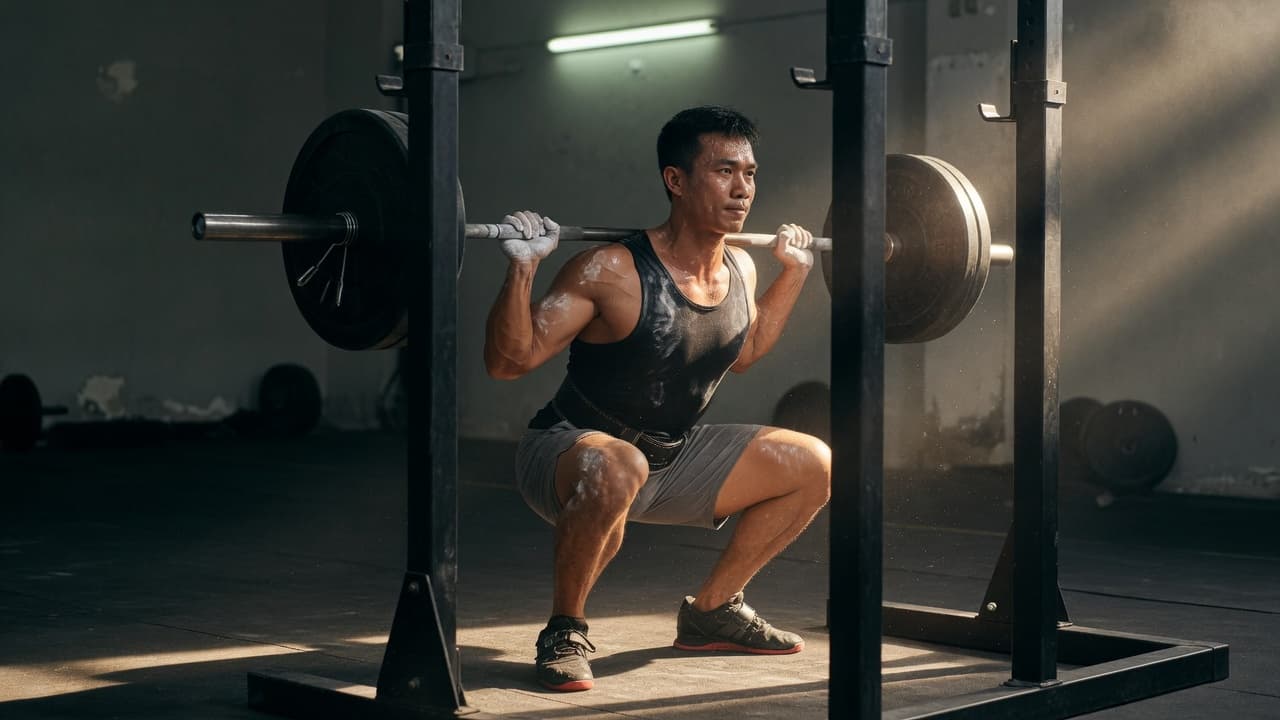
Many people fear squats because their “knees complain” or the quads take all the load while hips and glutes barely wake up. Often the problem is not the squat itself but how you descend: knees shoot too far forward, the torso dumps, or you never learned a hip hinge. This article focuses on hip-sit cues, foot stance, bracing, and a box-squat drill to rebuild a safer feel.
This is not a rehab protocol for an existing injury. If the knee is swollen, unstable, or painful after an accident, get a professional assessment before loading again.
Sitting the hips back vs “pushing the knees forward”
As you start down, think hips go back and down as if sitting into a chair behind you, while the knees bend as needed. If you only “bend the knees” with hips stuck in place, load dumps onto the knee joint and quads, and the torso either over-arches or collapses.
- Hip hinge / sit back: glutes lead, pelvis stable, intentional slight torso lean.
- Excessive knee slide: knees shoot far past the toes in the first centimeters, heels want to lift, front-of-knee pressure rises fast.
Knees slightly past the toes at the bottom can still be fine for many people — the key is that the hips joined early and the whole foot stays pressed into the floor.
Stance, feet, and toe angle
Start with feet about shoulder-width or slightly wider, toes turned out about 5–20 degrees depending on your hips. Try two or three widths with very light load and pick the stance that lets you go deeper without heel lift or sharp pain.
- Press three points evenly: heel, big-toe base, little-toe base.
- Knees track toward the toes — do not cave inward on the way up.
- Early depth target: thighs parallel to the floor or whatever depth keeps a neutral spine; absolute “ass to grass” can wait.
Desk workers often have stiff hip flexors and weak glute meds; pairing this with leg training for office workers makes squats feel clearly better within a few weeks.
Brace: lock the core before you descend
Before each rep, breathe into the belly and ribs (not only the chest), gently brace as if someone will lightly poke your midsection, keep that pressure on the way down and up, then exhale past the hard part or at the top. Pull shoulders lightly down and back; eyes on a fixed point slightly ahead and down — avoid cranking the neck up.
Short cue: “breathe – brace – sit into the chair behind you – push the floor with your feet – stand tall through the hips.”
Box-squat drill so the knees stop doing all the work
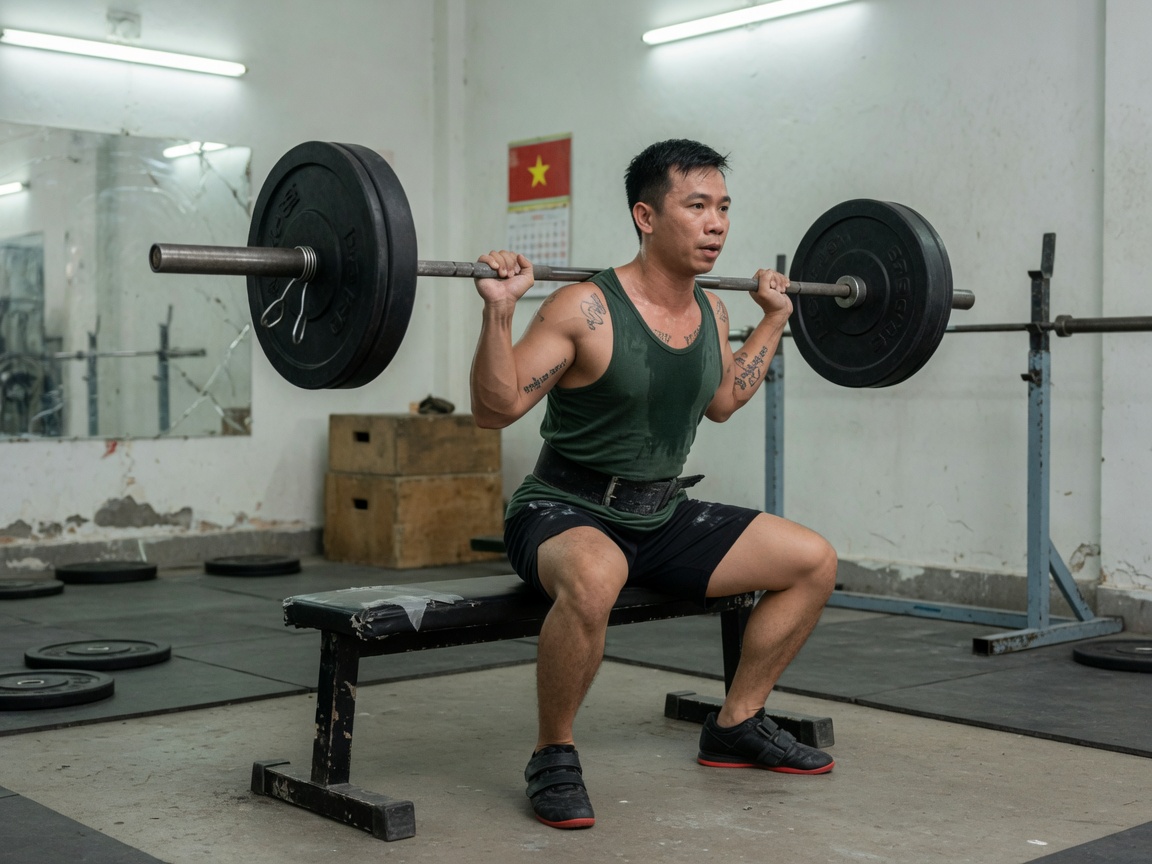
Place a sturdy box or chair behind you at about parallel thigh height. Then:
- Stance like a normal squat; hands at chest or hold a light weight.
- Lower for 3 seconds, actively sending hips back until the glutes lightly touch the box.
- Do not collapse into the seat; keep the torso tight.
- Stand by pushing the floor, extending hips and knees together.
- Do 3 sets × 5–8, rest 90 seconds, on leg days or technique days.
When box contact feels stable and pain-free, remove the box and keep the same feel. It is a good bridge before adding load.
Eight-minute warm-up before squat sessions
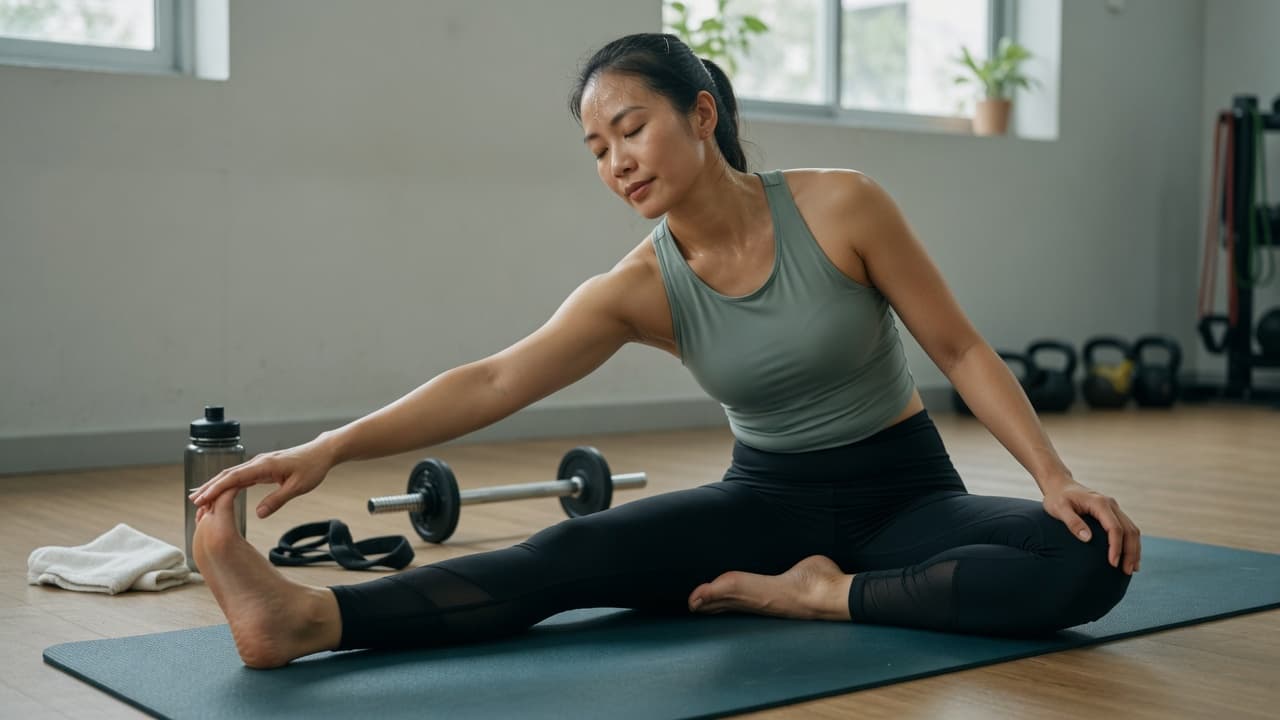
Do not jump straight into heavy sets. Circle hips–knees–ankles, gently open the hip flexors, do 10 glute bridges, then 2 unloaded squat sets and 1 very light loaded set. A fuller sequence is in 8-minute warm-up before lifting.
When to stop or deload
- Sharp pain in the front of the knee or along the kneecap that rises with every descent.
- Heels cannot stay down even after stance tweaks.
- Lower back rounds out of control in the bottom half of the range.
- Dizziness, chest pain, or a sudden joint “catch.”
Quad–glute soreness after a session is different from joint pain. When unsure, reduce depth, switch to light goblet squats, or temporarily use leg press / low step-ups while you get hands-on coaching.
Quick form checklist
| Item | What you see / feel | How to fix |
|---|---|---|
| Feet | Heels lift, collapse inward | Widen stance, press heels, reduce depth |
| Knees | Cave in on the way up | Drive knees toward toes; light band around knees |
| Hips | Do not sit back | Box squat; cue “sit into the chair behind you” |
| Torso | Dumps forward or over-arches | Brace, lower the load, 1-second pause at the bottom |
FAQ
Knees click without pain — is that a problem?
Many people have noise without pain. Still film your form, slow the descent, and avoid sudden load jumps. If swelling or post-session pain shows up, deload and get checked.
Narrow or wide stance — which is better?
There is no one stance for everyone. Choose the stance that keeps the torso stable, heels down, and reaches your target depth without pain. Adjust to your hip structure.
Do I have to go very deep to get results?
No. Controllable depth with a neutral spine and no pain gives beginners solid stimulus. Add depth gradually as ankles, hips, and core are ready.
This article shares general training technique only — not a diagnosis or treatment for knee or back injuries. See a doctor or physical therapist if you have pain, swelling, or a history of joint surgery.