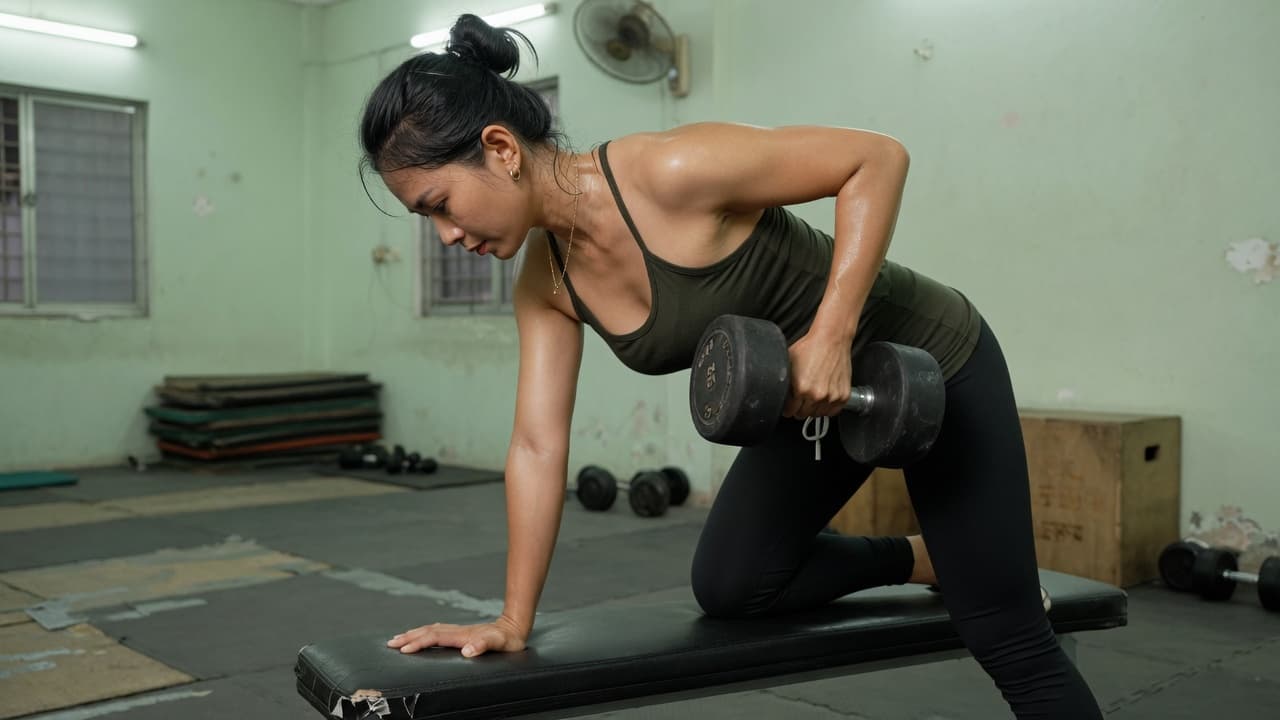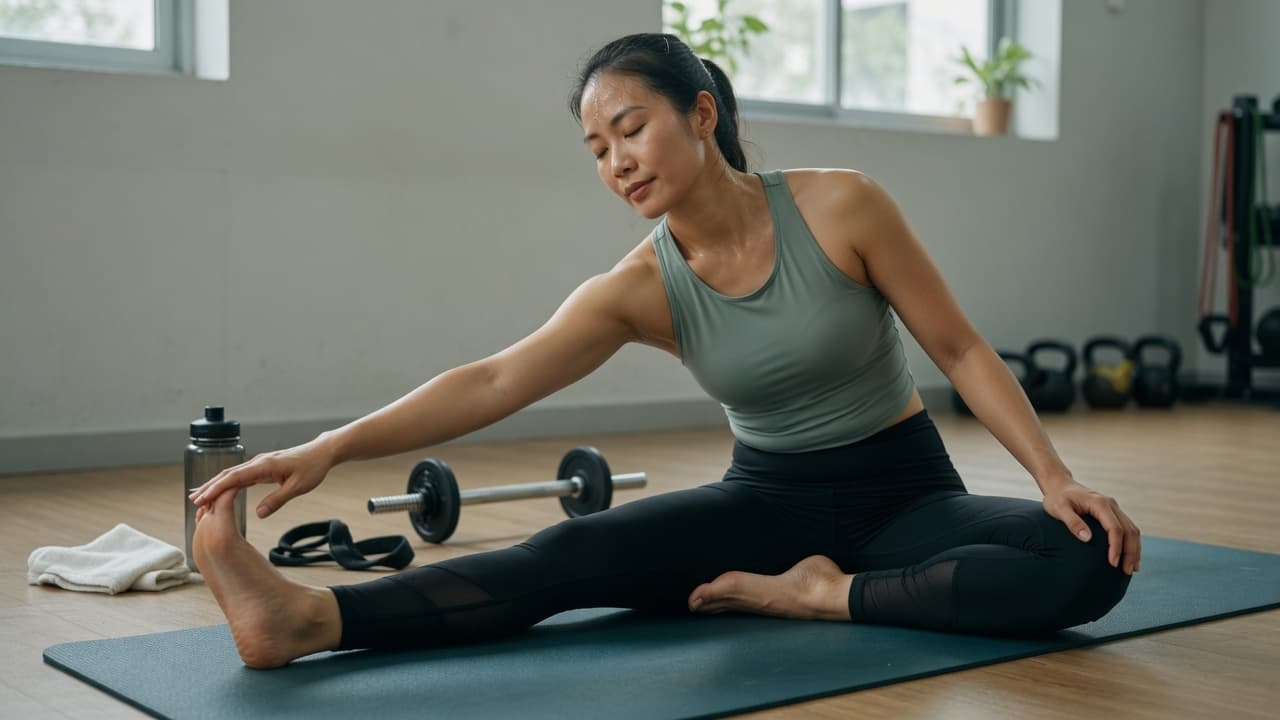
Hip abduction with a band or machine emphasizes the glute med — useful for pelvic stability in walking, easy running, and that “side-of-glute” feel. But it is an accessory: it does not replace squats, hinges (RDL/hip thrust), or split squats. A sensible frame is often around 2×12–15 after main lifts, with knee–hip cues so it does not become lumbar twisting.
Glute–thigh base: hip thrust and RDL for women. 3-day plan: 3-day glute–thigh plan for women. Squat form: squat form that spares the knees.
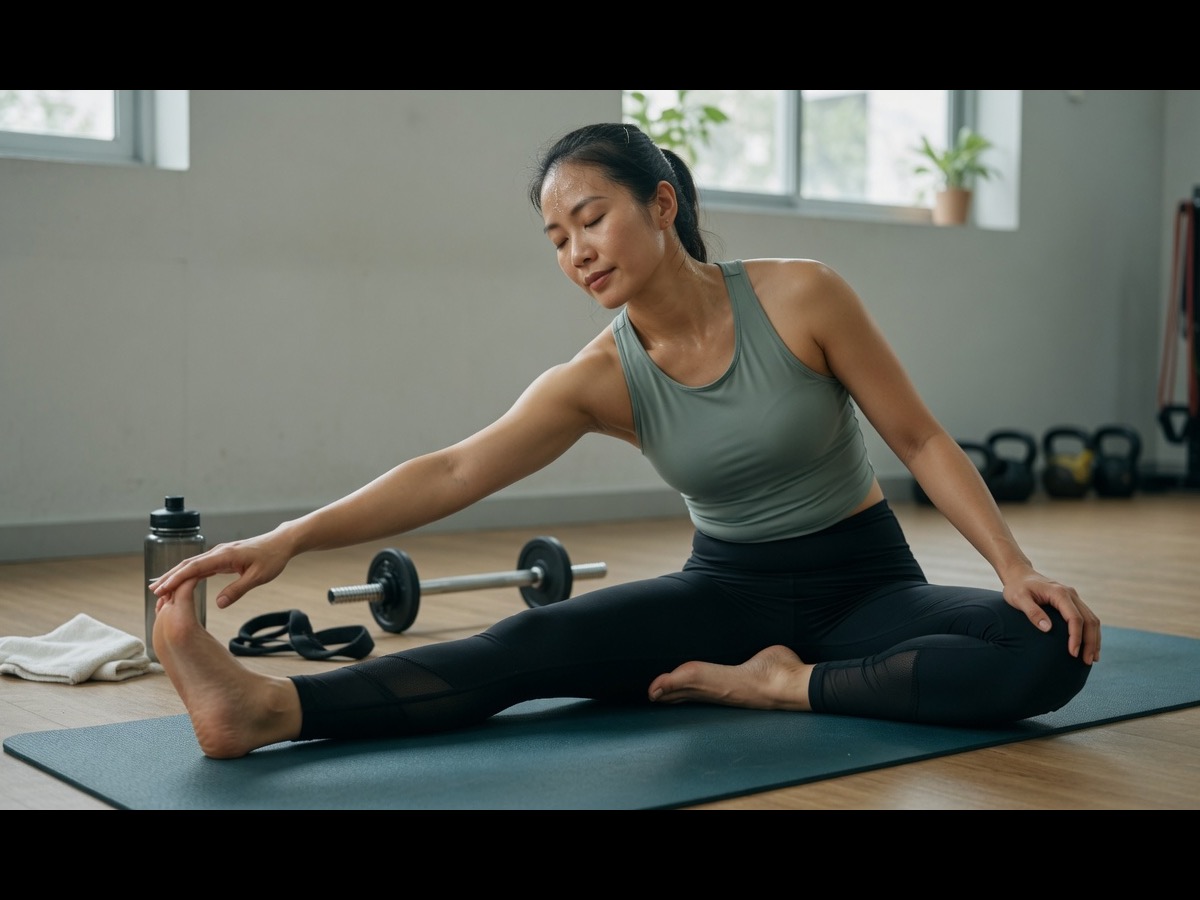
What abduction does — and does not
- Can: add glute-med stimulus, warm hip feel, accessory volume on leg days.
- Cannot: “grow glutes” with side kicks alone if you drop all thrusts/squats.
- Cannot: cure back–hip pain — lasting pain needs a professional, not self-prescribed bands.
Long-term glute shape comes from progressive hinge + squat patterns; bands are seasoning.
Band variations
Side-lying abduction
- Lie on your side, band above the knees or ankles (above the knees is often easier to control for beginners).
- Long torso, hips stacked; do not overarch the low back.
- Abduct the top leg slowly 2×12–15; squeeze the side glute, lower with control.
Lateral band walk
- Band above knees or ankles; sit lightly into a shallow half-squat.
- Short side steps, knees track over toes, torso does not tip for momentum.
- 8–12 steps/direction × 2 sets is enough after main lifts.
Hip abduction machine
Seated or per gym machine setup: both knees against pads, moderate range, no bouncing through the load. 2×12–15 RPE ~7. Add load when the top of the range is easy and the hip joint does not hurt.
| Tool | Suggested sets × reps | Place in the session |
|---|---|---|
| Band side-lying | 2×12–15/side | Finish or light warm-up |
| Lateral walk | 2×8–12 steps/direction | Warm-up or accessory |
| Abduction machine | 2×12–15 | After thrust/squat/RDL |
Knee cues and common faults
- Knees: keep lined with toes; do not let knees cave then “twist” for momentum.
- Hips: abduct from the hip; do not rotate the whole frame to send the foot farther.
- Back: avoid overarching the low back when side-lying to get the leg higher.
- Band too heavy: only 5 momentum reps → lighter band, prioritize clean 12–15.
- 10 band variants, zero RDL: flip the priority order back.
Fit into a glute–thigh week
After hip thrusts or squats on day A/B, add one of the variations above. Heavy hinge days: a short lateral walk as warm-up also works. About 4–6 total abduction accessory sets/week is enough for most non-specialist athletes.
- Compounds first (thrust, squat, RDL, split).
- Abduction / kickback accessories after.
- Progress compounds before buying a “max resistance” band.
When to reduce or stop
Sharp hip, groin, or back pain when abducting: reduce range, change variation, or drop the move and get checked if it lasts. Postpartum or pelvic-floor issues: ask a physio before adding band walks with a deep sit.
6-week progress (accessory, not compound replacement)
Weeks 1–2: learn lateral walk and side-lying with a light band, prioritize clean 12–15. Weeks 3–4: keep 2 accessory sets after leg days; raise band tension only when form does not twist. Weeks 5–6: you may add machine abduction 2×12–15 if available — still do not cut RDL/hip thrust to “make room” for bands.
- Log band color / machine number next to squat and thrust logs.
- Tired days or painful period weeks: keep a short walk warm-up, skip heavy machines.
- Do not measure success only by “side-glute burn” after kickbacks — compound loading is the long yardstick.
If the aesthetic goal is curves, slot abduction into an existing 3-day glute–thigh plan instead of opening extra band-only days. Few quality moves beat a long online variation list.
FAQ
1. Is the abduction machine alone enough for glutes?
Not as a foundation. Keep hip thrust/RDL/squat as pillars; abduction is a 2×12–15 accessory.
2. Band above the knees or ankles?
Knees are usually easier to control for beginners; ankles are harder. Pick the spot that allows clean 12–15 without hip twisting.
3. Needed every day?
No. 2–3×/week with leg days is fine. Daily heavy bands can irritate if recovery is poor.
General training technique — not diagnosis or treatment of hip–back–knee pain. Stop the move and see a clinician for sharp pain, numbness, swelling, or lasting pain. Pregnancy, postpartum, or joint injury need clearance before adding resisted abduction.