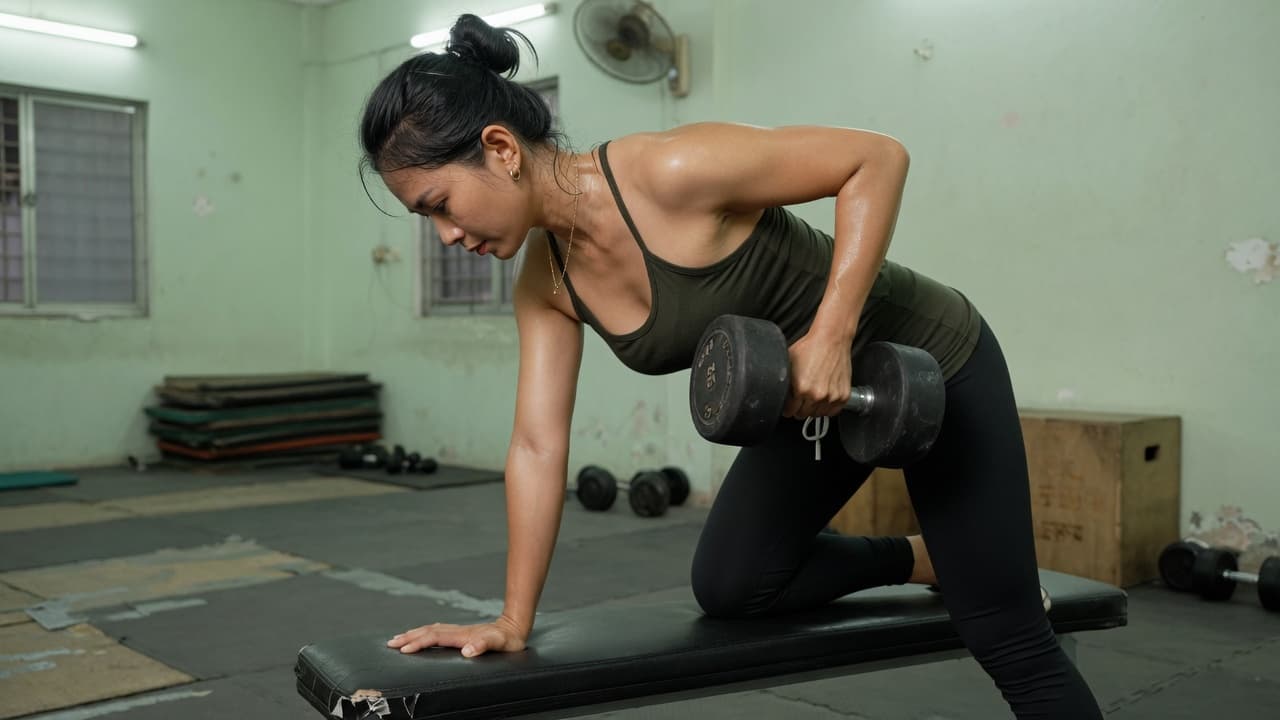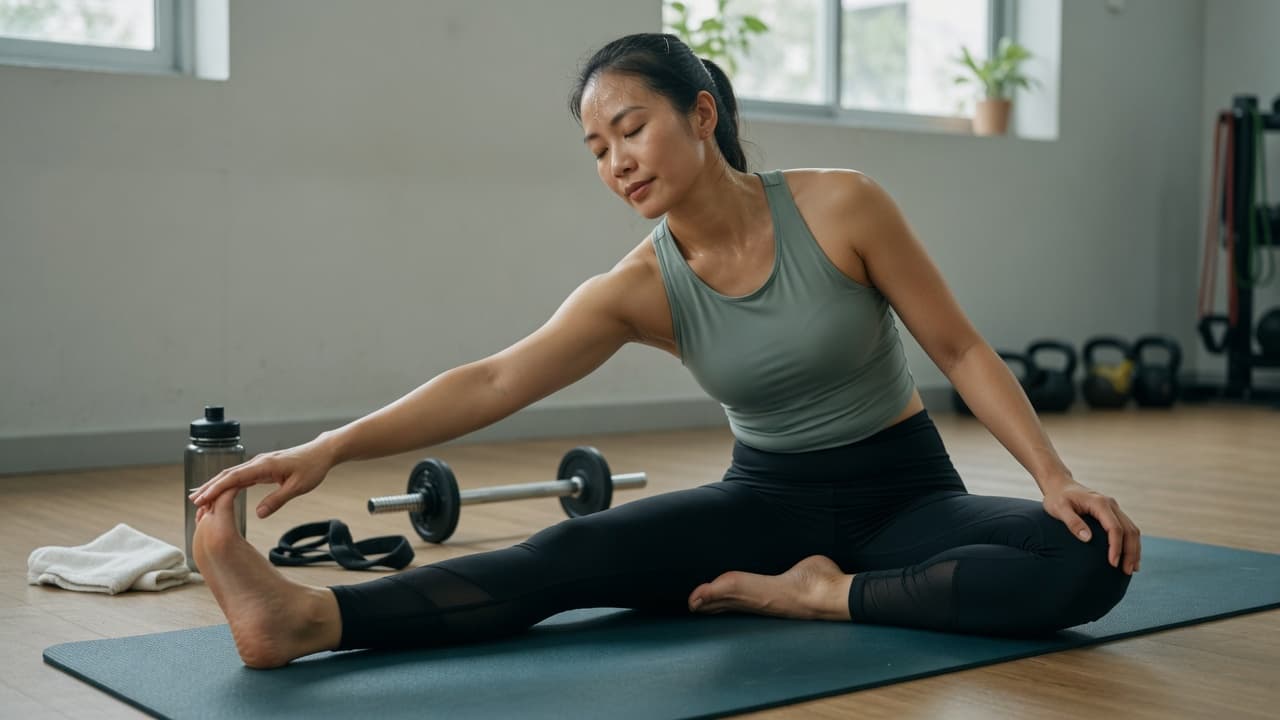
Want firmer, stronger glutes and thighs? Prioritize strength first, then think about “fat burn.” Three lower-body sessions a week — one hinge day, one squat-pattern day, one single-leg day — stimulate glutes, hamstrings, and quads without living on cardio machines. This article gives an A/B/C frame, sets–reps, rest, progression, and room for 1–2 back–shoulder sessions for balanced shape.
Women do not “accidentally become bodybuilders” just from heavy hip thrusts. Building glute muscle needs meaningful load, steady protein, and time; fat drops with a moderate deficit. If you worry lifting makes you bulky, read does lifting make women bulky? then return to the plan below.
Principles before you look at the schedule
- Strength before “burn”: protect 3 quality glute–leg sessions; add walking if you want more expenditure.
- 1–3 reps in reserve: last sets are hard but clean — no grinding the low back.
- Timed rest: compounds 90–120 seconds; isolation or band work 60–75 seconds.
- Weekly progress: add 1–2 reps or +2.5 kg when you hit clean target reps for 2 weeks straight.
The two pillar lifts here are hip thrust and Romanian deadlift. Setup, shin angle, and common faults are in hip thrust and RDL for women — read that before adding plates.
Sample weekly frame
| Day | Session | Focus | Duration |
|---|---|---|---|
| Monday | A – Hinge | Glutes + hamstrings + posterior chain | 45–55 minutes |
| Tuesday | Walk / active recovery | 7–9k steps | 30–45 minutes |
| Wednesday | B – Squat | Quads + glutes | 45–55 minutes |
| Thursday | Light back–shoulders (optional) | Horizontal pull + raises | 30–40 minutes |
| Friday | C – Unilateral | Side-to-side balance, glutes | 40–50 minutes |
| Sun or Sat | Rest / short walk | Sleep and recovery | — |
If the week only fits three lower slots, drop the back–shoulder day temporarily or tuck 2–3 pulling moves at the end of session A. When you want a V-taper and better shoulder posture, prioritize back–shoulder training for women without fear of getting bulky instead of hundreds of mirror biceps curls.
Session A – Hinge (Monday)
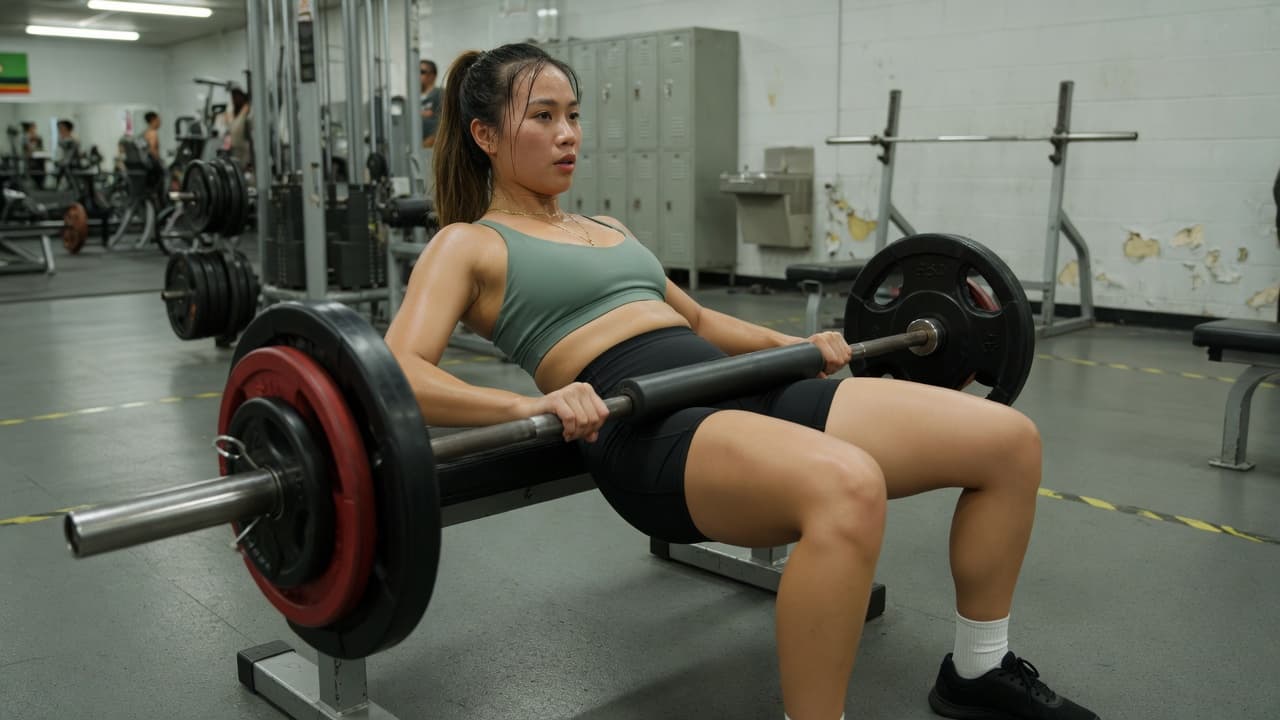
- Barbell or machine hip thrust: 3–4×6–10
- Romanian deadlift (bar or dumbbells): 3×6–10
- Cable pull-through or light 45° back extension: 2–3×10–12
- Single-leg glute bridge (bodyweight or light load): 2×8–10/side
- Standing calf raise: 2×10–15
Quick cues: on hip thrust, chin slightly tucked, ribs down, stop when torso and thighs make a straight line — do not over-arch the low back to “push higher.” On RDL, send hips back, shins nearly vertical, feel the hamstring stretch; bar stays close to the shins.
Session B – Squat pattern (Wednesday)
- Goblet squat or front/back squat (whichever you do cleanest): 3×6–10
- Leg press with feet low–mid (if available): 3×8–12 or swap for a machine squat
- Lighter hip thrust than day A or controlled band frog pumps: 2–3×10–15
- Lying/seated leg curl: 2–3×8–12
- Side plank or short Copenhagen if joints allow: 2×20–30 seconds/side
Do not buy depth by letting knees cave in. Knees track toward the toes; chest stays moderately open. If knees complain, reduce depth, control a 3-second descent, and prefer the variation you load well over “matching the video.”
Session C – Unilateral (Friday)
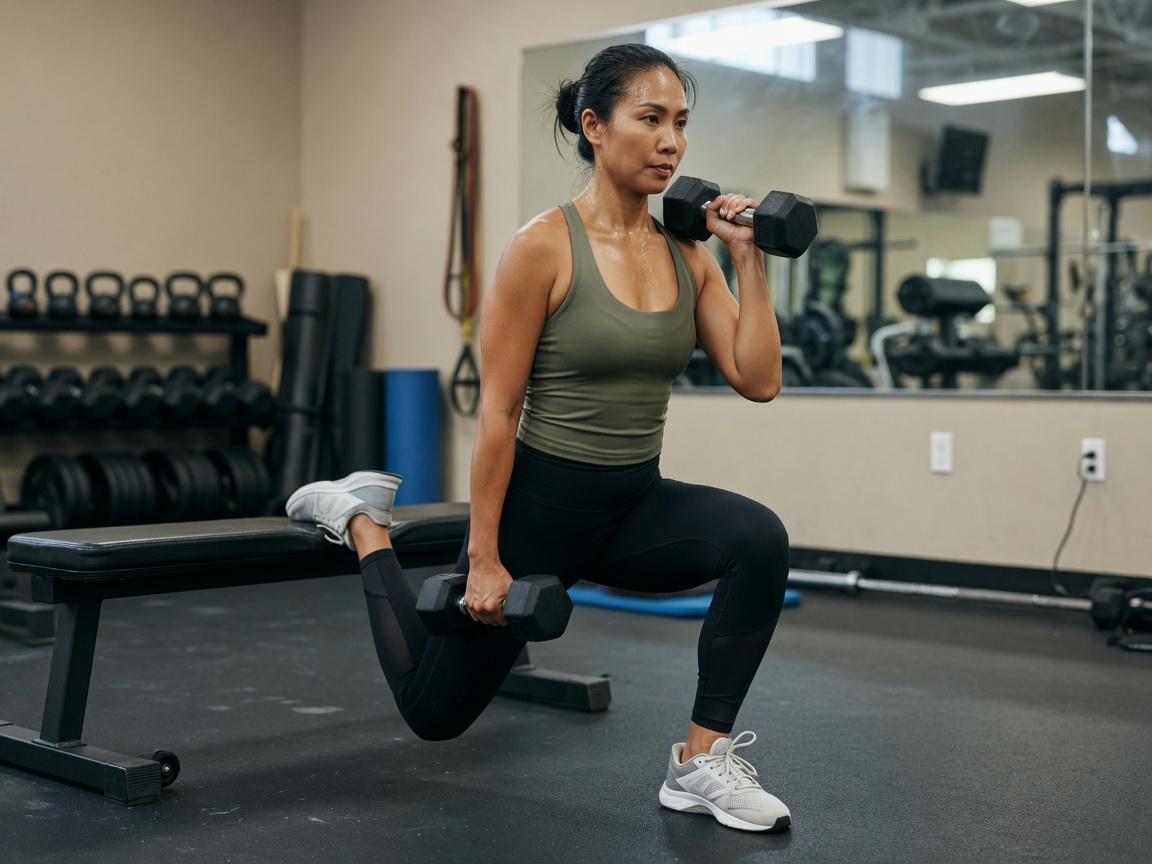
- Bulgarian / rear-foot elevated split squat: 3×8–10/leg
- Low–moderate box step-up: 2–3×8/leg
- Single-leg RDL with light–moderate dumbbell: 2–3×8/leg
- Lateral band walk or monster walk: 2×10–12 steps/direction
- Dead bug: 2×6–8/side
Unilateral days fix side-to-side strength gaps and hit the glutes differently than bilateral hinge/squat. Stay tall; do not lean hard onto the back leg. Rest enough between legs if heart rate kills your balance.
6–8 minute warm-up (every lower day)
- Hip, ankle, shoulder circles: 1 minute.
- Bodyweight squat or unloaded hinge: 1×8–10.
- Unloaded glute bridge: 1×10.
- One very light set of the day’s main lift (e.g. empty-bar hip thrust).
Progression over 8–12 weeks
Weeks 1–2: learn form; log load–reps. Weeks 3–6: add load first on hip thrust, RDL, and squat/split squat; keep accessories steady. Weeks 7–8: add one set on main lifts or trim rest 10–15 seconds if recovery is good. After an 8–12 week block, deload 1 week (~60–70% load or drop 1 set) then repeat the cycle.
Quick formula: 3 lower days + steps + enough protein beats “burn fat 7 days then quit from exhaustion.”
Eating while building glutes–thighs
Fuller glutes long term usually need a phase near maintenance or a small surplus — not a deep cut. Protein from Vietnamese-style rice–meat–fish–eggs–beans sticks better than “shakes only.” Calorie and meal frames: Vietnamese-style muscle menu for women. If the current goal is fat loss while keeping curves, keep these three sessions and only a mild deficit — do not zero carbs before every leg day.
Common mistakes
- Hundreds of band kickbacks while skipping loaded hinges and squats.
- Hip thrusting by over-arching the low back instead of extending the hips.
- Turning RDLs into half-squats with too much knee bend.
- Skipping day C because single-leg work feels awkward — that is often where asymmetries show.
- Daily leg HIIT on top of three hard lower days → overloaded knees and hips.
FAQ
Will three leg days make my legs bulky fast?
You will get firmer and stronger; circumference changes slowly and depends on genetics, calories, and protein. Most natural trainees do not “blow up like pros” from a few months of split squats. If pants feel tighter from denser muscle while waist is down, that is usually redistribution — not a sudden bulk accident.
Do I need a hack squat and five cable machines?
No. Hip thrust, RDL, goblet/squat, split squat, and one hamstring curl cover most of the stimulus. Machines are convenient variants when the floor is crowded or you want less balance demand.
I can only do two lower days a week?
Alternate A and B; add 1–2 unilateral moves at the end of each. Still walk the other days. Two quality consistent sessions beat three you abandon mid-week.
This is general fitness education, not medical advice or a treatment plan. Joint pain, old injuries, heart disease, pregnancy, or postpartum — get clearance from a doctor/physical therapist before raising lower-body load. Stop and seek care for sharp pain, unusual numbness, or dizziness.