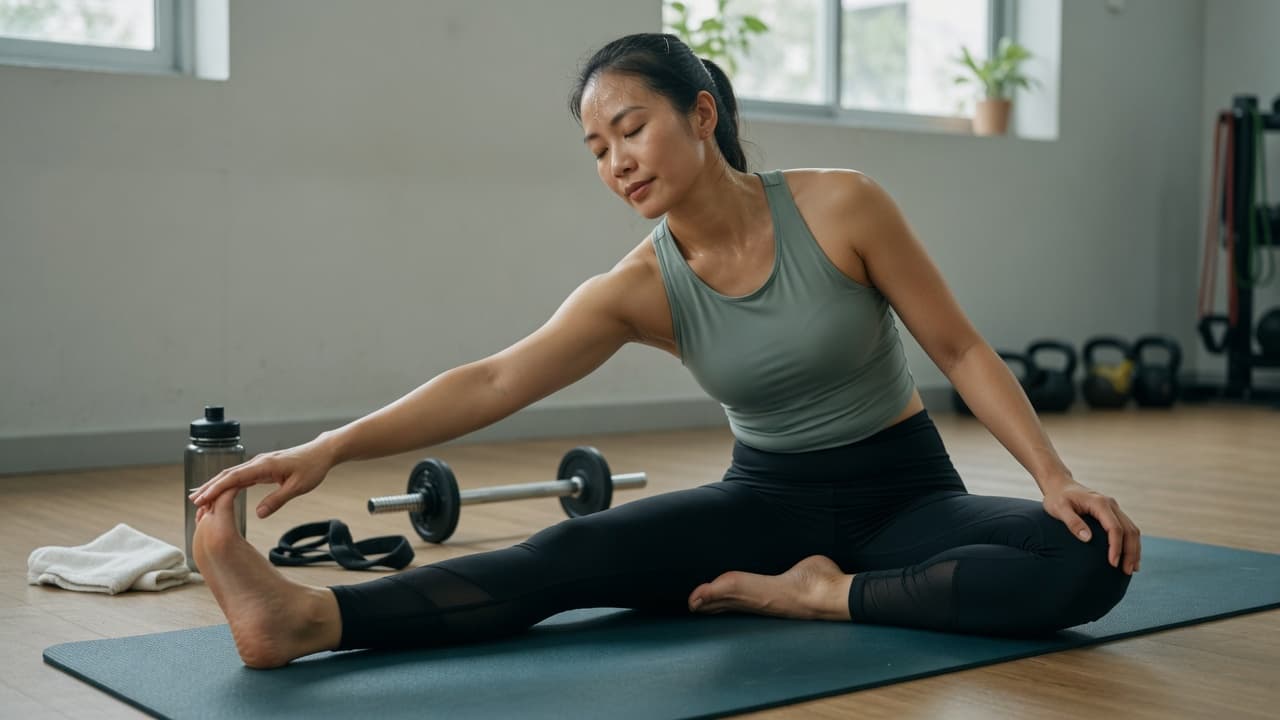
A moderately thick back and strong mid–rear shoulders create a soft V-taper — the waist looks tighter without hours of “arm toning.” Many people fear rows and raises because they think their arms will get bulky. In practice, sensible back–mid-shoulder volume rarely balloons the arms the way social media worries suggest; the first changes are usually taller posture and fitted shirts that sit cleaner on the shoulders. This article lists the moves, how to split delt vs arm volume, and how to plug them into a beginner women’s plan.
If you are stuck on “weights = bulky,” also read does lifting make women bulky?. Month-one full-body can start from the first-month gym plan for women, then add the back–shoulder block below once rowing machines feel familiar.
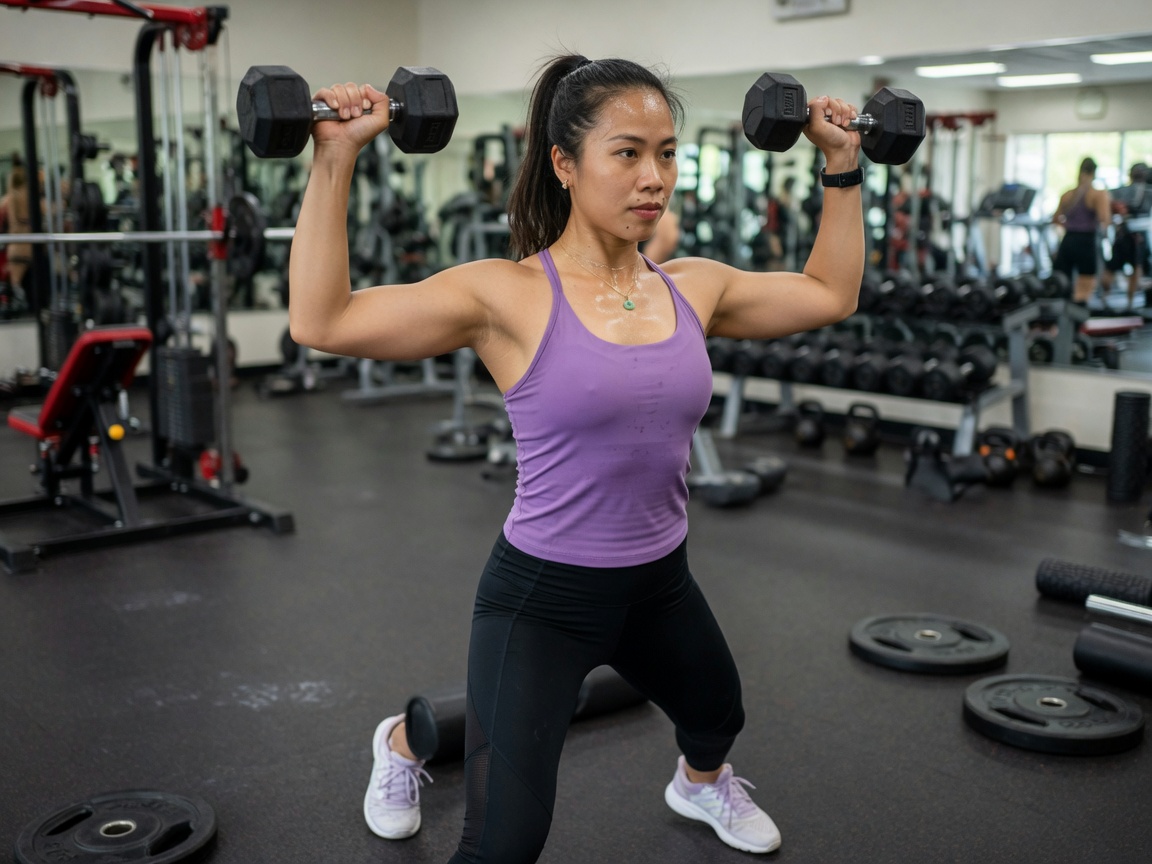
Where does the V come from?
- Moderately wide–thick back: pulldowns / vertical pulls and rows / horizontal pulls.
- Side delts: controlled lateral raises.
- Rear delts + stable shoulder girdle: face pulls, light reverse flies.
- Waist contrast: keep trunk muscle and manage overall fat — not 500 biceps curls.
Biceps already get indirect work from pulling. Adding 1–2 light curl sets at the end is fine, but do not let curls eat half the session while rows disappear.
Sample back–shoulder session (30–40 minutes)
- Seated row or chest-supported row: 3×6–10
- Lat pulldown (moderate-wide or neutral grip): 3×8–12
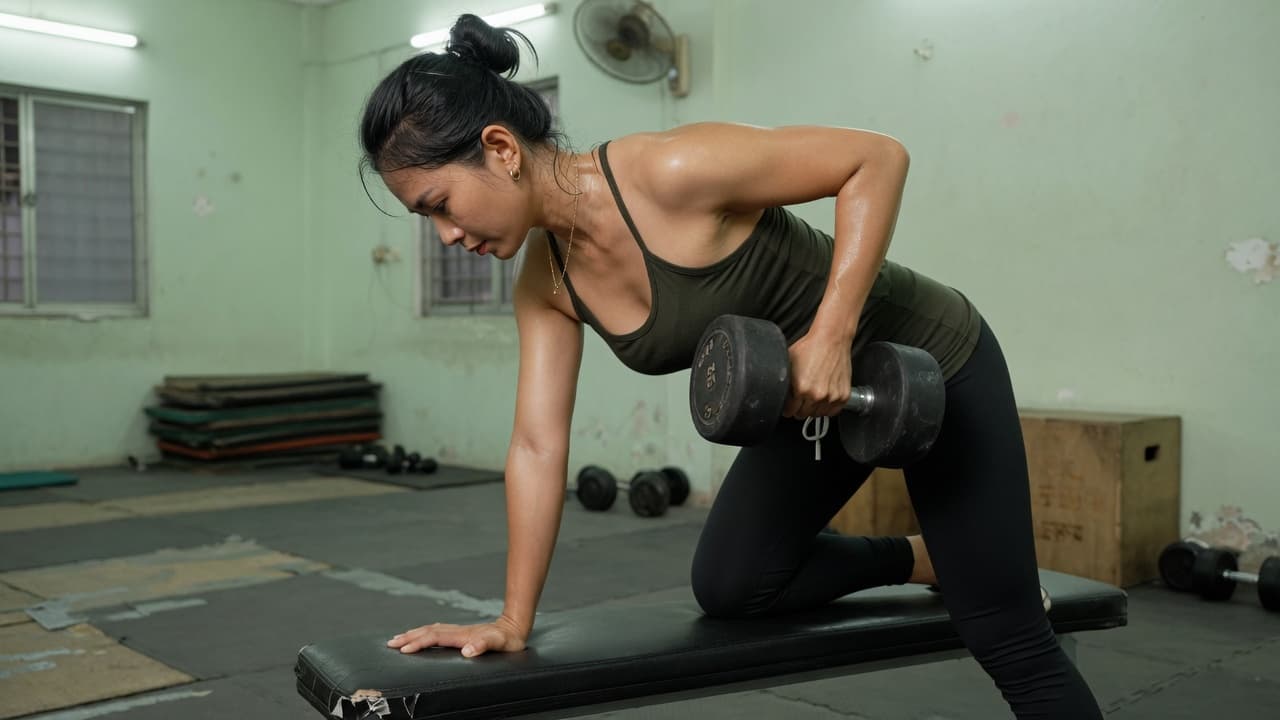
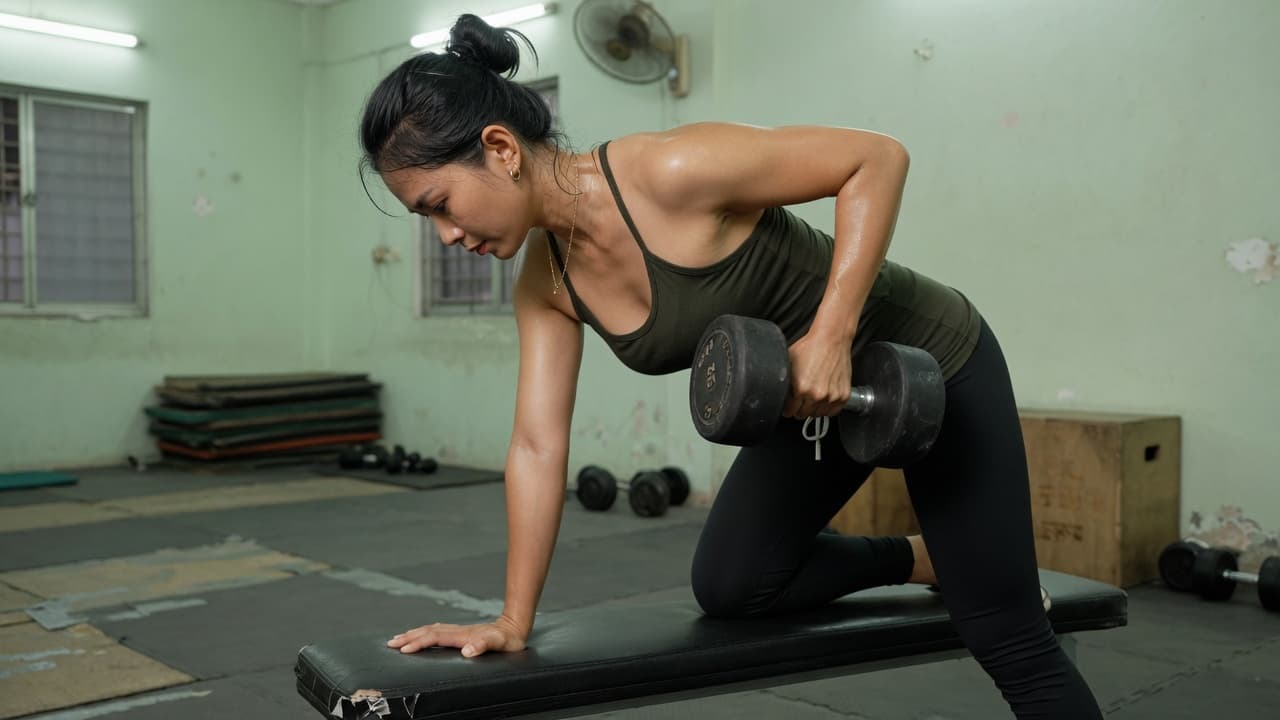
- One-arm dumbbell row: 2–3×8–10/side
- Light lateral raise: 3×12–15
- Band/cable face pull: 2–3×12–15
- Optional: light biceps curl 1–2×10–12 if time remains
Rest: row/pulldown 90 seconds; raise/face pull 60–75 seconds. RPE about 7: last sets hard without swinging the whole torso to “steal” reps.
Short technique cues
Row
Pull elbows toward the hips/pockets, chest open, avoid shrugging to the ears. Feel the shoulder blades squeeze; do not just bend the elbows with momentum.
Pulldown
Bring the bar to about collarbone–upper chest, tiny torso lean if needed — do not lean way back so the chest “chases” the bar. Control the way up.
Lateral raise
Soft elbows, raise to about shoulder height, as if pouring lightly from a pitcher. Light–moderate weight beats heavy swinging. Sharp front-shoulder pain: shrink range; check you are not shrugging the traps.
Face pull
Pull toward the face/forehead, gentle external rotation with elbows high, open the chest. Do not turn it into a neck shrug.
Quick reminder: pull more than you curl, controlled raises beat heavy swinging, good posture beats “big arms at any cost.”
Volume: delts vs arms
| Group | Suggested sets/week (average trainee) | Notes |
|---|---|---|
| Horizontal pull (row) | 6–10 | Foundation for back thickness and posture |
| Vertical pull (pulldown/assisted pull-up) | 6–9 | Moderate “width” feel |
| Lateral raise | 6–9 | Key for a soft rounded shoulder |
| Face pull / reverse fly | 4–8 | Rear delts + shoulder-girdle health |
| Biceps curl | 0–4 | Accessory; already covered by rows |
| Heavy triceps work | 0–4 | Add only if pressing underserves them |
Beginners on 3 full-body days already pull each session — just do not skip rows. When you add a dedicated back–shoulder day, do not suddenly double volume: start with one 30-minute accessory day, then adjust.
How to fit it into the week
- 3-day full-body: keep row + pulldown in A/B; add 2 sets of raises/face pulls at the end of 1–2 sessions.
- Extra accessory day: Thursday runs the sample session above; keep legs on other days.
- Heavy desk sitting: face pulls and rows matter more than curls — they fight rounding and forward shoulders.
Posture: visible wins before “big muscles”
Consistent pulling helps the shoulder blades move better and keeps the head from drifting forward at a laptop. Many people see shirts and blouses “fit the shape” before arm circumference changes much. That is the right signal — not proof you are “ruining a feminine frame.”
Clear arm growth needs a calorie surplus, high protein, and intentional arm volume over a long time. Three raise sets and two curl sets in a deficit rarely build athlete arms.
Common mistakes
- Only chest press + biceps, skip pulling → shoulders drift forward, weak V shape.
- Lateral raises too heavy with full-body swinging.
- Behind-the-neck pulldowns when they feel awkward — prefer to the front.
- Fear of bulk so you stay on tiny bands forever and never progress load.
- Twenty cable variations in one session instead of four quality moves.
8-week progress
Weeks 1–2: learn the scapular squeeze; very light raises. Weeks 3–6: add load on row/pulldown first; raises add reps then small kg jumps. Weeks 7–8: hold or add 1 face-pull set if shoulders feel good. Light deload if sleep is poor or pain lingers.
FAQ
Will back–shoulder training make my shoulders “as wide as a man’s”?
Shoulders get firmer and rounder depending on genetics and training time. Most natural trainees look more balanced — not like elite athletes from lateral raises alone. If you dislike high raise volume, keep it moderate and prioritize rows for posture.
Front of the shoulder hurts on raises?
Shrink range, lower the weight, check you are not shrugging traps, and prioritize face pulls and rows first. Lasting sharp pain or sudden weakness: stop and get checked — this article does not diagnose injuries.
Do I need unassisted pull-ups?
Not required. Pulldowns and assisted pull-ups already stimulate well. Unassisted pull-ups are an optional goal once pulling strength and scapular control are ready.
This is general fitness education, not medical advice. Acute neck–shoulder pain, dislocation/shoulder-girdle injury history, heart disease, pregnancy, or postpartum — get clinical clearance before raising pull and raise volume. Stop for sharp pain, hand numbness, or unusual dizziness.