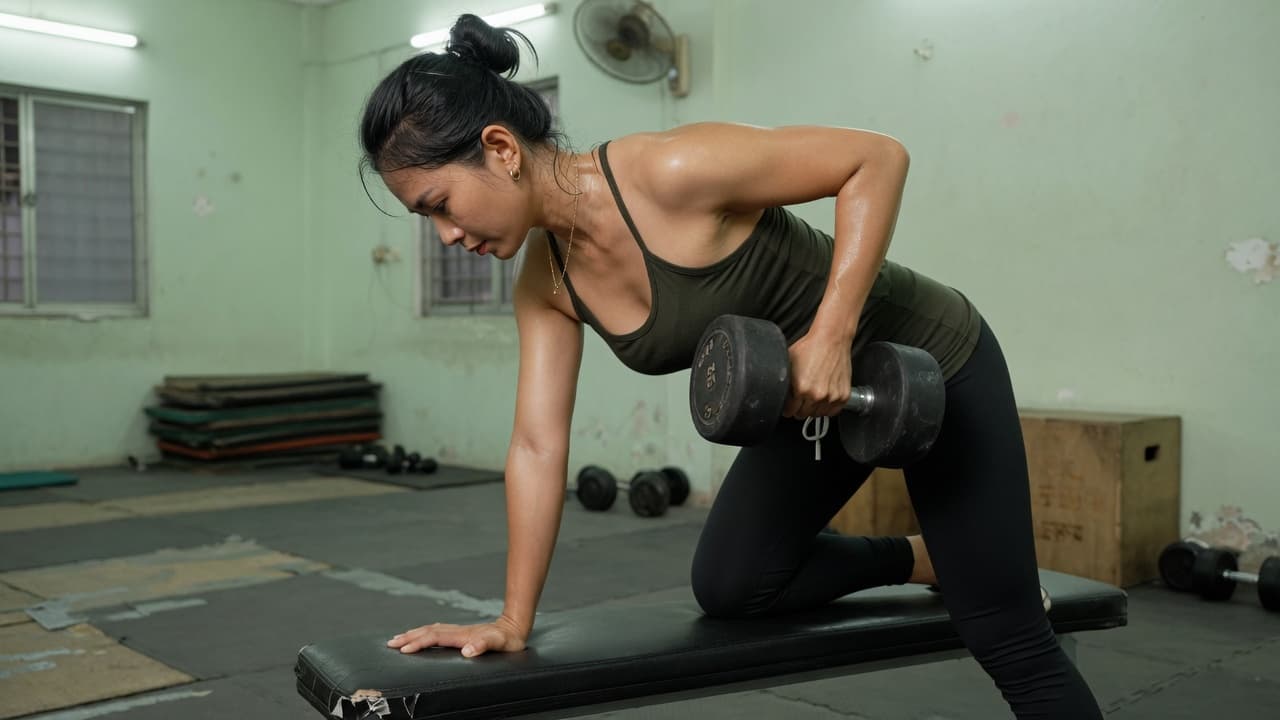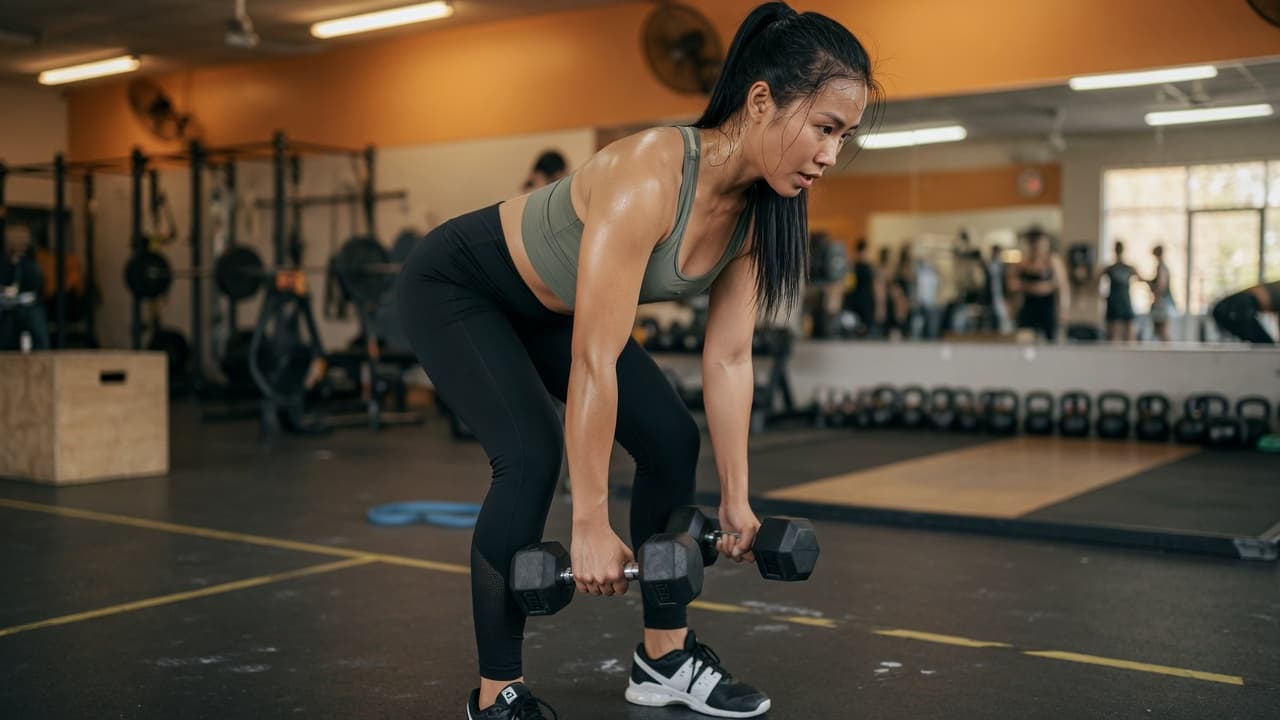
Two foundation lifts for firmer glutes and a stronger posterior chain: the hip thrust (loaded hip extension) and the Romanian deadlift – RDL (hip hinge). They do not fully replace each other: thrusts emphasize the glutes in a strong shortened range; RDLs emphasize hamstrings and controlled hinging with a neutral spine. Knowing setup, shin angle, hinge vs squat differences, and common faults lets you add load safely instead of chasing a “burn” with endless band kickbacks.
Plug them into a lower week via the 3-day glute–thigh plan for women. Squats still matter but are a different pattern — see squat form that spares the knees when knees complain.
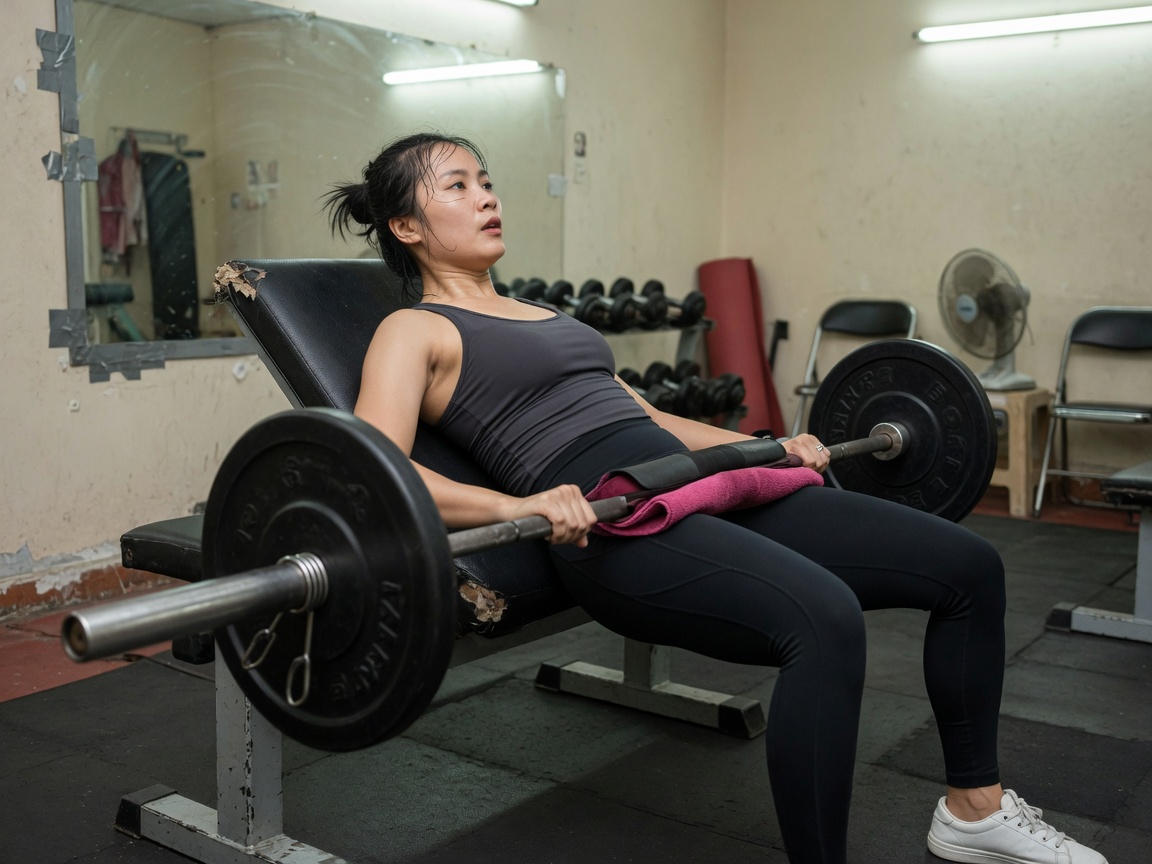
Hip thrust: setup step by step
- Upper back on a sturdy bench (bench edge roughly below the shoulder blades).
- Bar or weight across the hip crease; use a pad if bones hurt.
- Feet about shoulder-width or slightly narrower; close enough that at lockout the shins are nearly vertical (shins shoved too far forward steal glute leverage).
- Chin slightly tucked, ribs down, eyes looking slightly down in front of you.
- Drive through heels/mid-foot; extend hips until torso and thighs align; squeeze glutes 1 second at the top.
- Lower with control; do not dump the bar onto the wrists or over-arch the low back to go “higher.”
Shins: feet too far away and you push more with the quads and lose the glute feel. Too close and knees may complain. Nudge 2–3 cm at a time until the top feels clearly glute-driven with knees around 90°.
RDL: hinge, not a half-squat
- Stand with a bar or two dumbbells, soft straight arms, braced trunk.
- Inhale, light brace; push the hips back as if closing a door with your glutes.
- Shins nearly vertical; knees only soft enough — do not turn it into a squat.
- Bar close to shins/thighs; long spine, moderately open chest — neither rounded nor over-arched.
- Lower only as far as you keep a neutral spine (often around below the knees for average mobility).
- Push the floor, bring hips forward, stand tall; do not hyper-extend the low back at the top.
One-line difference: squat = knees and hips both bend more; RDL = hips go back, shins stay vertical. Mixing the two is why the low back or knees feel “pulled wrong.”
Hinge vs squat — when to use which
| Pattern | Examples | Emphasis | Notes for glute-focused training |
|---|---|---|---|
| Hip extension with more fixed knees | Hip thrust, bridge | Glutes shortened | Pillar of hinge day |
| Hinge | RDL, light good morning | Hamstrings + glutes + back control | Teaches hips going back |
| Squat pattern | Goblet, barbell squat, leg press | Quads + glutes | Its own day in a 3-day plan |
| Unilateral | Split squat, single-leg RDL | Side-to-side balance | Exposes form asymmetries |
Sets–reps and when to add load
Base suggestion: 3×6–10 for both hip thrust and RDL with 1–3 reps in reserve. Beginners can start 3×8 while learning form.
- Hit clean reps at ~RPE 7 for two weeks straight → add +2.5 kg (bar) or the next dumbbell step.
- Form already broken by set 2 → drop load; do not grind “just to hit the number.”
- You can cycle: 3–4 weeks biased to heavier 6–8 reps, then 1 lighter 8–10 technique week.
- Single-leg bridges or a 2-second pause at thrust lockout when you lack plates but want more difficulty.
Rest between heavy sets: 2 minutes if needed — glutes and the posterior chain respond better to enough rest than to 30-second circuit rests.
Common faults and fixes
Hip thrust
- Low-back arch at the top: drop the ribs; think “bring the hips through,” not “chest to the ceiling.”
- Mostly quads driving: pull the feet a bit closer; feel heel drive.
- Chin up, neck strained: keep eyes on a fixed point ahead and slightly down.
- Bar digs painfully: use a pad; place it on the hip crease.
RDL
- Too much knee bend → becomes a squat: think “vertical shins, hips travel back.”
- Rounded back from chasing depth: shorten range; improve mobility gradually — do not force centimeters.
- Bar drifts from the legs: loses leverage, easier to yank the back — keep it close to the shins.
- Standing up by hard over-arching: squeeze glutes to bring hips through; ribs down.
Order in the session
Usually place hip thrust or RDL in the first half after the warm-up, while focus is high. If both are in the same day: prioritize the lift you want to load hardest first (e.g. thrust 3–4 sets, then lighter–moderate RDL 2–3 sets). On a dedicated squat day you may keep only a light bridge or skip heavy RDLs.
Who should be careful?
Acute back pain, sharp pubic/hip pain, dizziness with fast lie-to-stand changes, or no postpartum clearance yet: do not self-load up. This article is not physical therapy. Beginners can learn floor bridges and unloaded hinges before a bar.
FAQ
Are hip thrusts alone enough for glutes?
Thrusts are excellent but pair them with a hinge (RDL), squat/split work, and steps in the week. Pattern variety balances thighs–glutes–posterior chain and reduces boredom.
Can RDLs replace conventional deadlifts?
For glute–hamstring goals and learning the hinge, RDLs are often enough and easier to control for range. Floor deadlifts are a different skill (pulling from the floor); add them only when the hinge is clean and you have suitable coaching/setup.
How long until glutes look firmer?
Strength often rises in a few weeks; clear shape change usually takes many weeks to months with progressive load, steady protein, and same-condition photos/form checks. Do not judge by the scale alone.
This is general lifting-technique education, not medical advice or an injury diagnosis. Back–hip–knee pain, osteoporosis, pregnancy, or postpartum — get clearance and guidance from a doctor/physical therapist before loaded hip thrusts or RDLs. Stop immediately for sharp pain, numbness, or loss of spinal control.