Post-workout stretching is not for “burning fat” or replacing a warm-up. Its job is to help you come down, ease tightness in areas that stiffen from sitting and lifting, and keep usable range for the next session. This article picks six positions focused on hips, chest, and hamstrings — short enough to actually do, clear enough not to force bad positions.
Do them when muscles are already warm after training. Hold each pose by breath count, no bouncing, no trying to set a depth PR in one night.
Before you start: non-negotiable rules
- Sharp pain means back off: mild–moderate stretch is fine; sharp pain, radiating numbness, or inability to breathe means stop.
- Count breaths, not only seconds: 5–8 slow breaths per pose (about 30–60 seconds) is easier to sustain than watching a clock.
- Do both sides: the tighter side can get 1–2 extra breaths; do not skip the easier side.
- Not a warm-up replacement: long static stretching before heavy sets is not this sequence’s job. Pre-session work should stay dynamic, as in the 8-minute pre-lift warm-up.
Six post-workout positions
1. 90/90 hip opener (seated)
Sit on the floor with the front leg making about 90 degrees at hip and knee; the back leg folds similarly rotated to the side. Keep a long spine; lean slightly forward in a controlled range if you want more front-hip sensation on the seated side. 5–8 breaths each rotation direction.
Tip: if knees complain, sit on a pad to reduce pressure.
2. Lunging hip flexor (front of hip)
Step one foot forward into a short lunge, back knee on the mat. Gently tuck the pelvis under (avoid over-arching the low back) until you feel stretch in the front hip of the back leg. The same-side arm can reach lightly overhead for more opening. 6–8 breaths each side.
Tip: desk workers are often tight here — a light version on leg days or rest days helps, especially if you are building the base in leg training for office workers.
3. Low figure-four / pigeon variation
From hands and knees, bring one leg forward bent; lower the hips as far as they allow. Keep hips roughly level; do not dump hard to one side. 5–7 breaths each side.
Tip: if the front knee is unhappy, pull the heel closer or pad the knee. Do not force the chest to the floor just because a video can.
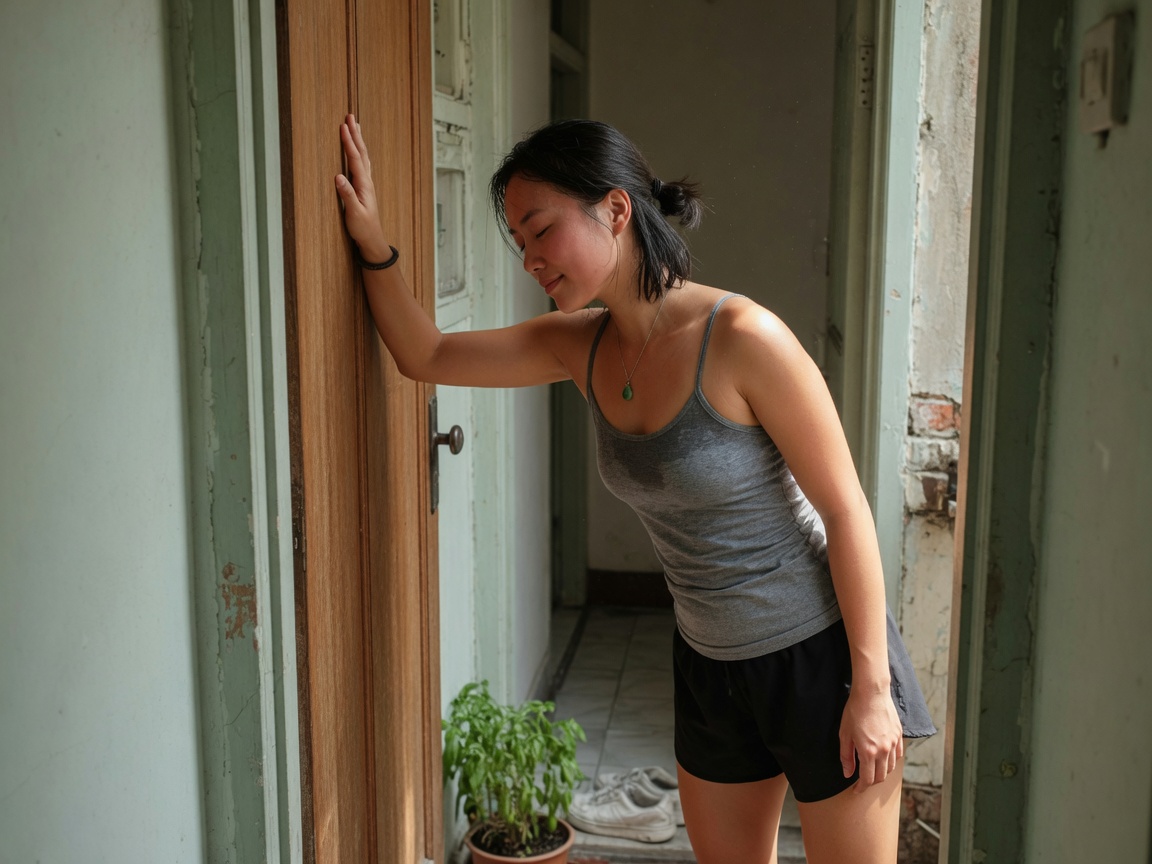
4. Chest opener at a doorway or wall
Place a forearm on a doorframe or wall, elbow at shoulder height or slightly below. Rotate the torso away from that arm until you feel a mild stretch in the chest and front of the shoulder. 5–8 breaths each side.
Tip: after pressing days or rounded computer posture, this makes standing and breathing easier. Avoid compensating with a low-back arch.
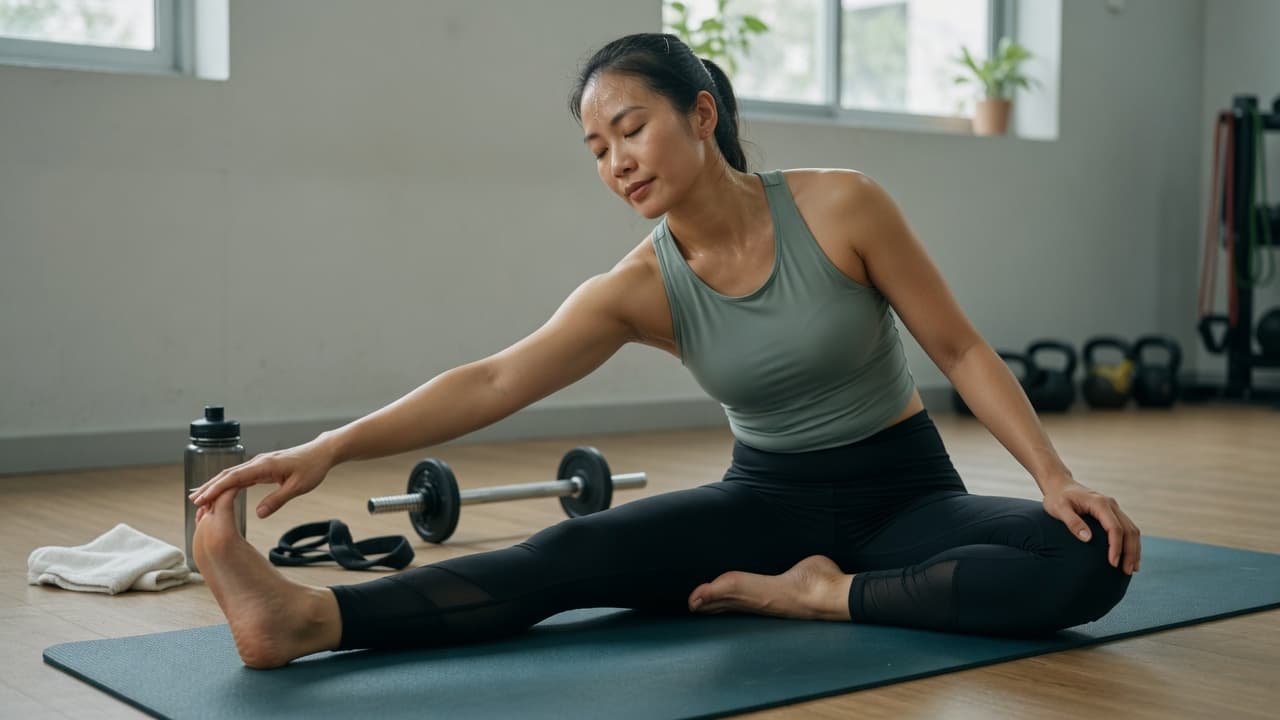
5. Single-leg seated hamstring (or standing hinge)
Sit with one leg long, the other bent comfortably. Hinge from the hips toward the long leg; the back does not need to round fully — keep the stretch feeling in the back of the thigh. 6–8 breaths each side.
Tip: keep a soft knee if the area behind the knee gets nervey. Do not yank the toes hard with your hands just to “go deeper.”
6. Child’s pose to settle back and hips
Kneel, hips toward heels, arms reach forward, forehead to the mat if it reaches. Breathe the belly into the floor. This is the closer to bring heart rate down. 8–10 breaths.
Tip: widen the knees if the belly or hips complain; pad the knees if needed.
All six in about 8–12 minutes is enough for most sessions. Consistency beats one “super deep” session you then abandon.
How to breathe while stretching
Inhale through nose or mouth at a natural pace; exhale one beat longer than the inhale. On each exhale, let the muscle ease a little more — do not shove deeper with your arms. If you are holding your breath, the range is too ambitious.
Breath counting keeps you present instead of scrolling in parallel. If you lose count, restart at breath one of that pose.
When stretching is not the answer
- Acute joint pain or swelling: rest and assess; do not stretch hard into inflamed tissue.
- Hard cramps: gentle lengthening plus fluids/electrolytes as needed; do not force depth immediately.
- Before maximal sets: prioritize dynamic warm-up and feeler sets.
- When you actually need sleep and food: ten minutes of stretching will not rescue a week of 5-hour nights.
Stretching also does not fix bad form. If hamstrings feel “tight” because your hinge is wrong or your back rounds on deadlifts, fix technique and volume before blaming muscle length alone.
Fit it into the training week
- After leg days: prioritize poses 1, 2, 3, 5, 6.
- After upper pressing: prioritize 4 and 6; add 2 if you sit a lot.
- Rest days: pick your 3 tightest poses; do them lightly after a walk.
- Short on time: skip completing all six — hit the loudest complaining area.
Note quickly in your log which areas feel better after 2 weeks. If nothing changes despite consistent stretching, review your chair, sleep, and training load — stretching is only one link.
Common mistakes
- Bouncing deeper (ballistic) when muscles are already tired.
- Holding the breath and turning red to “suffer for gains.”
- Comparing range to long-time yoga practitioners online.
- Stretching cold first thing instead of after movement.
- Forcing the chest to the floor in every hip pose just for photos.
FAQ
Does post-workout stretching reduce next-day soreness?
It can help you feel better and keep range, but evidence for strongly reducing DOMS is mixed. Treat it as joint and nervous-system care, not a soreness off-switch. Sleep, protein, and volume management still matter more.
Can I stretch in the morning instead of after training?
Yes if you use a lighter version and favor movement. Mornings are often colder — shrink range and add a few marches first. The six poses here work best when already warm after training.
How long until hips and chest feel less stiff?
Many people breathe and sit deeper more easily after 1–2 consistent weeks. Bigger posture and strength changes still need more strength work and standing/walking breaks at work. Measure by sit-to-stand feel and light squat form — not only by “how deep the stretch felt.”
Disclaimer: These positions are references for healthy people. Do not use this article to self-treat injuries. Low-back pain radiating down a leg, hand numbness, or unexplained chest pain — seek medical help instead of stretching harder.