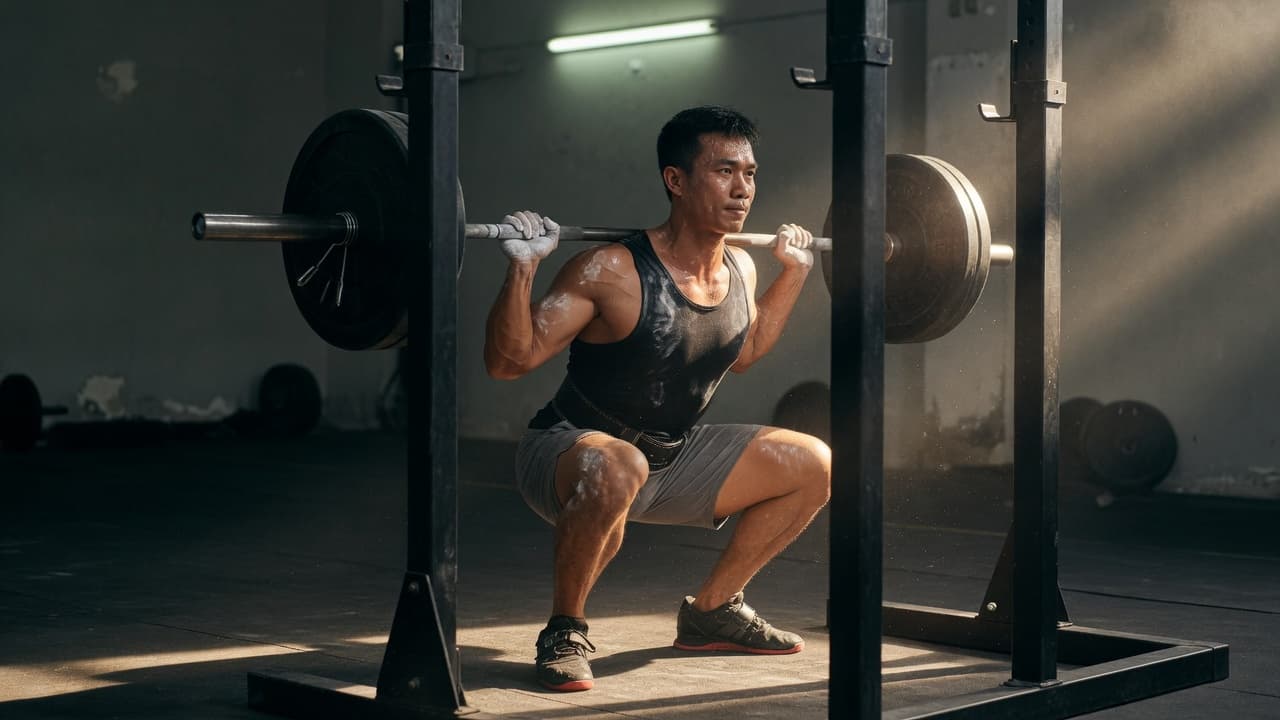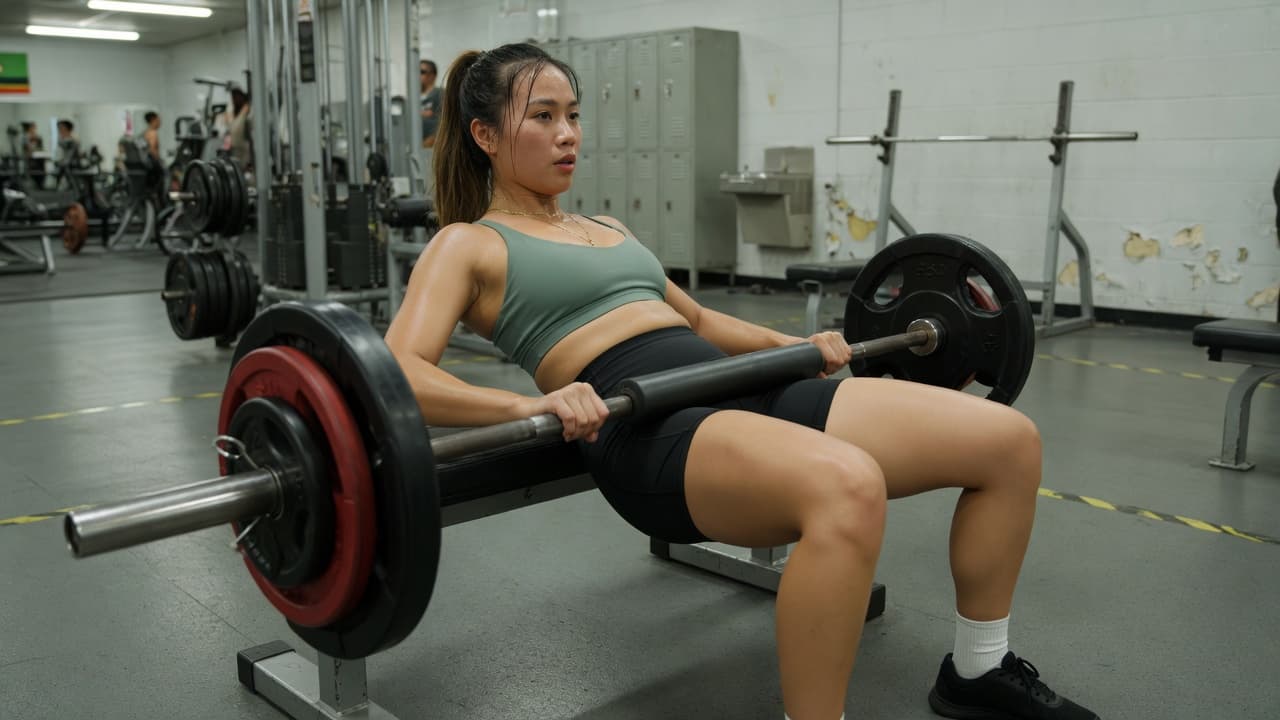
When a rest day becomes a “60-minute yoga flow that feels like leg day,” you do not have a rest day — you have another fatiguing session. Light yoga for 15 minutes focused on hips and chest, breath-led, is enough to keep range of motion and settle the nervous system without wrecking recovery after heavy squats.
The sequence below is not a full traditional curriculum; it is a practical pack for lifters who need an easy off day.
Rest-day principles
- Duration: about 12–15 minutes — do not “add one more sun salutation because you still have energy.”
- Intensity: comfortable stretch; sharp pain or uncontrolled shaking means back off.
- Do not force ROM when thigh/hip DOMS is still heavy — see soreness vs injury.
- Breath first: longer exhales; optionally finish with short box breathing — breathing and recovery.
Rest-day yoga makes the body feel easier — not a story post that “off day still burns.”
Suggested 15-minute pack
- Belly breathing lying or sitting (1 minute).
- Slow cat–cow 8 breaths — warm the spine.
- Low lunging hip flexor each side 5–8 breaths — do not overarch the low back.
- Supine figure-four or light 90/90 each side 5–8 breaths.
- Doorway chest opener or arms-open lying position (2 minutes).
- Light single-leg hamstring stretch — soft knee if needed.
- Child’s pose or knees-bent lying 8–10 breaths to finish.
Similar cues appear in hip–chest–hamstring stretching and 10-minute hip mobility; on rest days choose a lower range than after an already-warm lifting session.
What not to stuff into “yoga rest”
- Bodyweight squat–lunge chains to failure.
- Long strength holds with shaking legs just to prove something.
- Hot yoga + under-hydrated right after a 5-hour sleep night.
- Forcing full splits from a video; DOMS is not the time for flexibility PRs.
If you want more movement, prefer 20–40 minutes of walking — the rest-day pillar in what to do on a rest day when you are sore. Walking and light yoga same day is fine if total time does not become a second session that sends you home wiped and up late.
Fit with the training week
After heavy lower body: skip or shorten deep hip rotations; prioritize breathing, chest openers, child’s pose. After upper push: chest openers and cat–cow help. Deadline week: 10 minutes at home beats a 60-minute class with commute pressure — spirit of stress week, cut volume.
Women new to training or people who like lighter calendars can alternate this pack on non-gym days, as long as joint–nervous-system stress still has truly low days. Beginners learning hinge/squat should also keep yoga rest breathable instead of forcing depth to “make up” technique — technique fixes happen in the weight room with light load, not on the off-day mat.
Minimal environment and gear
Non-slip mat, space to rotate the shoulders, mildly cool room. No expensive yoga blocks needed; a sofa cushion can support the hip in 90/90 if knees are sensitive. Slow music or silence keeps you from unconsciously pushing tempo into cardio. If practicing with someone else, agree first: this is a recovery session, not a flexibility contest.
Track how you feel
After 2–3 weeks: easier sleep? Does the next lifting session “boot up” the hips faster? If every rest day leaves you as wiped as a training day, shorten duration and drop strength poses. Rest is measured by recovery, not sweat. One journal line (“hips easier / neck still aching”) is enough to tweak next week’s pack without a complex app.
FAQ
Can light yoga replace the warm-up on training days?
Not enough. Training days still need dynamic ramp-ups and feel sets for the bar. The rest pack is recovery and range — different from strength warm-up goals.
Do I need an expensive mat and classes?
No. A temporary non-slip mat, space to turn around, comfortable clothes. Classes are fine if the teacher respects sore-day limits; avoid environments that only glorify deep poses.
Low-back pain when folding forward?
Reduce range, bend the knees, prefer lying and breathing. Pain radiating down a leg, numbness, or acute pain after a bend — stop and get assessed; do not “stretch it away.”
Disclaimer: Pose ideas for healthy people on active rest days. Not supervised physical therapy or therapeutic yoga. Spinal injury, pregnancy, or chronic conditions need professional modifications before following this article.