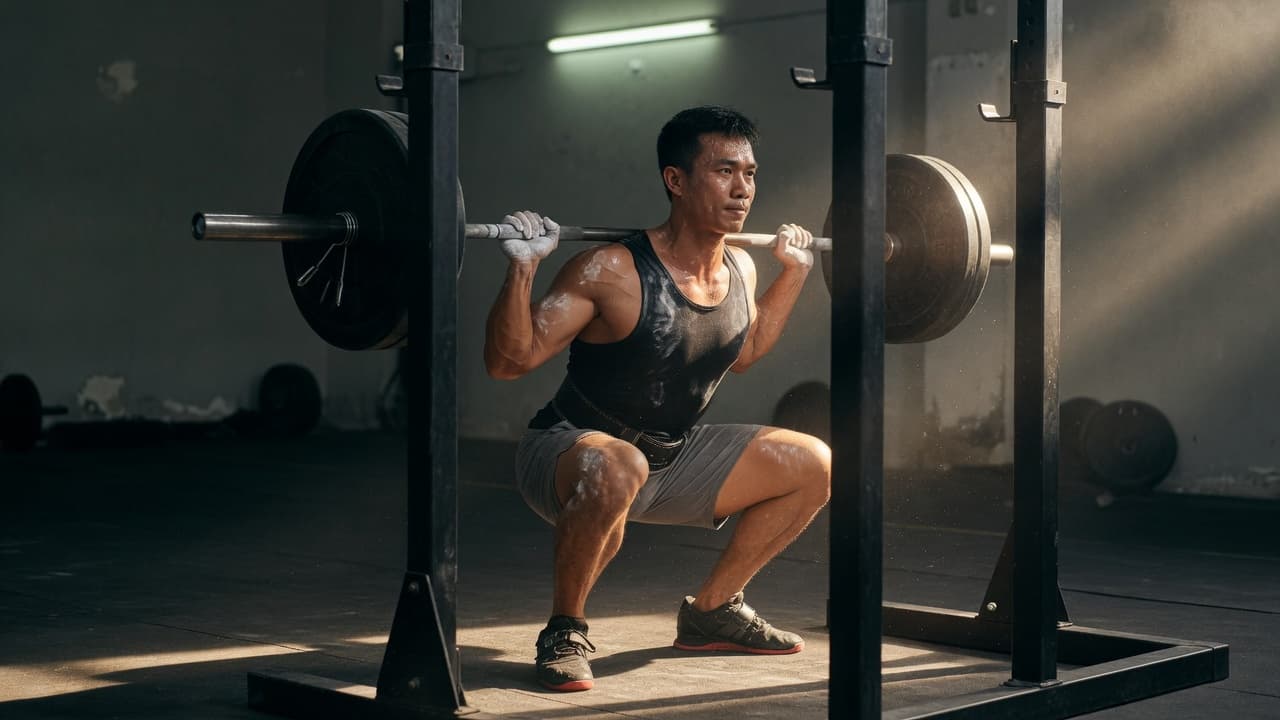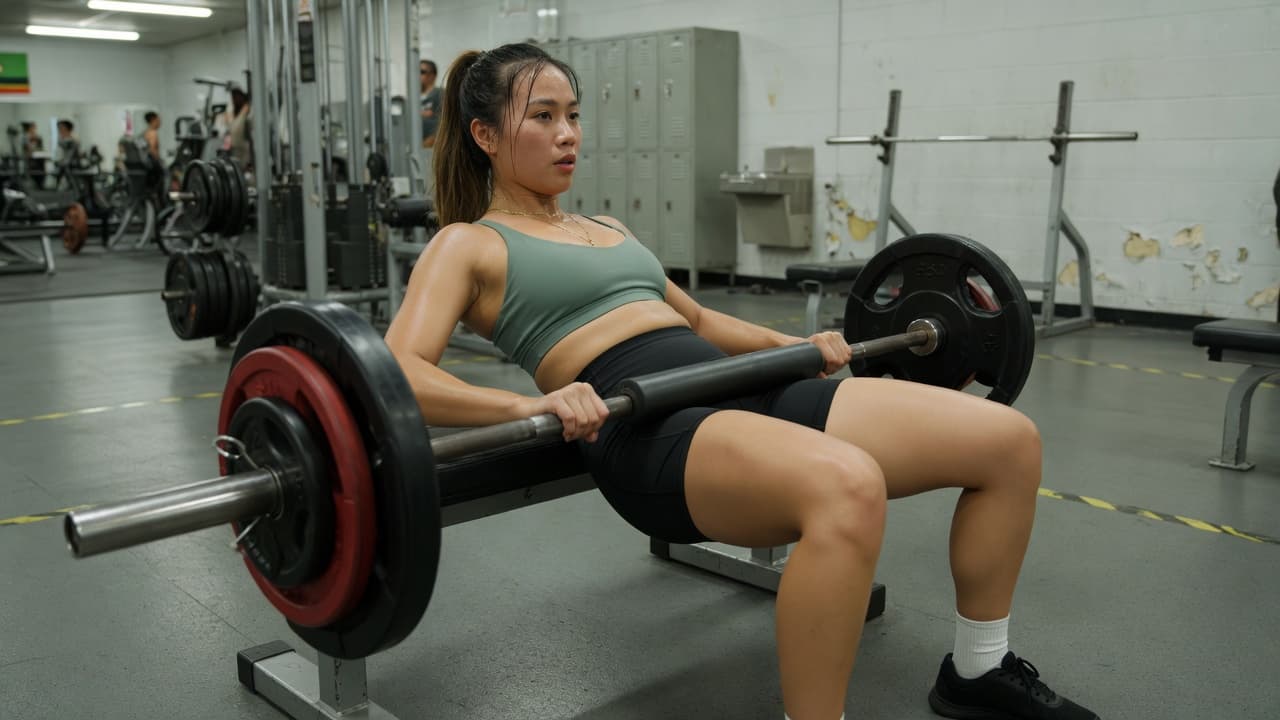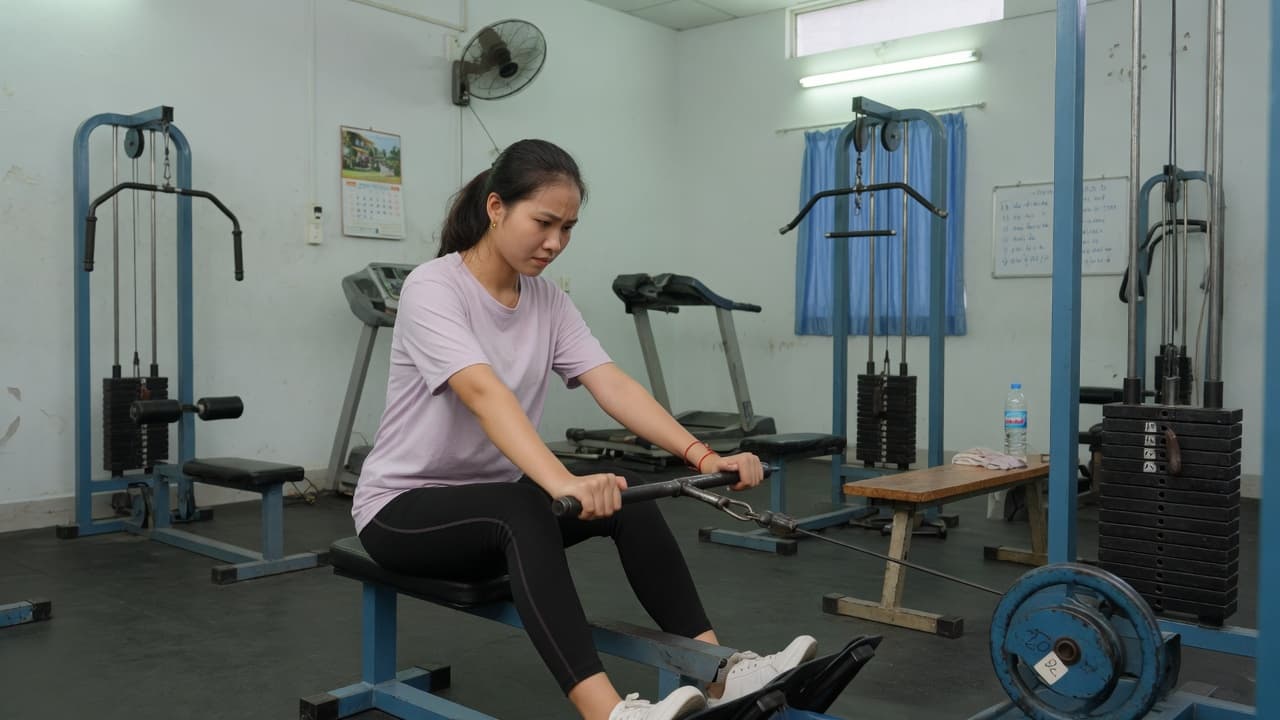
After the last heavy set, many people scroll the phone on the bench while heart rate is still high and shoulders are still shrugged. Five intentional minutes of nose–belly breathing is not a mystical ritual — it is how you shift the nervous system from “fight mode on the rack” toward a gradual downshift, feel better before you leave, and sleep easier if you train at night.
This piece covers 4-4-4-4 box breathing (and simpler variants), how to place it after a session, and the limit: breathing does not replace sleep, protein, or deload.

Why slow breathing after training helps
Heavy lifting and short rests push breathing into the mouth, shallow chest, accessory neck muscles. Ending with a few longer-breath minutes helps you feel the heart rate drop, reduces the “wired” feeling, and draws a clear line between the session and the rest of the day — especially valuable when evenings still have deadlines or when you tend to carry gym stress home.
This is low-level active recovery skill, beside rest-day walking in rest days for soreness — not disease therapy.
4-4-4-4 box breathing
- Sit or lie comfortably, long spine, shoulders soft.
- Inhale through the nose for a count of 4.
- Hold for 4 (do not brace the neck).
- Exhale through the nose or softly through the mouth for 4.
- Hold empty for 4, then repeat.
Do 4–6 rounds (about 3–5 minutes). If holds make you dizzy or anxious, drop the holds: only inhale 4 – exhale 6–8. Beginners usually succeed more with the no-hold variant.
Recovery breathing is measured by whether shoulders drop and you can belly-breathe — not by “reaching a higher state.”
How to slot it at the end of a session
- After the last set and any short stretch, turn off the hype playlist.
- Sit still on the spot or in a quieter corner; phone face down.
- 3–5 minutes of breathing; stand slowly, drink water.
- Log the session after the heart rate has dropped — clearer decisions.
Late-night training: slow breathing + dimmer phone light supports the shift toward sleep. If caffeine is still high in the blood, breathing helps comfort but does not erase the stimulant — see caffeine cutoff.
Breathing in sets and between sets
Bracing before compounds (inhale and hold abdominal pressure when needed) differs from relaxation breathing after the session. Do not apply box breathing between two heavy squat reps. Between sets, a few exhales longer than inhales are enough to prepare the next set without losing focus.
During stretching or mobility, the exhale is when you allow range to ease slightly — same spirit as post-training stretching and light yoga on rest days.
When breathing is not the main answer
- Acute-style chest pain, unusual shortness of breath, or suspected heart issues — need medical care, not “breathe through it.”
- You actually need 7–9 hours of sleep and a stress-week volume cut.
- You are raising coffee and pre-workout servings every week.
- Dizziness when holding breath — drop the hold phases or sit down.
Breathing also does not replace clinical anxiety treatment. If lingering panic sits outside the gym, seek appropriate professional support.
A 5-minute habit outside training days
Morning before email or night before sleep: 5 minutes of belly or light box breathing. Short consistency beats one 30-minute session then forgetting. Pair with a properly timed short nap if sleep-deprived — 20-minute nap — instead of only breathing then staying up until 2 a.m.
FAQ
Is mouth breathing after heavy sets wrong?
During hard effort, mouth breathing is normal. The “nose–belly” piece targets the window after intensity has dropped — not mid-failure rep.
Do I need a guided app?
Not required. Counting in your head or watching a second hand is enough. Apps help if you lose track of time; avoid turning them into notification scrolls.
Is 4-4-4-4 a magic number?
No. The rhythm must feel comfortable for your lungs and calm level. Average trainees may use 3–3–3–3; experienced ones 5–5–5–5. Comfort and steadiness beat pretty numbers.
Disclaimer: Breathing techniques here are relaxation and post-training downshift ideas for healthy people — not treatment for respiratory, cardiovascular, or anxiety disorders. Unusual shortness of breath or chest pain needs timely medical evaluation.