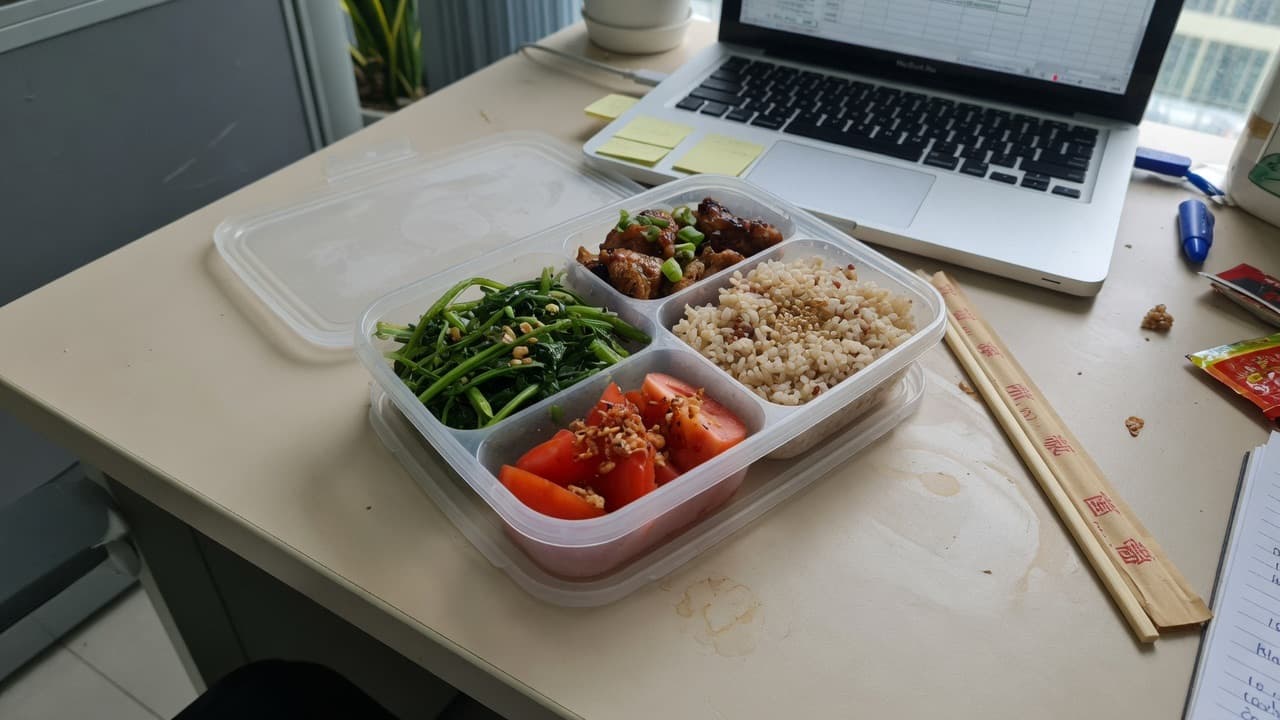
An office lunch box should carry about 35–45 g protein, enough vegetables, rice matched to the goal, and still be edible without a microwave. Mildly seasoned cold chicken, boiled eggs, pan-seared tofu, heat-tolerant salad or cooled boiled greens — five samples below rotate a week without daily takeout.
Batch on weekends with 90-minute meal prep; cheap protein budgets in ~50k per meal menu.
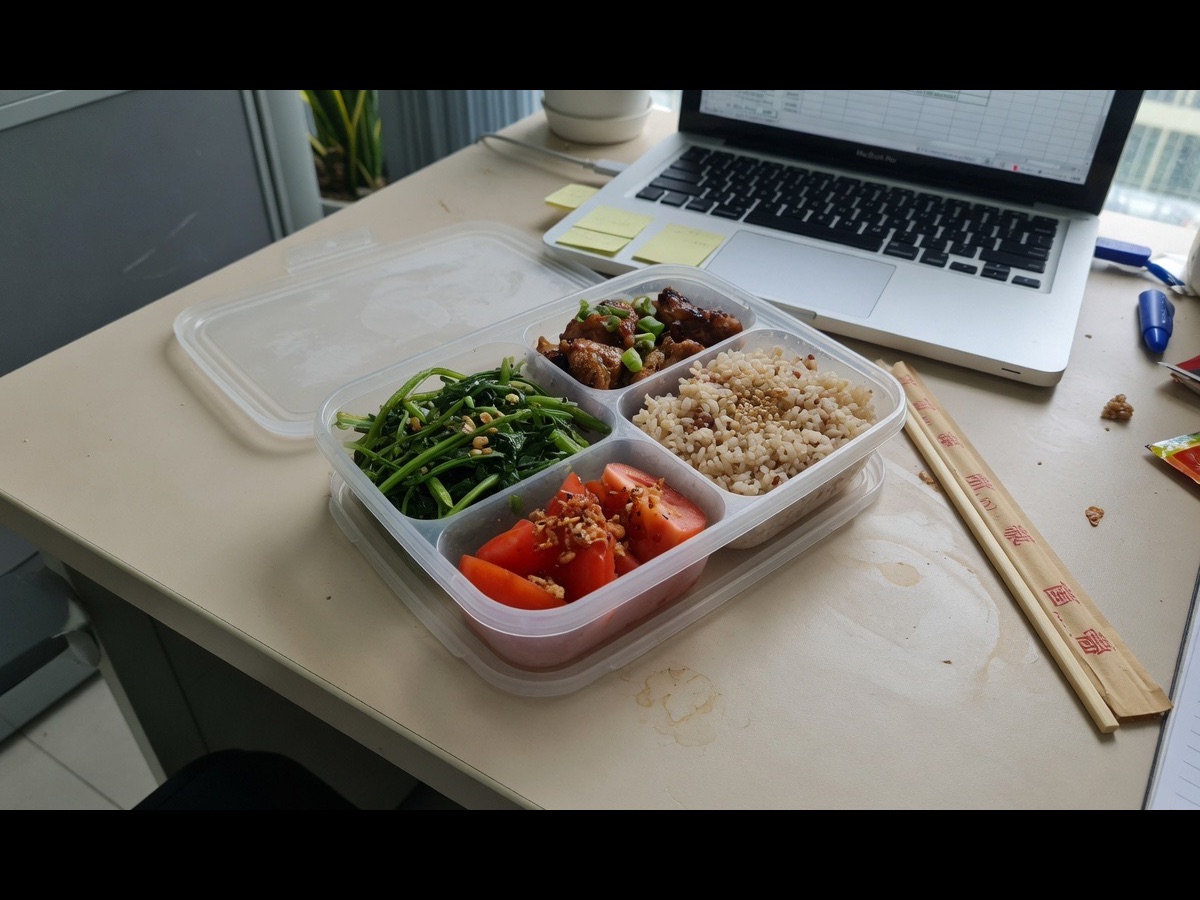
“No microwave still edible” checklist
- Cooked protein that tastes fine at room temp for 2–3 hours (eggs, boiled/roasted cooled chicken, tofu).
- Rice in a separate compartment or sturdy box; hot weather use an insulated bag / gel pack.
- Vegetables: cucumber, tomato, boiled cabbage, green beans — avoid greens that wilt soggy.
- Premixed light dipping sauce in a small jar — do not soak the rice from morning.
- Safety: cook thoroughly, refrigerate overnight, do not leave a warm box in a bag too long.
No microwave does not mean leaving meat on a meeting table all morning — keep it cold until lunch.
Five sample boxes (~35–45 g protein)
| Box | Main components | Estimated protein |
|---|---|---|
| 1. Chicken egg | 120 g skinless breast/thigh + 1 egg + rice + veg | ~40–45 g |
| 2. Cold fish | 140 g steamed/braised fish + rice + cucumber | ~35–40 g |
| 3. Tofu eggs | 150 g tofu + 2 eggs + moderate rice + veg | ~35–40 g |
| 4. Eggs + canned fish | 2 eggs + low-sauce canned fish + veg + rice | ~35 g+ |
| 5. Heat-tolerant salad | 100 g chicken + egg + cabbage/carrot + a little rice or potato | ~35–40 g |
Adjust cooked rice 100–200 g for cutting or maintenance. Add 5–10 ml oil when gaining.
Sunday evening 45-minute flow
- Boil 6–8 eggs; roast or pan-sear one tray of chicken.
- Steam fish or lightly braise a small pot.
- Boil sturdy vegetables; drain well.
- Cook rice, fluff, portion boxes when just cool.
- Label weekdays; 2 boxes can freeze if the week is long.
Eating at the office
- Wash hands, open the box, add lime/chili if needed.
- With a microwave: 1–2 minutes, lid cracked.
- Without: eat the cold samples above; drink water.
- Avoid soft drinks “with lunch” — they wreck a calorie-managed box.
Coworkers invite restaurants: bring boxes most days, flex 1–2 days/week per 80/20 or the eating-out article — 100% rigidity not required.
Common mistakes
- Rice soaked in sauce from morning → mushy, spoils faster.
- Vegetables only, no protein → 4 p.m. pastry cravings.
- Over-salting chicken for fear it tastes bland cold.
- Forgetting a gel pack on hot days.
A good lunch box is one you will open every day. Rotate weekly flavors: lemongrass chili, black pepper, dilute tomato sauce for tofu — same macro frame.
Hot season: prioritize eggs, mildly seasoned cold chicken, tofu; bring a gel pack and eat on break. Cooler season: braised fish and peppery pork hold flavor cold better. Always keep a desk backup — a few yogurts or boiled eggs — so one forgotten box does not become milk tea + sweet bread for the afternoon.
Sync with weight goals: fat loss locks a rice measuring bowl; muscle gain adds half a bowl or a milk pack. Keep protein at 35–45 g so you do not “make up” at night with a huge meat plate that hurts sleep.
Month-end review: how many days did you bring a box? Under three days/week, simplify to two favorite templates instead of five pretty paper samples you never make.
FAQ
1. Is the office fridge OK?
Yes if ≤4°C and boxes are not next to exposed raw food. Use sealed boxes, label your name.
2. Must every lunch hit 45 g protein?
35–45 g is a convenient target so the day easily reaches ~1.6 g/kg. If breakfast–dinner are already protein-rich, lunch can be a bit lower.
3. Is cold rice too hard?
Slightly firm is normal. Sprinkle a little water if you have a microwave; or cook with ~5% more water from the start.
Supports lunch-carrying habits and basic food safety — not medical guidance. People with allergies, digestive disease, or pregnancy should mind storage and food choices with a professional.