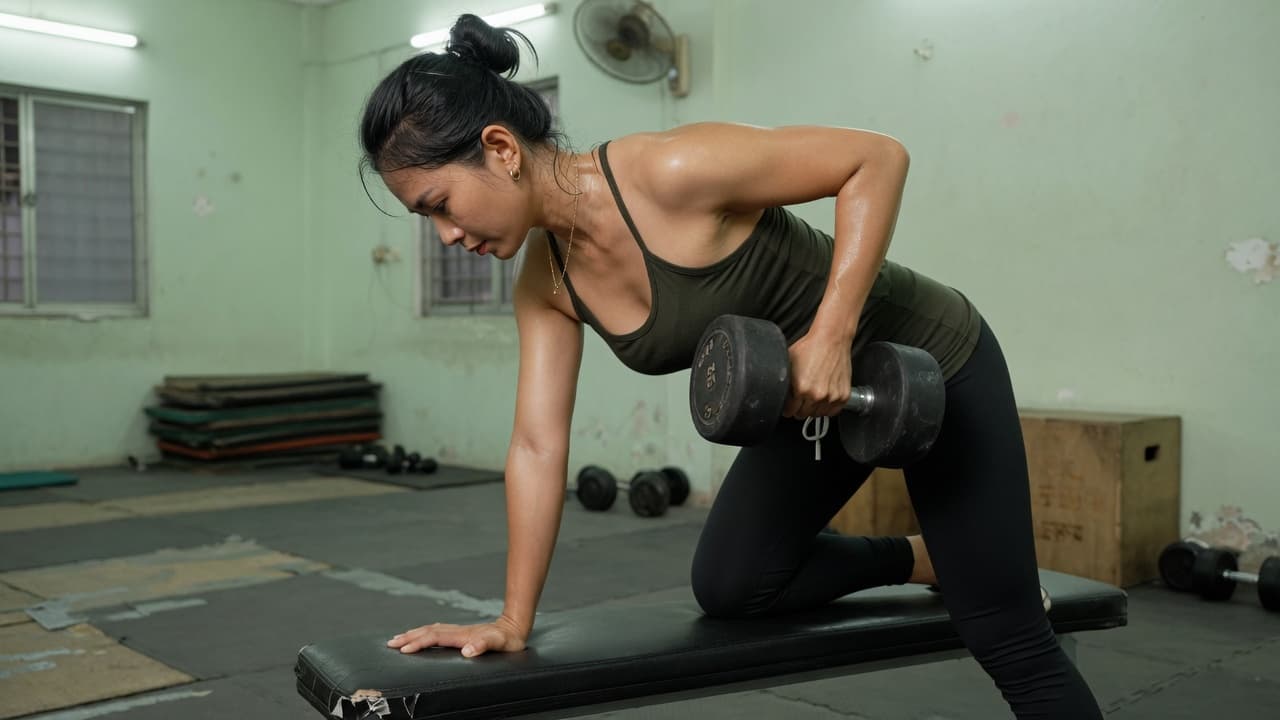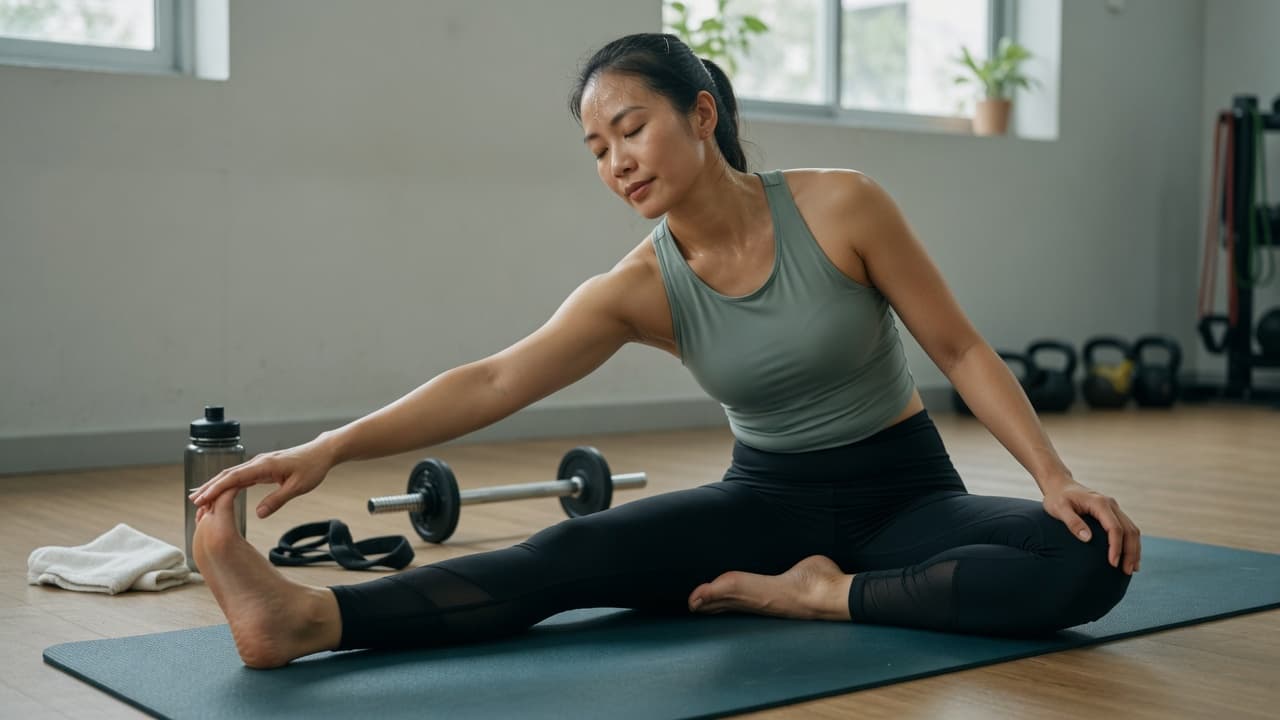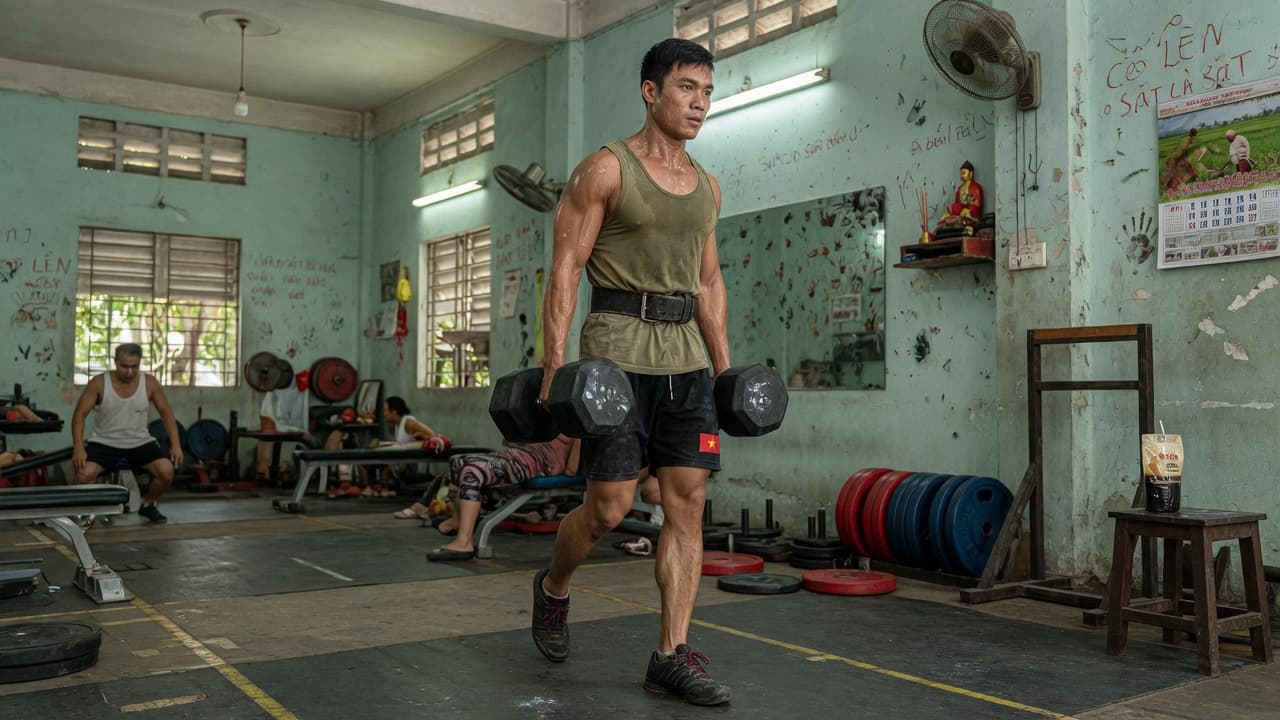
One dumbbell is not “making do” — it is enough to build a tidy full-body or upper/lower session in 30–40 minutes. The keys are balanced left–right moves, pauses and tempo to raise stimulus before you buy more iron, and knowing when to stop adding difficulty because form is breaking.
This article assumes one hex or round dumbbell that fits your hand (light to moderate). No specialty bench required; a sturdy chair or low box covers some variations.
Principles with one dumbbell
- Symmetry: match reps on each side; start with the weaker side.
- Stability before load: if you lose balance, shorten range or lightly touch a wall instead of yanking the weight.
- Tempo when the dumbbell is light: lower 3 seconds, pause 1, lift 1 — more in tempo 3-1-1 to learn form.
- Do not “spin” the weight around the joint: wrist straight, elbow on a controlled path.
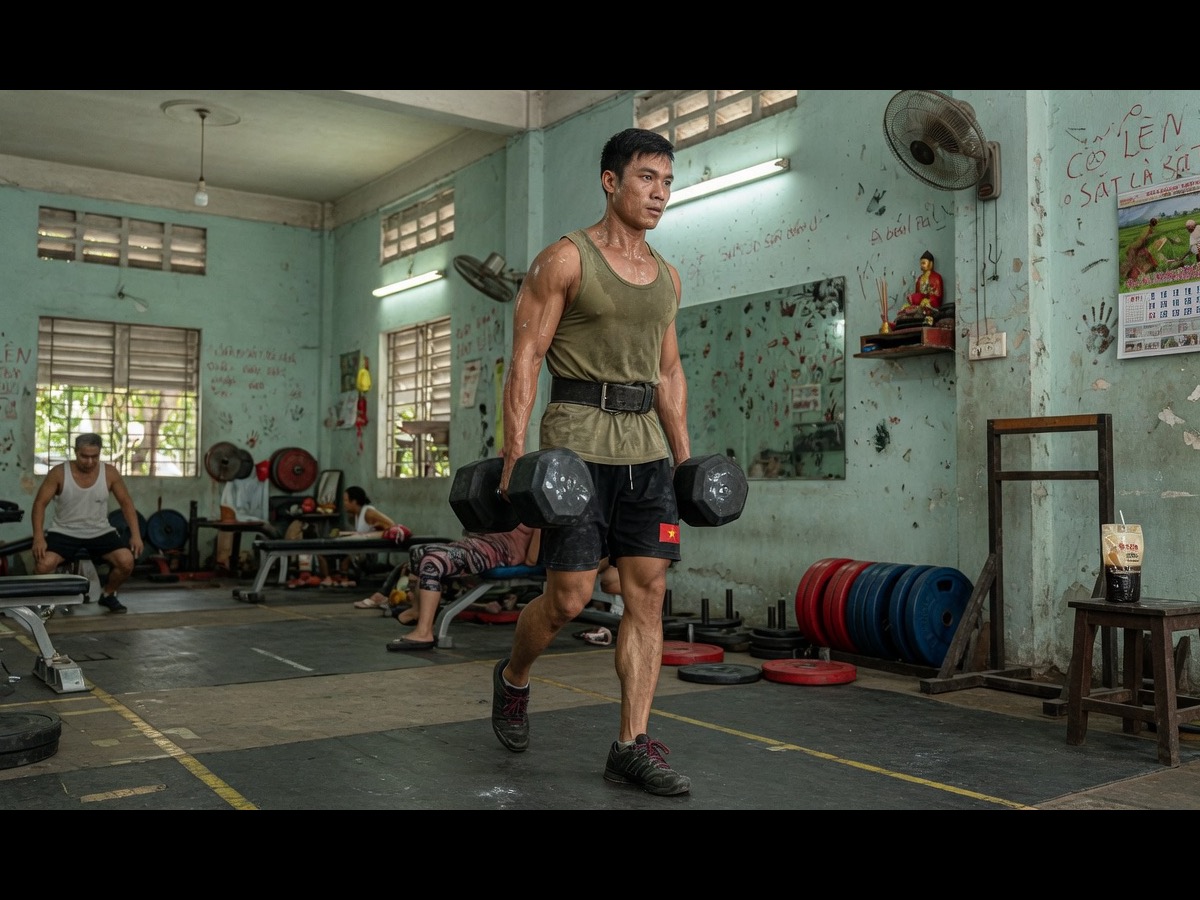
35-minute full-body sample
- Goblet squat: 3×8–12 — weight at the chest, elbows between knees, hips sit back.
- One-arm or two-hand hugged Romanian deadlift: 3×8–10 — hip hinge, long spine; if one-arm, switch sides evenly.
- Floor press: 3×8–10/side — stable shoulders, elbows not flared too wide.
- One-arm row (other hand on a chair): 3×10–12/side — elbow toward the hip, squeeze the scapula.
- Light goblet or in-place split squat: 2–3×8/leg.
- Farm carry in place or short walks: 2×30–40 seconds — shoulders down, core braced.
Rest 60–90 seconds between heavy leg sets; 45–60 seconds on press–pull. Warm joints and do 1–2 unloaded feeler sets before working numbers.
Goblet cue: “dumbbell tight to the chest, elbows point down between the knees, press heel–midfoot as you stand.”
Splitting sessions when you only train 2–3 days/week
| Day | Focus | Main moves |
|---|---|---|
| A | Full-body | Goblet squat, RDL, floor press, row, carry |
| B | Legs–glutes + core | Split squat, hinge, glute bridge with dumbbell on hips, dead bug |
| C (optional) | Push–pull | Floor press, row, light overhead if shoulders allow, bandless pull-aparts |
A 2-day/week frame can still progress if each session hits the big patterns hard enough; see full-body 2 days/week for longer-term layout.
How to make it harder before changing the dumbbell
- Add a 2-second bottom pause on squats and split squats.
- Slow the eccentric (lowering) 3–4 seconds.
- Go from 3 sets to 4 before buying a heavier dumbbell.
- Shift two-hand RDL toward a small-range assisted single-leg version near a wall.
- Floor press → seated neutral press if shoulders allow and you have a light backrest.
When 3×12 goblets still feel easy with clean form and you are not gasping too early, consider a dumbbell 2–4 kg heavier — progress slowly.
Common one-dumbbell form faults
- Excess torso twist on rows: cut load, keep the chest flatter, pull the elbow close to the ribs.
- Knees cave on goblets: drive knees over toes, open the stance slightly.
- Hinge becomes “round-back pick-up”: lower less, push the hips back first.
- Broken wrist on presses: crush the handle, imagine pressing through the palm.
Sharp front-shoulder, wrist, or low-back pain: cut load or change the variation. Knowing RDL vs stiff-leg correctly lowers back risk — read how RDL differs from stiff-leg before loading the hinge harder.
FAQ
How many kg to start?
Beginners often start around a load that allows 8–12 clean goblet reps with the last set still controlled. A slightly light dumbbell still works via tempo; a too-heavy one that breaks form does more harm than good.
Do I need a matching pair?
A pair is more convenient for two-hand presses and carries, but not required. With one dumbbell, alternate sides and use goblet/two-hand hugged hinges for most basic health–physique goals.
Training at home on tile — any issue?
Use a non-slip mat or shoes; do not drop the dumbbell. Hex shapes are more stable than rounds when you set them down between sets.
General technique and session layout with one dumbbell only — not medical advice or in-person coaching. Stop for unusual joint pain or an unevaluated injury history.