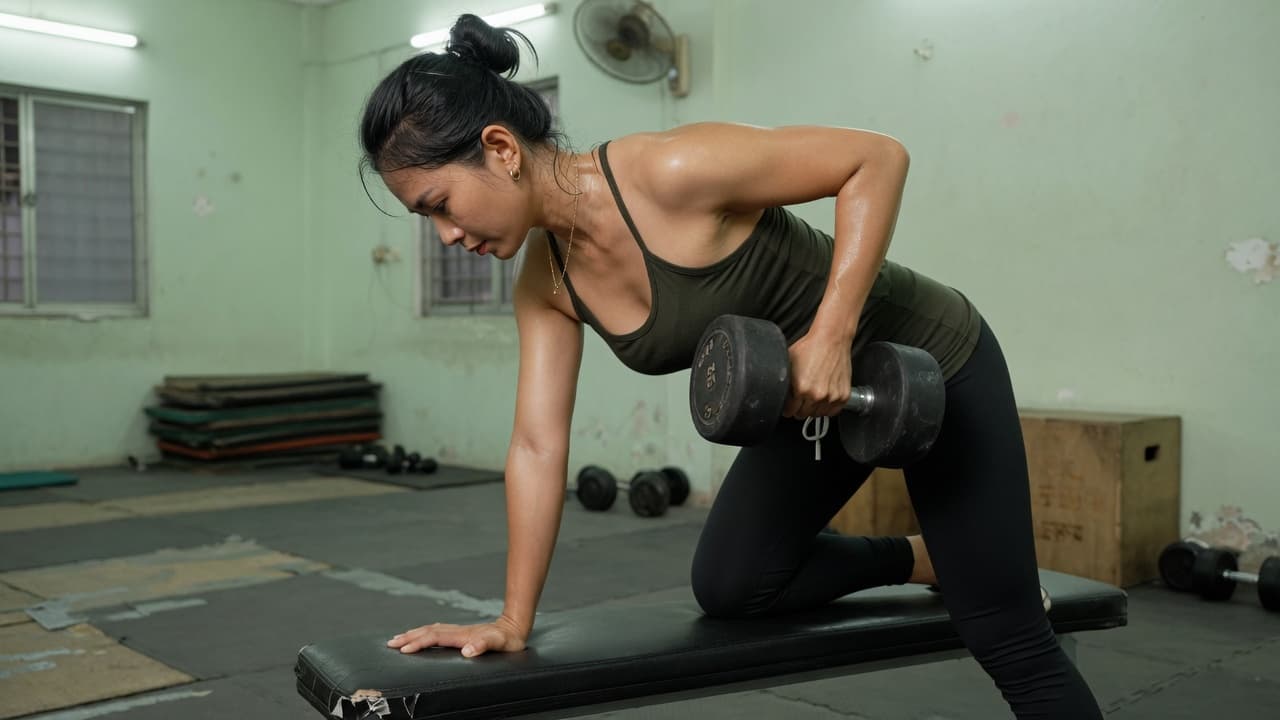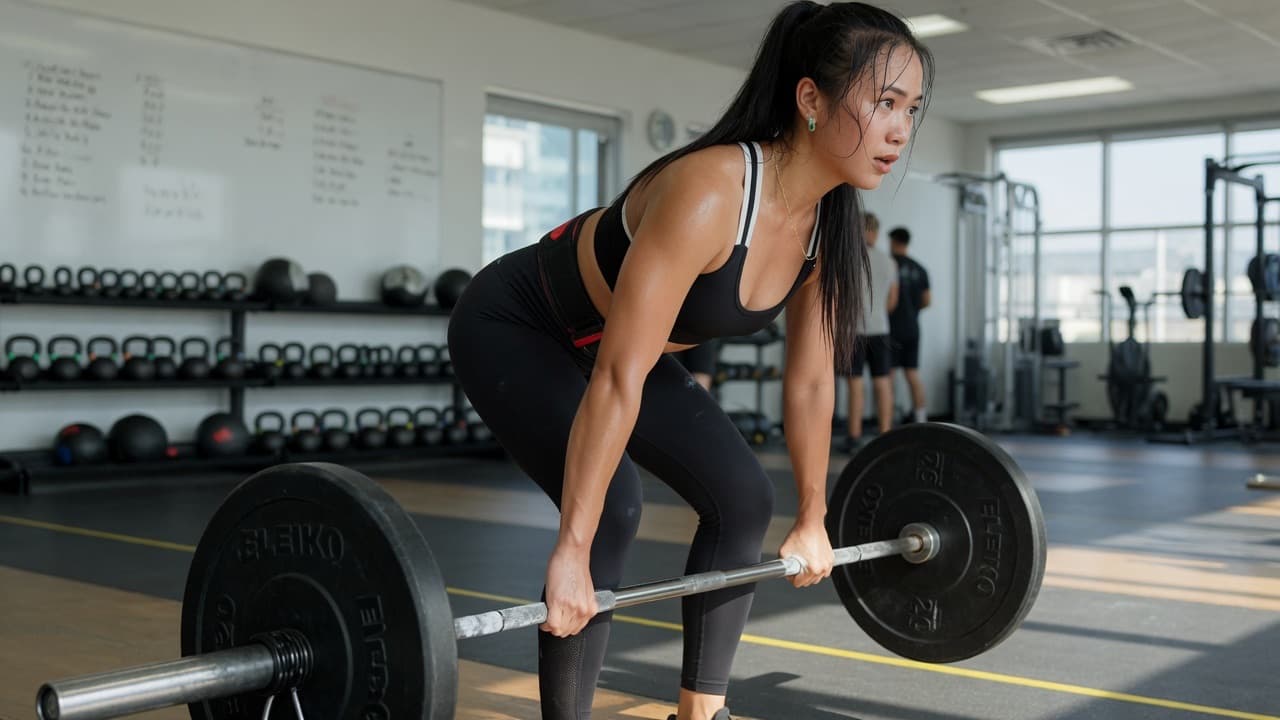
Romanian deadlifts (RDL) and stiff-leg deadlifts often get mixed up, so trainees lock the knees hard, let the load “pull” the back into a round shape, or never learn a real hip hinge. This article separates the two by knee position–bar path–muscle feel, with cues that favor a safer RDL for most health-focused lifters.
Both are hip hinges, not squats. If you have acute back pain, get assessed before heavy hinging.
Core differences
- RDL: start standing, lower by pushing the hips back; knees keep a small fixed soft bend (not squat flex–extend); motion mainly at the hips; strong feel in hamstrings–glutes–long back.
- Stiff-leg (common gym meaning): knees straighter or near locked, more torso fold, bar often hugs shins–heels; strong hamstring stretch emphasis; easier to lose a neutral spine without control.
In FitPath practice, prefer a soft-knee RDL as the main variation. Use stiff-leg only with shallow range, light load, once the hinge is solid.
Step-by-step RDL cues
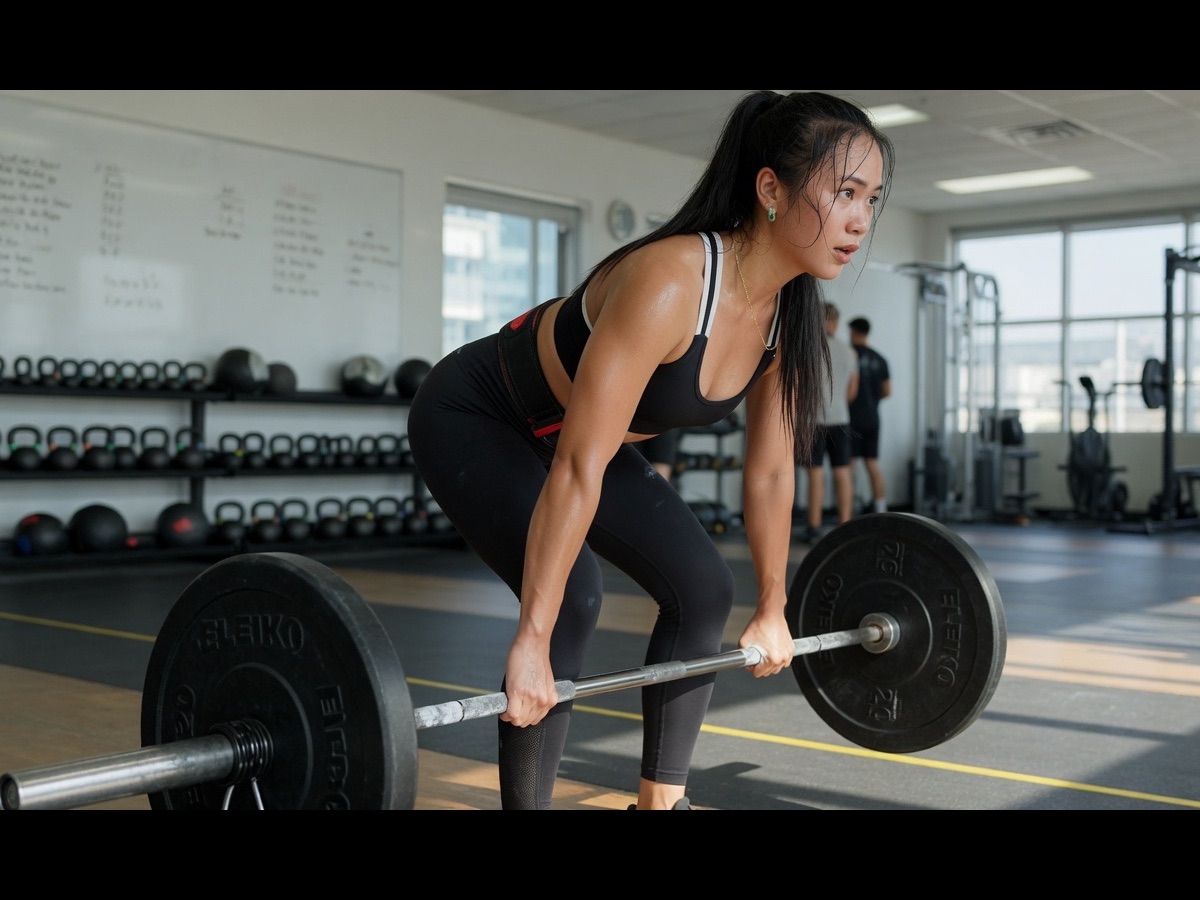
- Stand hip-width, load in front of the thighs, shoulders lightly down–back.
- Inhale–brace; push the hips back as if closing a door with the glutes.
- Knees stay soft at the same angle; shins barely travel forward.
- Bar close to the legs; lower only while the spine stays neutral (often just below the knees for many people).
- Drive the floor, bring the hips forward to stand tall — no hyperextension at the finish.
Short cue: “hips back – thighs ‘drag’ the bar – spine long like a tabletop – stand with the glutes, not by yanking with the back.”
When the feel is right / wrong
| Feel | Usually means | Fix |
|---|---|---|
| Hamstring–glute stretch, back OK | Hinge in the right direction | Keep it, add load slowly |
| Sharp low-back pain | Rounded back or too much load | Shorten range–load, film yourself |
| Only front-thigh fatigue | Knees bend too much / became a squat | Push hips farther back, less knee bend |
| Bar far from the legs | Lost leverage, easy to round | Shave the bar along thighs–shins |
Stiff-leg: use with conditions
If you want more hamstring stretch emphasis:
- Cut load clearly versus your RDL.
- Keep a long spine; stop as soon as the back starts to round.
- Use a shallower range than your RDL if needed.
- No bounce at the bottom; do not lock the knees so hard the joint hurts.
Beginners and office workers with stiff hamstrings should build RDLs and glute bridges first — see glute bridge to hip thrust and leg training for office workers.
Where RDLs sit in a program
- Leg or full-body days: 3×6–10 after squats or as the main hinge.
- Tempo 3-1-1 with moderate load to learn form — tempo 3-1-1.
- Kickstand single-leg when bilateral is solid, small range near a wall.
- Balance with hip thrusts and walking; do not only heavy-hinge every session.
Women emphasizing glutes–hamstrings can pair RDLs with hip thrusts in the same week; more ideas in hip thrust and RDL.
Mistakes to drop
- Calling every fold-over a deadlift then adding weight.
- Cranking the neck to watch a mirror and losing neutrality.
- Locking the knees fully then pulling with the back.
- Going too deep only to “touch the floor” after the back has already rounded.
FAQ
Is an RDL a normal deadlift?
Not exactly. Conventional deadlifts usually start from the floor with more knee bend and a different bar path. RDLs emphasize a standing hinge through a range you can keep neutral.
Can I RDL with one dumbbell?
Yes — excellent for learning anti-rotation control. Keep the hips square, cut load, switch sides evenly. See also training with one dumbbell.
Is a strong hamstring stretch dangerous?
Controlled muscle stretch differs from sharp pain near the attachment or in the back. Shorten range if stretch turns into sharp pain; light stretch after the session instead of forcing deeper while fatigued.
General hinge technique distinction only — not a diagnosis of back–hamstring pain. Stop loading and seek care for unusual pain or a history of spinal injury.