Many women quit because one morning the scale is up 1 kg — even while pants fit looser and squats are heavier. For women, the menstrual cycle, water retention, poor sleep, and stress make the scale jump more than true fat change over a few days. The durable approach: use multiple signals — weekly average weight, waist, photos, strength log, clothes feel — instead of worshipping one weigh-in.
General foundation: tracking progress beyond body weight. Period week: eating on your period without wrecking the plan. Keep going through hard phases: don’t quit in week 3.
Why women’s scale weight often “lies”
- Water around the period: can be +0.5–2 kg then drop after a few days.
- Glycogen: more rice/carbs or returning to training → muscle holds water with it.
- Salt, short sleep, stress: also bump the number temporarily.
- Bathroom timing / when you weigh: evening after food differs from morning fasted.
One data point is not a trend. Trends need 2–4 weeks plus a few other metrics.
Weekly average weight
Weigh under the same conditions (e.g. morning, after bathroom, before eating) 3–7 days/week, then take the weekly average. Compare this week’s average to last week’s — not Monday of your period with Friday mid-cycle.
- Mark period weeks in a notebook/app.
- Skip big conclusions in the first 3 period days if the number jumps.
- Look at the 4-week slope: slow loss, flat, or gain.
Healthy fat loss often averages ~0.25–0.6 kg/week (estimate, person-dependent). A flat scale with a smaller waist and heavier lifts can still be positive recomposition.
Waist, photos, and clothes
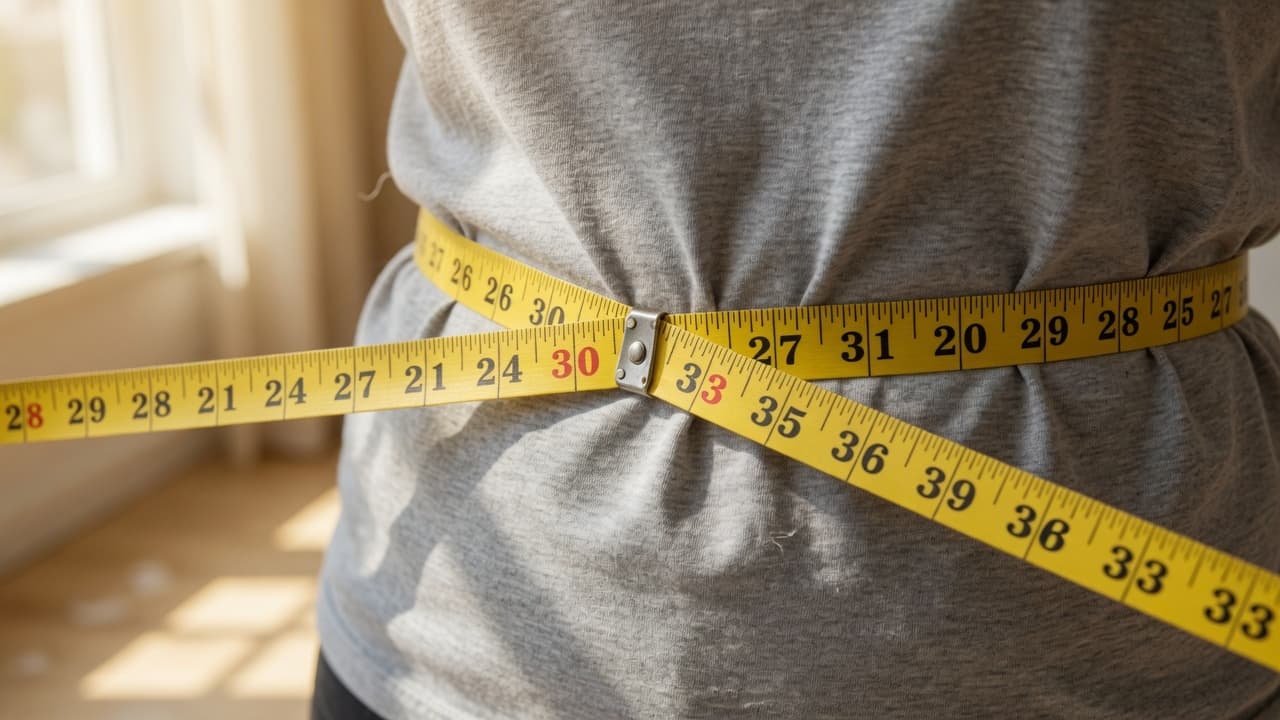
- Waist: same landmark (e.g. at the navel), same time of day, tape not cinched. 1–2×/week is enough.
- Hips / thighs if curves are the goal: expect slight increases when building lower-body muscle — not every number always drops.
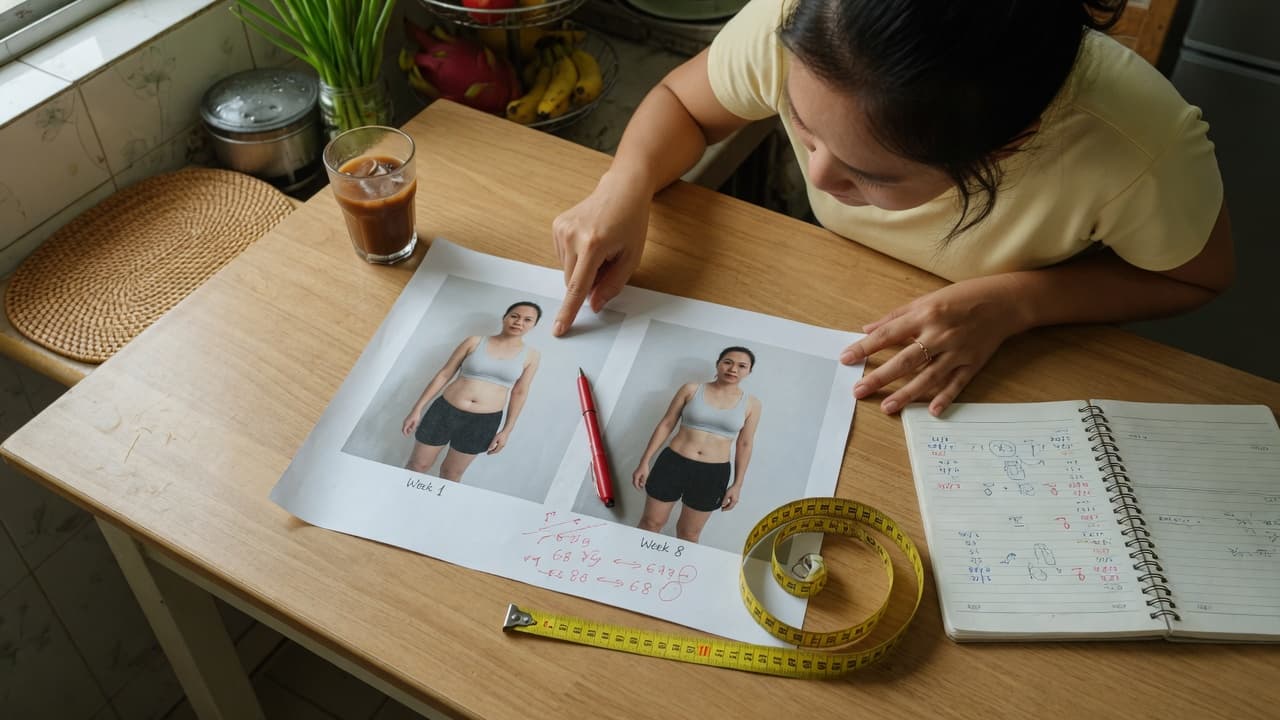
- Photos: same mirror, light, pose, distance; every 2 weeks. Period-week photos can look fuller — compare same cycle phase when you can.
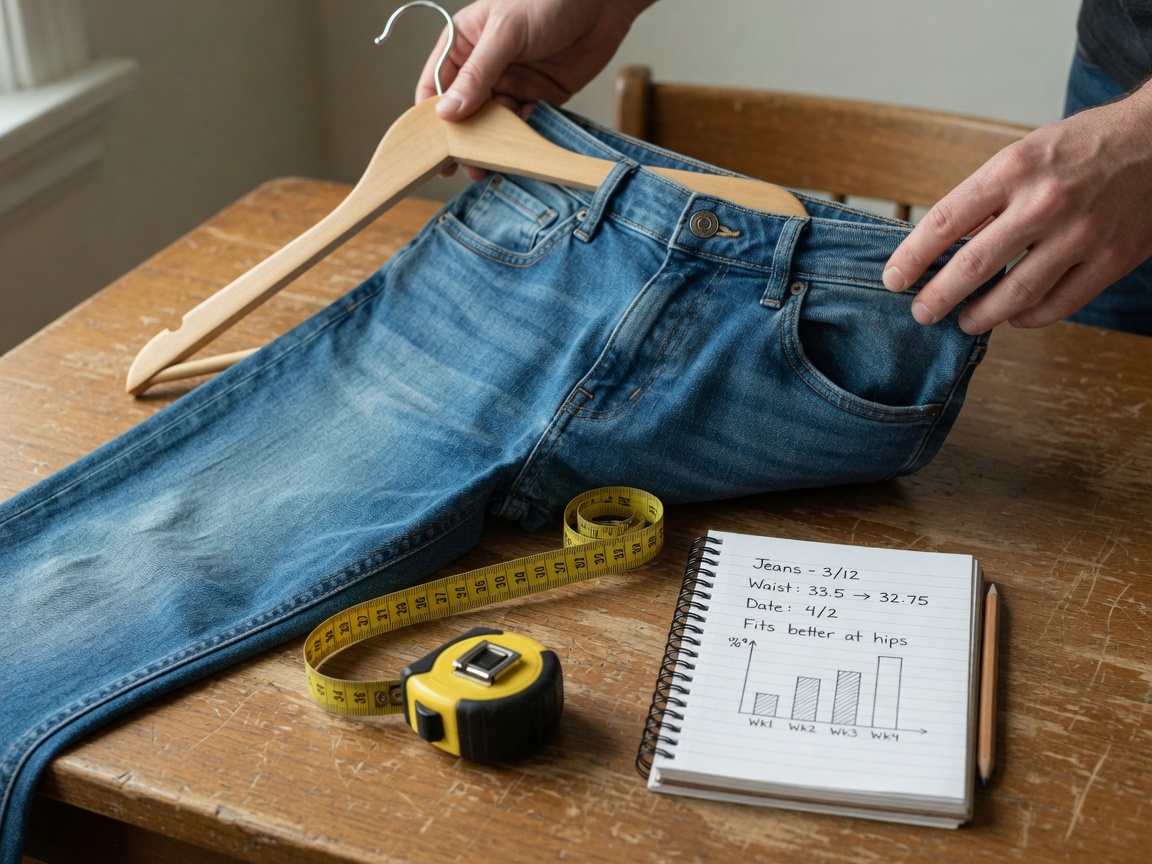
- “Reference” clothes: one fixed pair of pants/shirt each month for a real-world feel.
Strength log — progress the scale does not show
Log main lifts: squat/leg press, hinge, press, pull — sets × reps × load. After 4–8 weeks, if form is solid and load/reps rise, you are building or keeping muscle even if weight is flat. That is big motivation when photos change slowly.
You do not need to log every isolation machine. Just 3–5 “anchor” lifts each week show the trend. If your period or poor sleep makes a session lighter, jot a short note beside the numbers so you do not later misread it as technical regression.
| Signal | Suggested frequency | Notes for women |
|---|---|---|
| Weekly average weight | 3–7 weigh-ins / week | Mark period weeks |
| Waist | Every 1–2 weeks | Same spot, do not cinch |
| Photos | Every 2 weeks | Same shooting conditions |
| Strength | Every session | Prioritize compounds |
| Reference clothes | Every 2–4 weeks | Real-world feel |
| Energy / sleep | Brief daily note | Short sleep → cravings & “fake” scale weight |
When should you change the plan?
- Do not change yet if it has only been 7–10 days, or you are on your period and only looking at the scale.
- Consider a slightly larger deficit or more activity after 3–4 weeks if: average weight unchanged, waist unchanged, photos the same, strength flat, and eating–training adherence was good.
- Consider eating more / cutting excess cardio if you are exhausted, missing periods (ask a doctor), strength is falling, or intake has been very low for a long time.
- Do not cut deeply just because one photo “looks bad” after a poor night’s sleep.
People with an eating-disorder history should limit daily weighing if it triggers anxiety — prioritize strength, energy, and professional support.
The menstrual cycle and how to read the data
Before and early in the period, many people feel a fuller face/waist and higher weight even when portions did not change. Mark phases on the calendar: comparing mid-cycle week to mid-cycle week last month is fairer than “best day” vs “puffiest day.”
- Keep protein steady and do not slash calories only because of period-week weight.
- Period photos can help you notice how your body feels, but plan changes should rest on multi-week averages.
- If periods stop for a long time or become very irregular in a deep deficit — stop tightening further on your own and ask a doctor; this article does not diagnose causes.
Good progress is a 4-week trend across several signals — not one morning with a flattering number.
A simple log that does not become an obsession
One notebook page or phone note with columns: date – weight (if weighing) – waist (when measured) – main squat/pull – sleep (hours) – period/stress notes. No expensive app required. If logging makes you anxious every hour, lower frequency: weigh 3×/week, photos every 2 weeks, and focus on sessions completed.
The point of tracking is calm decisions (hold / small tweak / recovery break), not self-punishment. When signals conflict — e.g. scale flat but waist down and lifts up — prioritize body-composition and performance signals over a single number.
FAQ
1. Is period-week scale gain fat gain?
Usually mostly water/glycogen. Wait until after the period and look at averages before concluding.
2. Do I need gym body-fat machines?
Not required. Many on-site machines have large error. Waist–photos–strength are enough for most recreational goals.
3. Scale flat 3 weeks but pants looser — what gives?
Possible redistribution (fat down, muscle kept/up slightly). Continue if health is fine; do not slash calories only because the scale will not move.
This article is about habit tracking, not diagnosing disease or replacing medical advice. The author is not a doctor. Lasting amenorrhea, unintended weight loss, or a negative relationship with the scale/photos — see a medical or mental-health professional; be careful with eating disorders, pregnancy, or PCOS (do not self-diagnose).