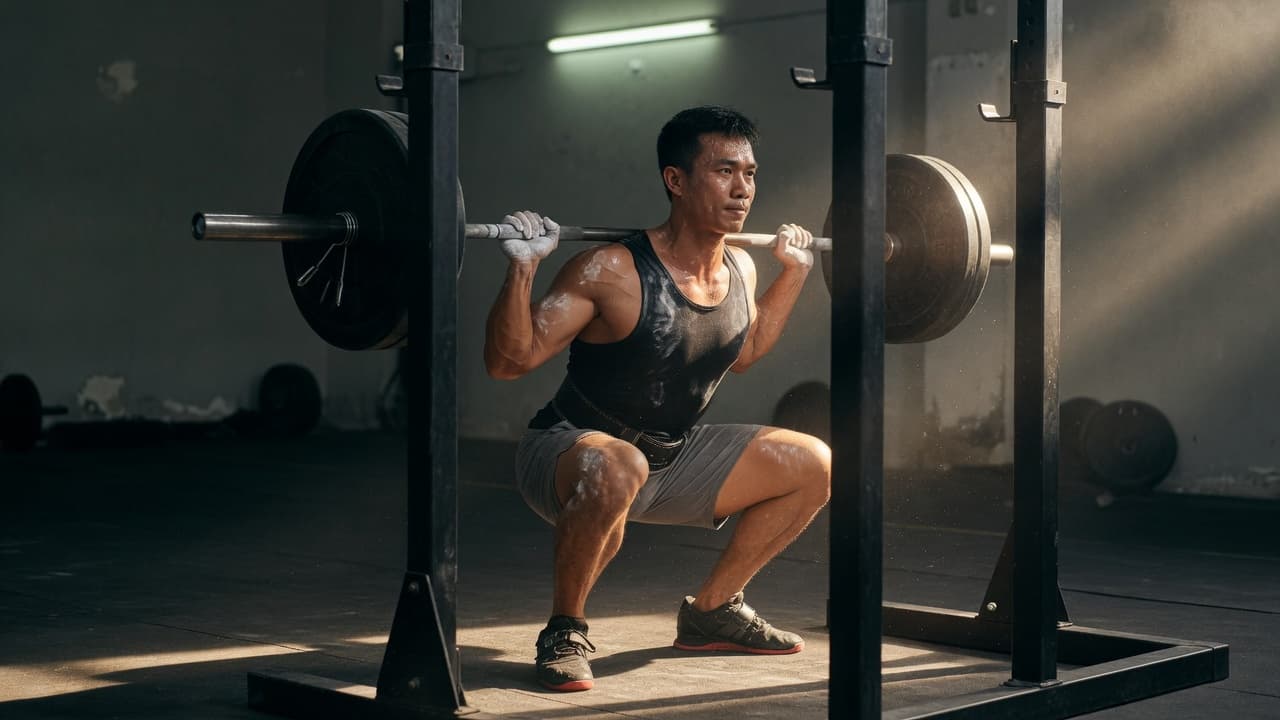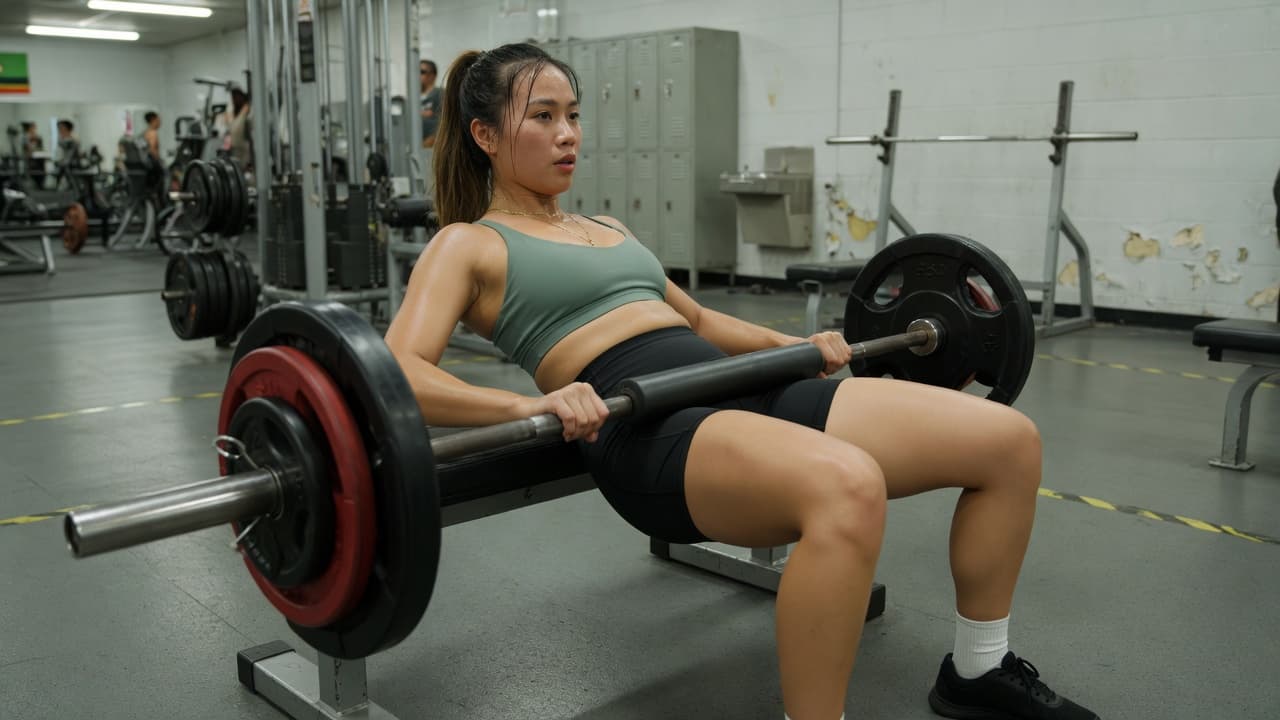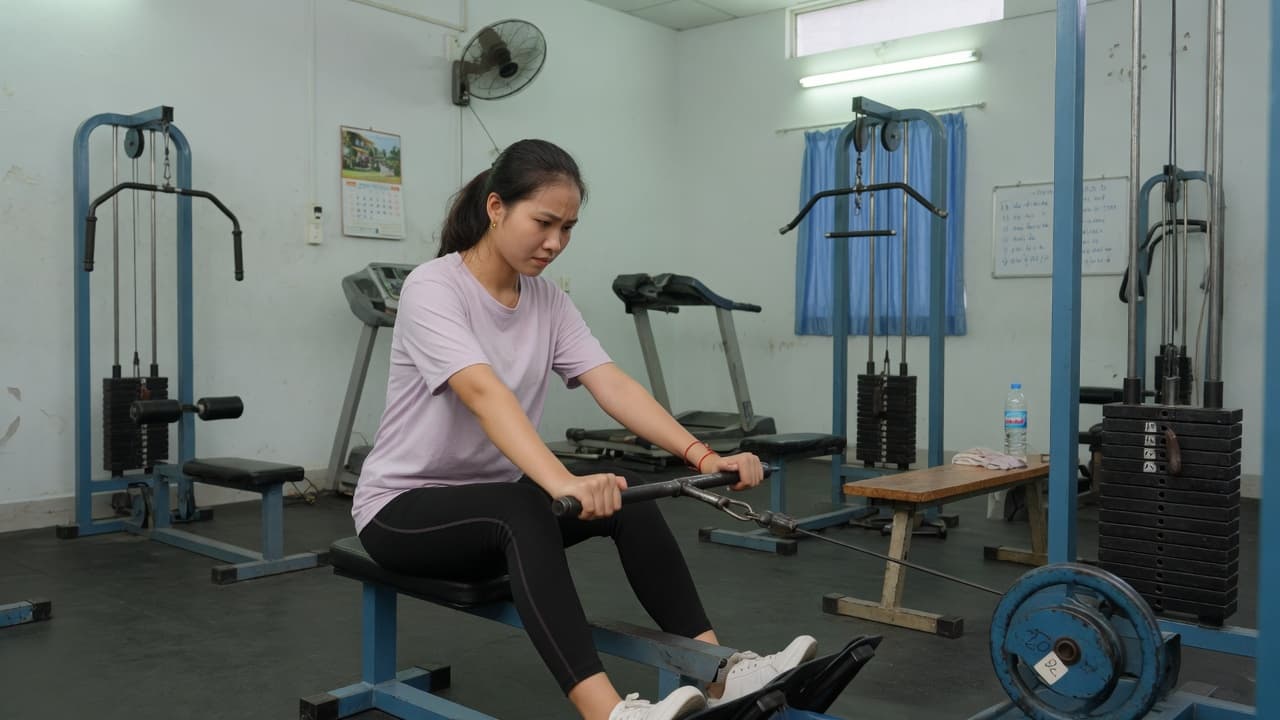
On days with horizontal pressing, overhead pressing, hanging from a bar, or swimming, skipping a shoulder–joint warmup often means the first sets feel “stiff,” a pinch in the front of the shoulder, or compensating with a low-back arch. Warmups do not need to drag on: about 6–8 minutes in order helps the ball-and-socket glide better and primes the nervous system before load.
This is a practical gym or home sequence — not physical therapy for rotator-cuff tears or chronic inflammation.
Principles before shoulder–press days
- General to specific: warm the body → joint motion → light activation → feeler sets.
- Controlled range — do not force into pain.
- Avoid long static stretches right before maximal sets.
- Sharp front-shoulder pain or pain down the arm: shorten range or stop.
The goal is smooth shoulder glide and remembering the bar path — not sweating like a bonus HIIT session.
Suggested 7-minute sequence
| Minute | Work | Details |
|---|---|---|
| 0:00–1:30 | Raise heart rate lightly | March in place, slow jump rope, or unloaded bike |
| 1:30–3:30 | Large joint circles | Big arm circles, shoulder circles, light doorway chest openers |
| 3:30–5:30 | Socket and scapulae | Light band pull-aparts, unloaded or very light face pulls, wall slides |
| 5:30–7:00 | Feeler sets of the main pattern | Empty bar or very light chest press / overhead press |
Key move details
Arm circles and socket rotation
Stand feet shoulder-width, draw large circles with both arms 8–10 each way. Then hands on hips or light hold, rotate the arms like stirring within a pain-free range. Keep the ribs from over-arching to “cheat” reach.
Wall slide
Back and head against the wall, elbows and backs of the hands touching if you can. Slide the arms up–down slowly 8–10 times, neck neutral. Not touching the wall through the whole range is fine — work the controllable range.
Light band pull-apart / face pull
Light band, pull apart at chest height or toward the face, squeeze scapulae together–down, no upper-trap shrug. 10–12 smooth reps. Goal: activate rear pulling to balance a press-heavy day.
- Pull slowly 2 seconds.
- Hold the squeeze 1 second.
- Return under control 2 seconds.
The whole sequence can nest inside the longer frame in 8-minute warmup before lifting — on shoulder days just bias time toward the upper body.
Feeler sets before bench or overhead
- Bench: 2 sets × 8 unloaded or empty bar, focus on packing scapulae and driving the floor with the feet.
- Overhead: 2 sets × 6–8 light presses, no low-back arch for momentum.
- Bar hangs: short passive hang 10–20 seconds × 2 if shoulders are quiet, then light scapular pulls.
Women training back–shoulders who want shoulder lines without fearing “uneven bulk” can see balanced pull–press progressions in back and shoulder training for women without fearing bulk.
Common mistakes
- Windmilling arms so hard it hurts.
- Only static chest stretching for 2 minutes then heavy benching.
- Heavy bands that turn the warmup into failure sets.
- Skipping feeler sets because “I already know the form.”
If one shoulder clearly sticks, do not add load to test it. Shorten range, change press angle (e.g. neutral machine), and consider a professional assessment if it lasts many weeks.
FAQ
1. Do I need to foam-roll the upper back every session?
Not required. 30–60 seconds can feel good for people who sit a lot, but it does not replace dynamic joint work and feeler sets.
2. Mild front-shoulder discomfort when pressing — can I warm up more?
Mild ache that eases after a few warm minutes sometimes settles. Sharp pain, catching, or weakness raising the arm is not something you “warm through” — cut load or change the move and monitor.
3. Training at home with no band?
Use a towel for light isometric pulls, a wall for wall slides, and slow wall / floor presses as feeler sets. Pattern matters more than expensive gear.
Disclaimer: This warmup sequence is general education, not a diagnosis of shoulder injury. People with prior surgery, dislocations, or suspected rotator-cuff tears need personal guidance from a doctor or physical therapist.