Front-shoulder pain on the bench press is often not “weak chest” — it is setup: unstable scapulae, elbows flaring out of control, or lowering the bar deeper than your current shoulder structure likes. This article focuses on feet–back–scapulae–grip before you think about adding load, with a checklist and signs to shorten range.
General technique for barbell or dumbbell presses on a bench. If you already have a rotator-cuff injury, swelling, or pain down the arm, get assessed before returning to loads at shoulder height.
Five setup points before you unrack
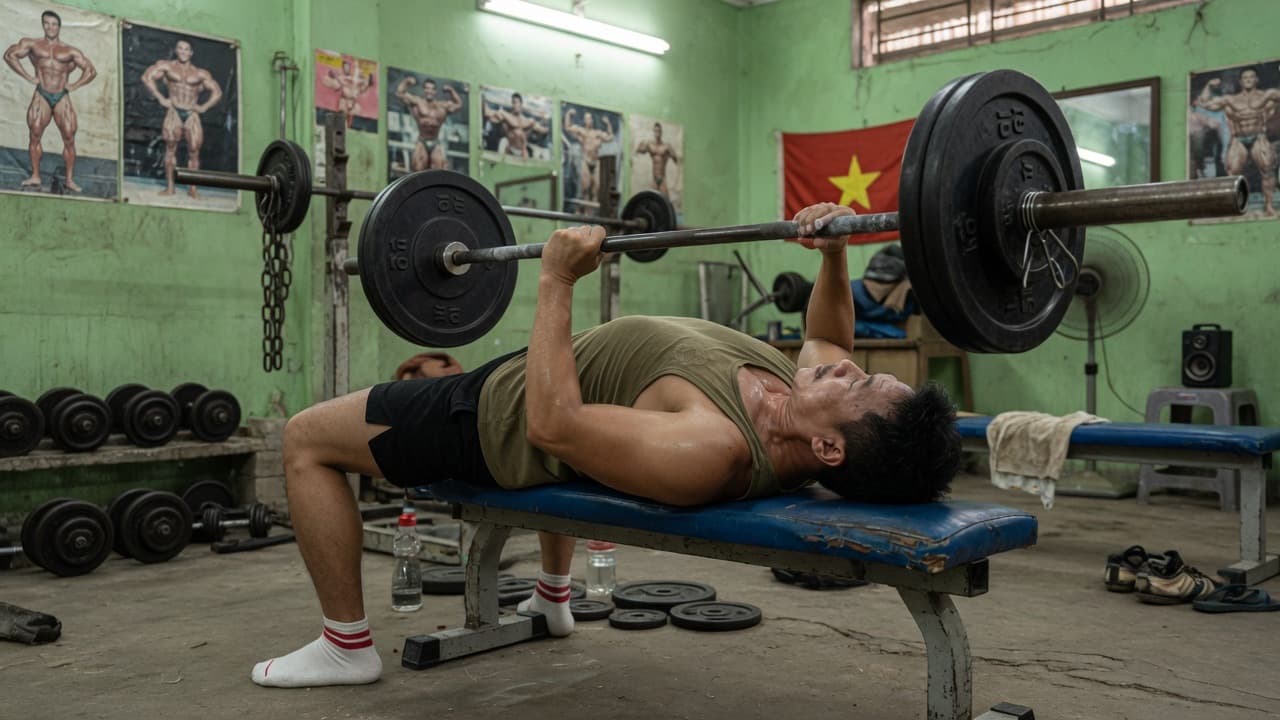
- Lie down: eyes roughly under the bar; head–shoulders–glutes on the bench, both feet solid on the floor.
- Scapulae: draw the blades down–back as if tucking them into back pockets; keep that base the whole set.
- Natural light arch: do not force a maximal bridge; ribs not flared loosely open.
- Grip: wide enough that on the way down the forearms are roughly vertical; wrists stacked over elbows.
- Brace: inhale into belly–ribs, light squeeze, then unrack under control.
Lowering path and elbow angle
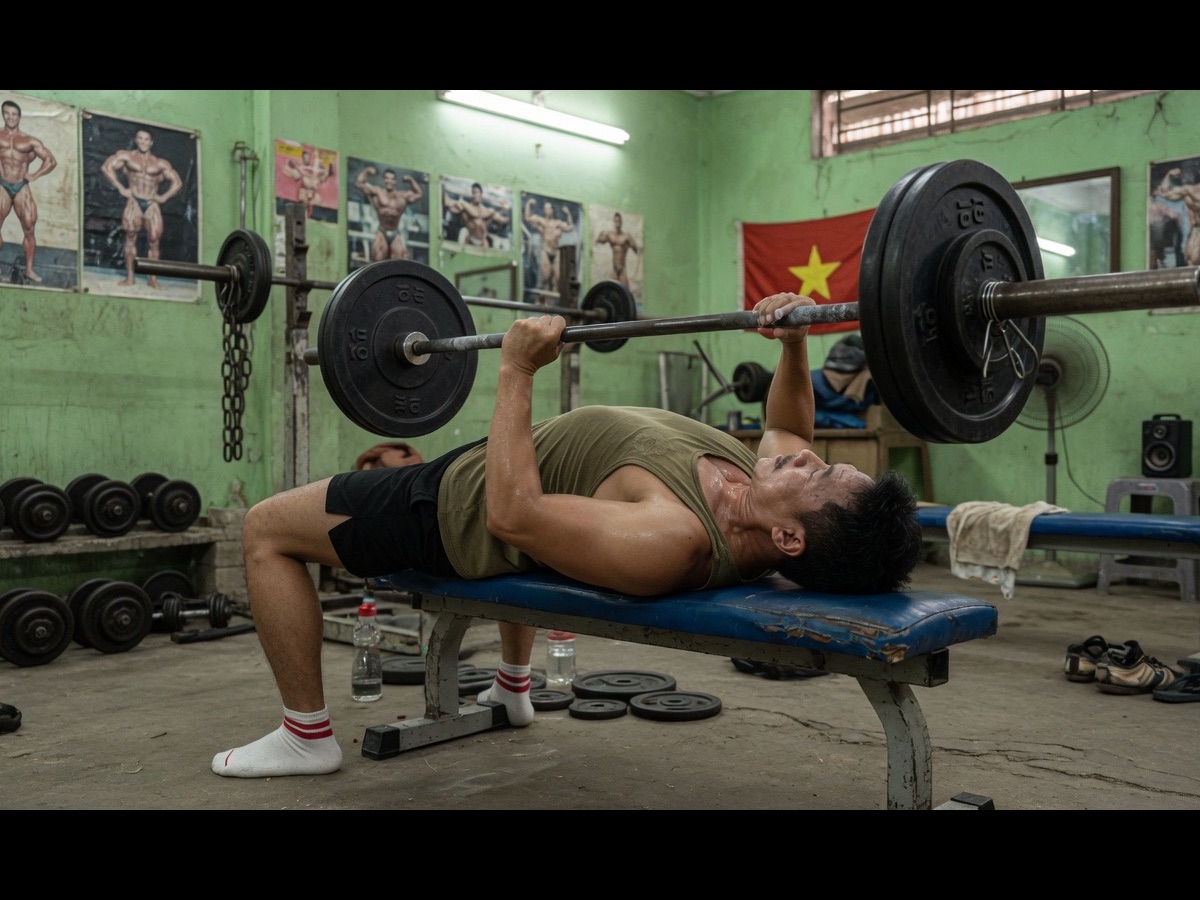
Lower toward mid–lower chest (not necessarily the neck), elbows about 45–70 degrees from the torso — not a rigid 90-degree flare if the front of the shoulder hurts. The bar travels slightly back toward the rack as you press — not a forced “vertical column” if the shoulders dislike it.
- Lower 2–3 seconds; light touch or stop just above the chest if contact hurts.
- Press until the elbows extend without a hard bounce lockout.
- Shoulders do not shrug to the ears at the top.
Short cue: “scapulae in pockets – feet gently drive the floor – elbows under the bar – brake on the way down – press the bar up and slightly back.”
Feet and glutes: not decoration
Both feet pressing the floor stabilize the body and transfer force. Glutes stay on the bench; avoid an extreme bridge that loses back–scapula contact. If short legs cannot reach the floor firmly, use a solid foot plate rather than floating heels.
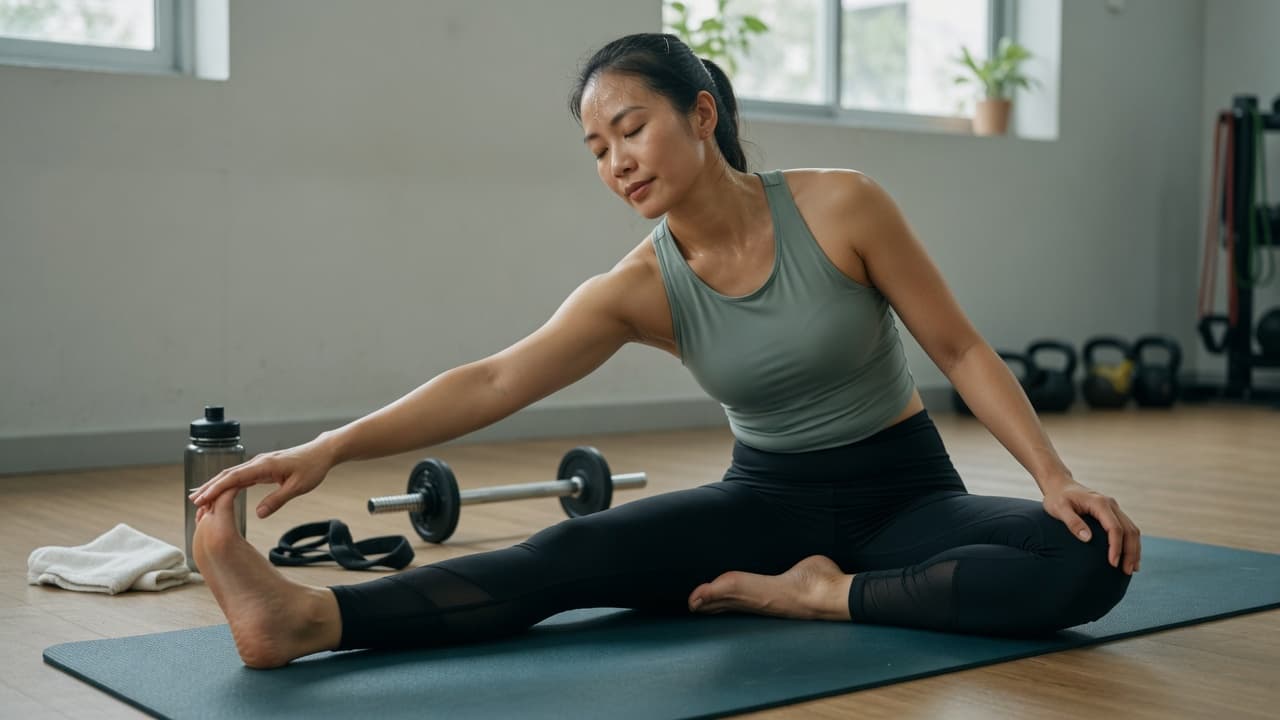
Warm shoulders–chest before heavy sets: joint circles, light band pull-aparts, then a few empty-bar or very light sets. A suggested circuit is in 8-minute warmup.
Checklist when the front of the shoulder complains
| Symptom / observation | Fix first | When to stop |
|---|---|---|
| Sharp front-shoulder pain on deep lowers | Shorten depth, tuck elbow angle, check scapulae | Pain rises rep to rep |
| Bar wobbles, wrists break | Crush the bar, stack wrists over elbows, cut load | Sharp wrist pain |
| Shoulders shrug to ears | Reset scapulae mid-set, cut load | Numbness down the arm |
| Low back arches out of control | Brace, solid feet, cut load | Sharp low-back pain |
Dumbbell or barbell floor press is useful when you want a natural depth limit. Pair with balanced pulling (rows, light face pulls, controlled hangs) — see pull-up progression and biceps–triceps balance.
Smart loading
- Add weight only when the target 3 sets still leave 1–2 clean reps in reserve.
- Keep the same setup: mark the grip with tape or bar knurl landmarks.
- Technique weeks: 3-second lowers with 10–20% less load.
- Spotter or safety pins near failure; do not “force one more” after the scapular base is gone.
Common mistakes
- Lifting the glutes off the bench to move more weight.
- Bouncing the bar off the chest for momentum.
- Going very wide or very narrow only because someone else does.
- Dropping all pulling and external rotation in the week → lots of pressing, little pulling.
Chest–triceps muscle soreness is different from joint pain. Spotting the difference early keeps benching longer than one week of forced PRs.
FAQ
Must the bar touch the chest?
Not every arm–shoulder structure likes a deep touch. A controlled, pain-free range with stable scapulae still stimulates well. Deepen gradually as setup gets solid.
Are dumbbell benches safer for shoulders?
Dumbbells let wrists and elbows self-adjust angles, helpful for many people. You still need a scapular base and controlled lowering; they are not automatically “perfectly safe” if the load is too heavy.
Is arching on the bench wrong?
A natural light arch with packed scapulae is common and accepted in ordinary powerlifting–gym practice. Extreme bridges that lose contact points or cause pain are not the goal of this article.
General setup technique only — not diagnosis or treatment of shoulder pain. See a doctor or physical therapist for pain, numbness, or a history of shoulder surgery.