End-of-workday neck–shoulder ache often gets labeled “weak core” or “need more planks.” Sometimes the real issue is screen height, sleep pillow, rarely standing up, and all-day shoulder shrugging. This piece is for office workers wanting to reduce common mechanical discomfort — not a therapy protocol for disc issues or acute injury.
If pain radiates into the arm, night numbness, grip weakness, or after an accident — see a professional instead of adding shrug sets.

Why neck–shoulders “complain” when you sit a lot
Head slightly forward, shoulders shrugged, mouse offset to one side: neck–shoulder muscles work statically for hours. They are not necessarily “absolutely weak” — they are tired from no rest and little posture change. Adding heavy front-of-shoulder work after a day of irritation can make discomfort worse.
A weak core can relate to overall posture for some people, but it is not the only switch. Before blaming the abs, fix the environment and stand-up rhythm.
Workstation and habit checklist for one day
- Screen: eye level or slightly below; do not hunch over a phone on your lap for long stretches.
- Mouse and keyboard: close to the torso, shoulders relaxed; avoid reaching far to one side.
- Chair: back support with a contact point; both feet on the floor.
- Every 30–45 minutes: stand, walk for water, shoulder circles 30 seconds.
- Sleep pillow: too high keeps the neck flexed at night — adjust before buying expensive gadgets.
Three on-time stand-ups often ease ache more than a 10 p.m. “shoulder fat-burn” session.
Helpful light movement (and what to avoid)
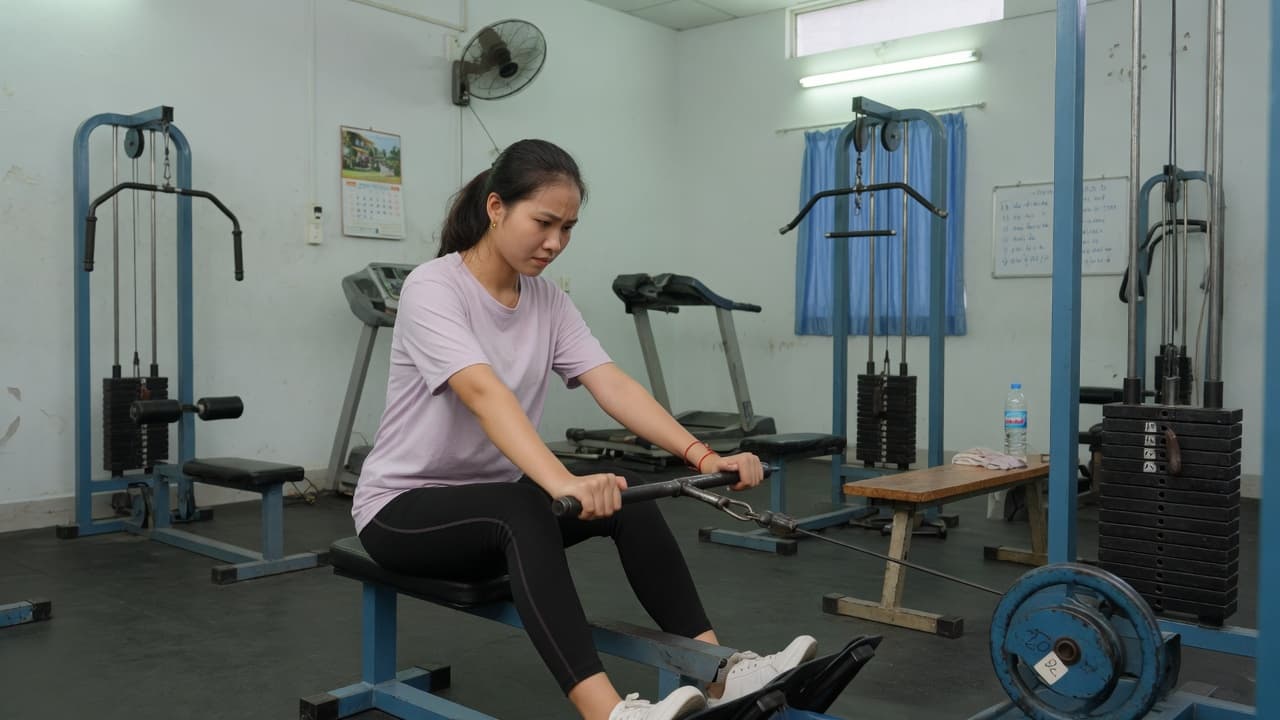
Helpful: walking after meals and between blocks; small shoulder circles; light doorway chest openers; gentle mid-back pulling at the gym if there is no sharp pain. Morning chest–hip openers in 10-minute hip mobility and post-training stretching also support overall posture.
Avoid during acute ache: heavy shrugs in a “hurt means detox” style, forcing end-range neck spins for the crack, dozing at the desk then yanking hard stretches on waking.
Planks and dead bugs still belong in a training week if they do not provoke pain — but they do not replace raising the laptop and walking.
When to see a practitioner / doctor
- Pain lasting many weeks despite chair fixes and load cuts.
- Numbness or tingling radiating into the arm or hand.
- Clear weakness, wasting, or night pain that repeatedly wrecks sleep.
- After a fall/impact, or with dizziness/double vision.
- Swelling, heat, or a stiff neck that cannot turn to the side.
Physical therapy or specialty care helps rule out causes that need intervention. Self-labeling a “herniation” from the internet then yanking your own neck is a poor path.
Fit with the training schedule
Chest/shoulder push days: warm up the scapulae carefully, cut volume if the neck is aching after 10 hours of meetings. Rest days: walk and light chest openers — do not turn them into shrug sessions. Work-stress weeks: drop upper accessories — mindset of stress week, cut volume.
Track 2 weeks: end-of-workday pain (0–10), stand-up count, bedtime. If pain drops as habits improve, you are on a common mechanical track. If nothing changes or it worsens, do not intensify stretching — get a professional assessment.
FAQ
Do I need weekly neck massage?
It can feel better short-term for some people, but it does not replace workstation fixes and movement breaks. If you only cope via nightly massage, find the maintaining cause instead of only temporary rubbing.
Will trapezius training make the neck worse?
Heavy shrugs and overloaded upper traps after a day of shrugging can raise discomfort. Prioritize mid–lower back pulling and shoulder control before trap isolation.
Does a one-shoulder bag matter?
A heavy bag carried long on one side can contribute to posture imbalance. Switch sides, lighten the load, or use a two-strap backpack for longer commutes.
Disclaimer: Lifestyle and posture ideas for common mechanical discomfort — not diagnosis or treatment of spine–neck–shoulder disease. Seek a clinician for neurological signs, injury, or lasting pain.