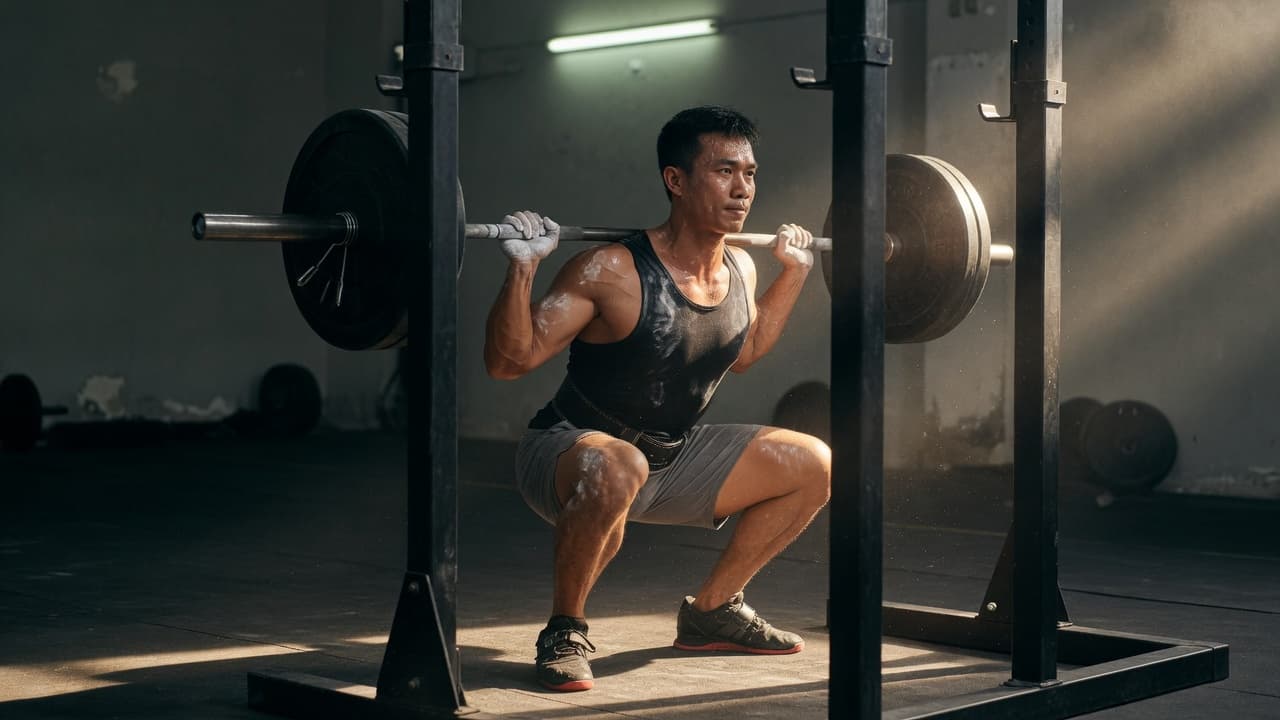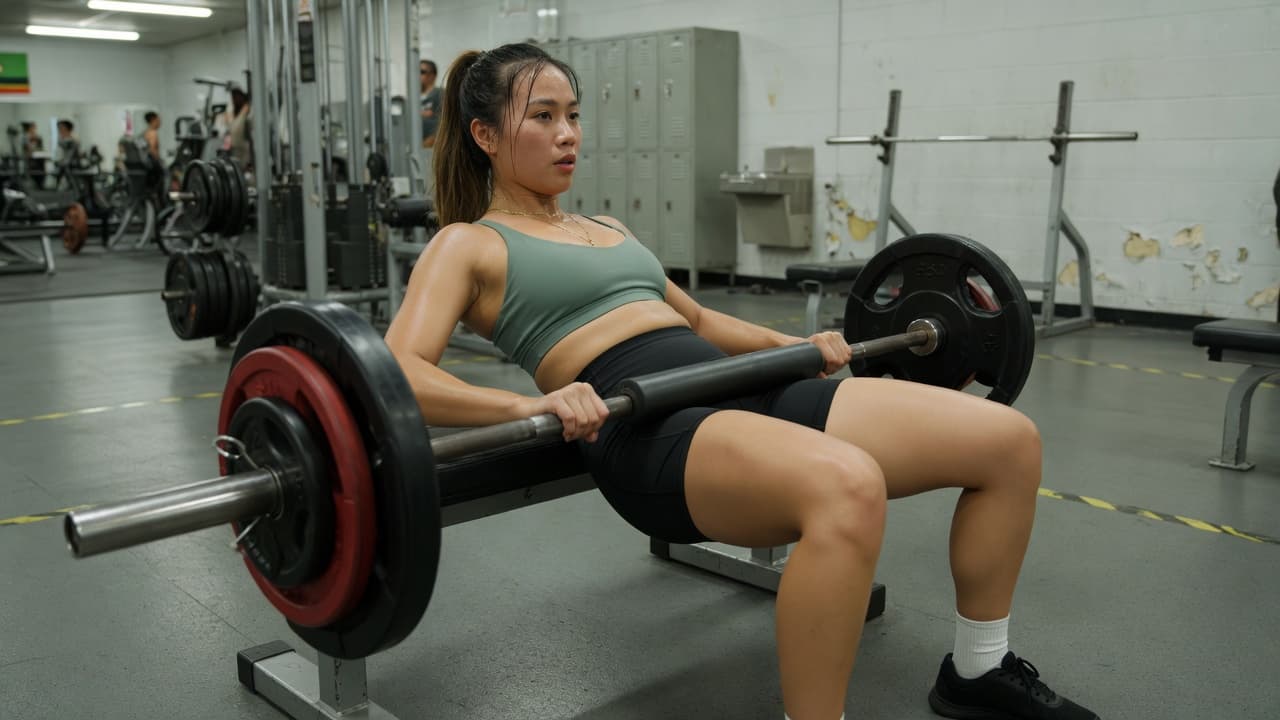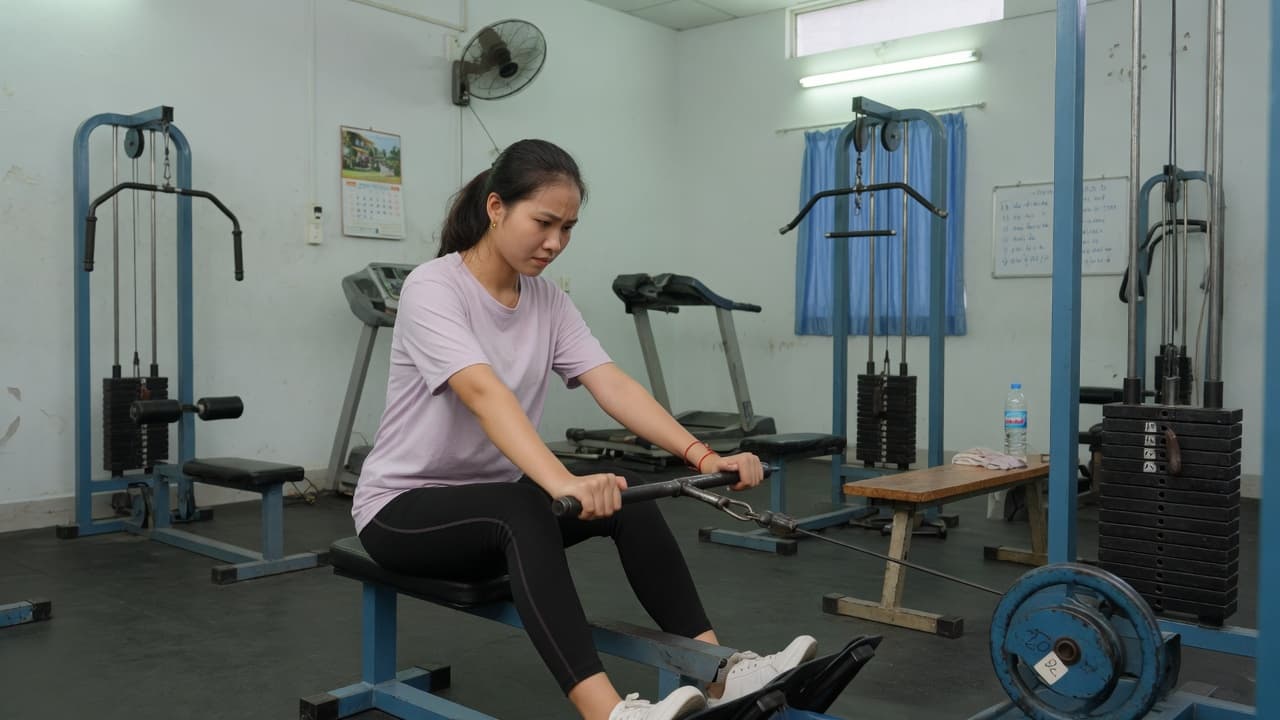
A massage gun (percussion) eases the feeling of muscle stiffness after hard sessions — useful as a support tool. It does not replace sleep, enough calories, and deload weeks. If you hammer the gun 20 minutes every night, sleep 5 hours, and never reduce volume, progress and joints still pay.
Recovery base: sleep and muscle recovery. Off days: what to do on a rest day.
What the gun can and cannot do
- Can: temporarily ease stiffness, feel better before light mobility, build a post-training “care” habit.
- Is not: magical lactate clearing, a warm-up replacement, injury treatment, or a free pass to skip deloads.
- Do not press: the spine, front of the neck, exposed kidney area, hot swollen joints, open wounds.
Recovery is mainly planned rest + sleep + nutrition. The gun is the top layer.
Practical use
- Choose a soft/medium head for large groups (thighs, glutes, mid-back, calves).
- 2–3 minutes per group, move slowly; stop if sharp pain or numbness.
- Moderate intensity — light skin redness is fine; bruising and numb hands mean too much.
- After heavy legs: front/back thighs and glutes are enough; no need a “full-body 30 minutes.”
- Combine with easy walking and gentle stretching rather than relying on the gun alone.
| Situation | Gun | Prioritize instead |
|---|---|---|
| DOMS 24–48h | Light 2–3 minutes | Sleep, protein, walking |
| Sharp joint pain | Do not press the joint | Reduce load; get checked if it lingers |
| Accumulated fatigue over weeks | Optional | Deload / cut volume |
| Poor sleep | Does not fix the root | Bedtime, caffeine, stress |
Deload and sleep remain the pillars
Every 4–8 weeks (person-dependent), reduce volume or intensity for 1 week so tissue and the nervous system catch up. The gun does not replace that week. Likewise, short sleep worsens DOMS and drops strength — protect bedtime before buying a new head attachment.
- Pain increases after using the gun → stop the tool, reassess form and load.
- Using it on lightly warmed muscle feels better than cold hammering right after waking.
- Foam rollers and guns share a similar comfort goal; pick what you use consistently over what is more expensive.
Budget: a basic model is enough for most lifestyle lifters. Do not let “athlete-level recovery” marketing replace still chasing PRs every week with no rest. Log sleep hours, session RPE, and joint feel — that is the real recovery dashboard.
Helpful add-on after training: hips, chest, hamstrings. A short gun pass before mobility can feel nicer; still keep ranges free of sharp pain.
Sample use in a 4-day lifting week
- After legs: 2–3 minutes front thigh, rear thigh, glute each side — ~10–12 minutes total.
- After pull/back: light mid-back and lats, avoid pressing into spinal bone.
- Rest day: use only if stiffness is annoying; prefer walking.
- Deload week: reduce or skip the gun — do not increase percussion time because you are “recovering.”
If after weeks of consistent gun use you still accumulate fatigue, look at sleep and volume before buying a stronger device. The best recovery tool is the session you do not pile on when the body already signaled. The gun is seasoning; sleep and deload are the main course.
FAQ
1. Can I use the gun every day?
On healthy muscle, a few light minutes are usually fine. If you bruise or feel more wiped, cut frequency and intensity.
2. Use it before lifting to get stronger?
It can warm the feel, but it does not replace movement warm-ups. Keep ramp-up sets with the bar/light weights.
3. Knee pain after squats — hammer the gun hard into the knee?
No. Avoid the joint. Fix load, form, and rest; lasting knee pain needs a professional.
General recovery education — not injury diagnosis. Sharp pain, swelling, numbness, or suspected damage — stop self-treating with the gun and see a doctor/PT.