No gym membership does not mean only light dance-cardio videos. A mat, a pair of 4–12 kg dumbbells (or a pair you can progress), and 30–40 minutes × 4 days a week is enough to build glute–thigh strength, back work, and basic pressing in the living room. This article gives a 4-day plan, move order, how to pick loads, and when to upgrade to a bar or a gym floor.
The goal is not “maximum sweat” but finishing all sets with clean form. Prefer a shorter no-equipment version? See the 30-minute home plan without machines. Ready for heavier lower work? Ease into the 3-day glute–thigh plan for women.
Minimum gear
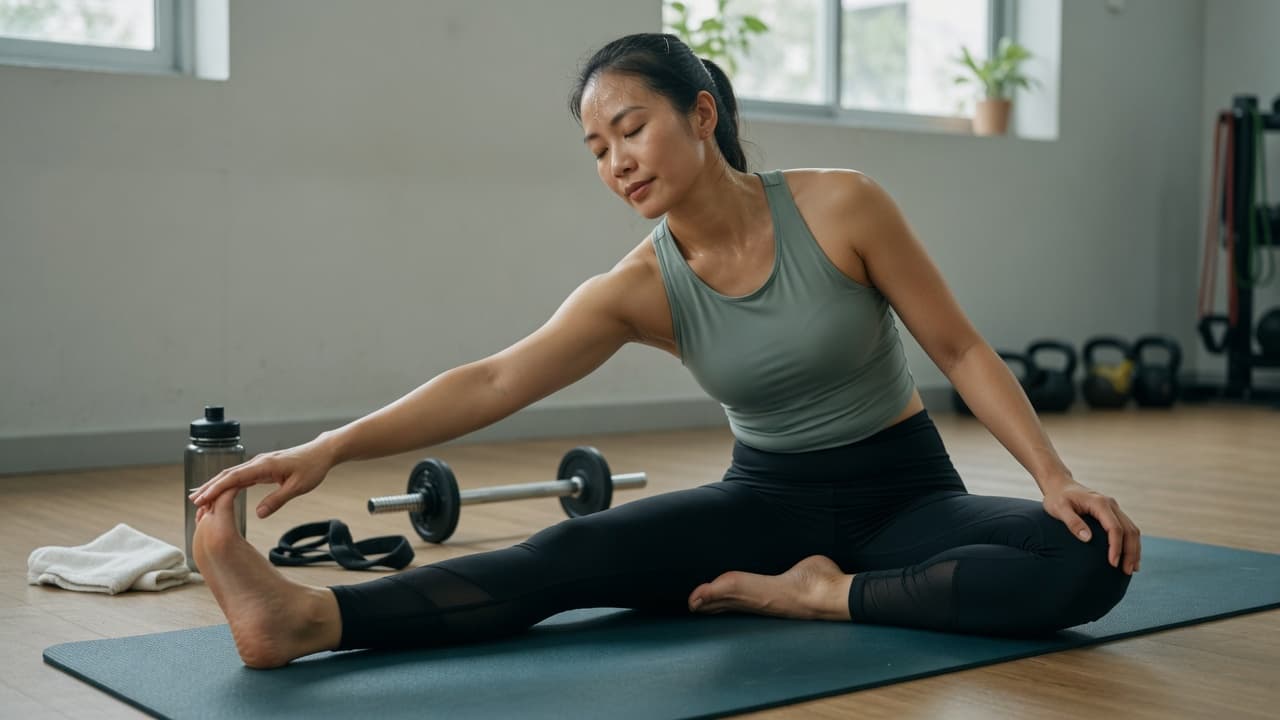
- Yoga mat or thin non-slip mat.
- One or two dumbbells: beginners often start 4–8 kg for raises/light presses and 8–12 kg for goblet/rows if strength allows; increase when reps get easy.
- Sturdy chair/sofa for Bulgarian or light triceps dips (optional).
- Mini band if you have one — not required week one.
- Rest timer: 60–90 seconds.
Space: enough to step back for a hinge without hitting the coffee table. Barefoot or grippy shoes both work if the floor is not slippery.
4-day / week frame
| Day | Session | Focus | Duration |
|---|---|---|---|
| Day 1 | Lower A | Squat + bridge | 30–40 minutes |
| Day 2 | Upper push–pull | Floor press + row | 30–35 minutes |
| Day 3 | Rest or walk | Steps | 20–40 minutes |
| Day 4 | Lower B | Hinge + single-leg | 30–40 minutes |
| Day 5 | Short full-body | Goblet + row + core | 30 minutes |
| Days 6–7 | Rest / walk | Recovery | — |
Shift rest days around work; keep sensible spacing between the two lower days (avoid stacking two hard leg days if knees are still sore).
Day 1 – Lower A
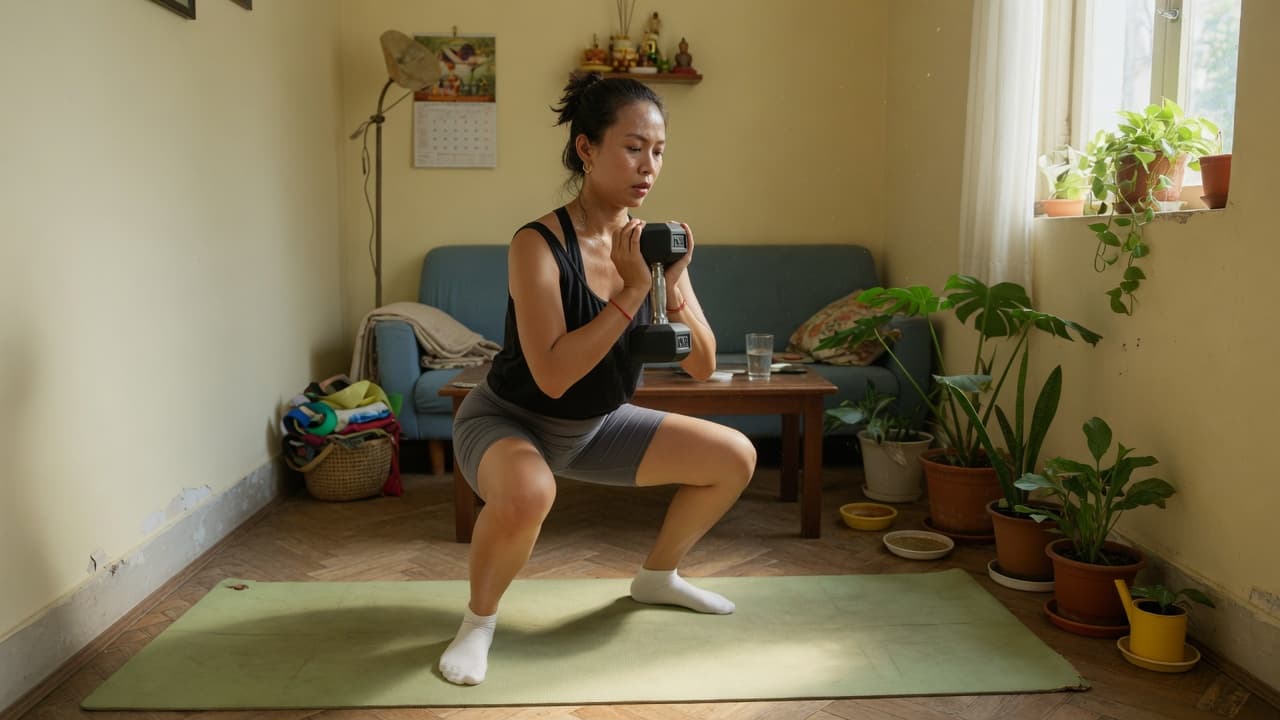
- Goblet squat: 3×8–12
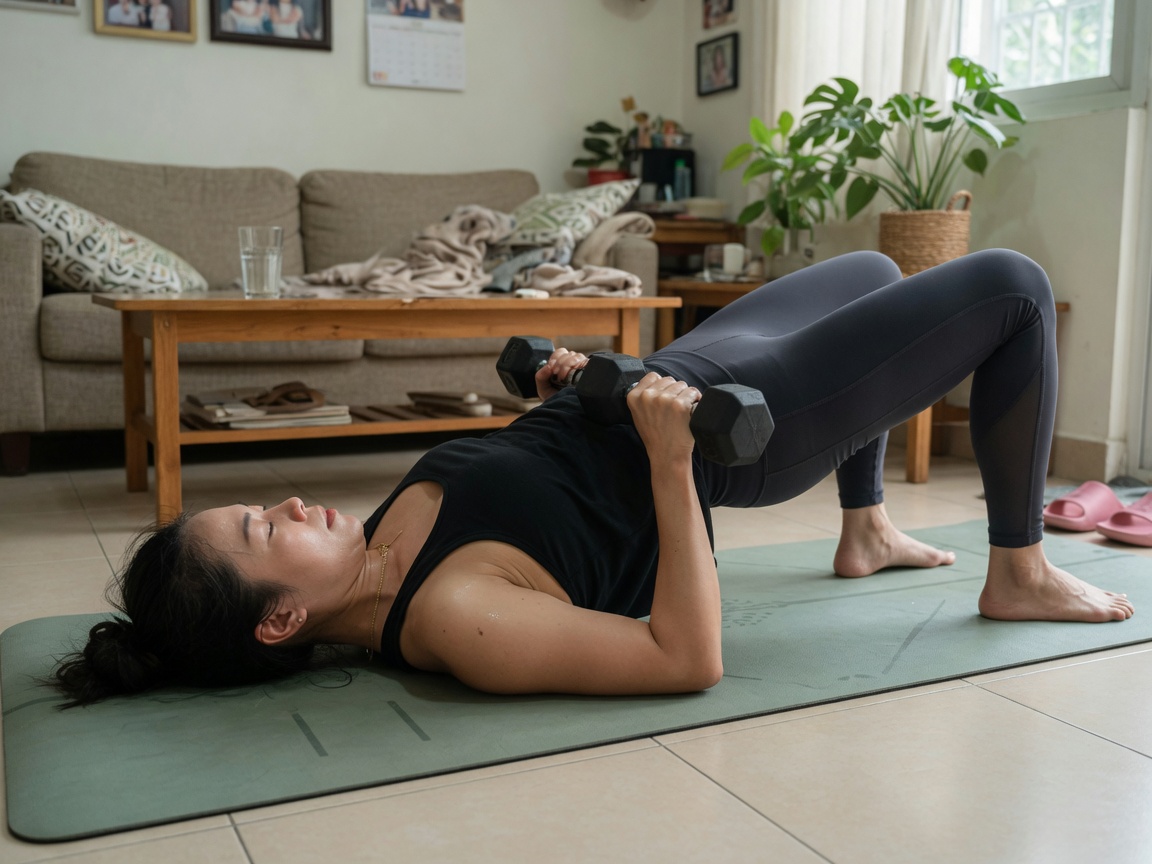
- Glute bridge with weight on the hips: 3×8–12
- Reverse lunge in place holding dumbbells (or unloaded): 2–3×8/leg
- Weighted calf raise: 2×12–15
- Side-lying hip raise or band lateral walk: 2×10–12/side
Goblet cues: knees track toward toes, chest moderately open, controlled descent. Bridge: drive through heels, squeeze glutes at the top, no low-back over-arch.
Day 2 – Push and pull
- Dumbbell floor press: 3×8–12
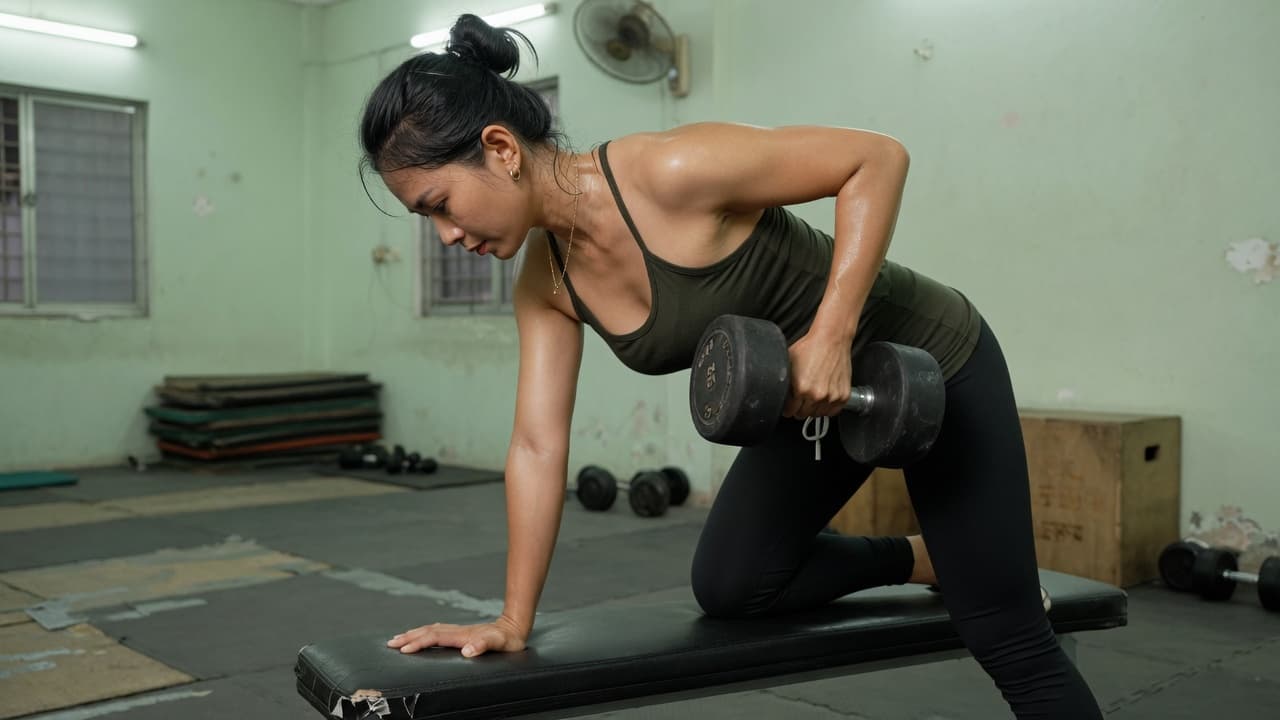
- Two-arm bent-over row or one-arm row with hand on a chair: 3×8–12
- Standing or seated overhead press: 2–3×8–10
- Light lateral raise: 2×12–15
- Dead bug: 2×6–8/side
Floor press is safer than a bench when training alone at home: elbows tap the floor, then press. Row: back nearly flat, pull elbows toward hips, avoid shrugging to the ears.
Day 4 – Lower B (hinge + unilateral)
- Dumbbell Romanian deadlift (two bells or light suitcase style): 3×8–10
- Bulgarian split squat with rear foot on a low chair: 3×8/leg
- Single-leg glute bridge: 2×8–10/side
- Moderate-stance sumo goblet squat: 2×10–12
- Hollow hold or dead-bug variation: 2 short sets
Home RDL: hips back, shins vertical, bells close to the legs; stop while the back stays flat. If the low back feels like a “wrong pull,” shrink range and load.
Day 5 – Short full-body
- Goblet squat: 2–3×8–10
- One-arm row: 3×8–10/side
- Floor press: 2×8–10
- Hip bridge: 2×10–12
- Suitcase march in place holding one dumbbell: 2×20–30 seconds/side
Home formula: 4 days present + loads heavy enough that last sets are hard beats 20 random “calorie burn” minutes every night then quitting next week.
Choosing and progressing dumbbell loads
- Last set has 1–3 clean reps left → roughly right.
- Easy 12–15 with good form for two weeks → raise load or slow the descent to 3 seconds.
- You do not need an expensive pair: one heavier bell for goblet/row and one light for raises still works (switch hands).
- When 12 kg feels light on hinge/squat: consider adjustable bells, a kettlebell, or move some sessions to a gym with a bar.
Living-room safety
- Do not train among kids’ toys / cords / wet floors.
- Bulgarian: non-slip chair; shallower range if the front knee complains.
- Skip high box jumps and all-out burpees if neighbors/ceilings or joints are not ready.
- Sharp joint pain ≠ muscle soreness: stop that variation, swap the move, seek care if it lasts.
Progress over 6–8 weeks
Weeks 1–2 learn form with easy loads. Weeks 3–5 add reps then kilograms. Weeks 6–8 can add 1 set on goblet, bridge, row. Keep a phone log. If you only manage 3 days, drop day 5 first; keep two leg days and one push–pull day.
FAQ
Is a 5 kg dumbbell enough for firmer glutes?
At first it can be enough to learn bridges and squats. To keep progressing you will need more load or harder variations (single-leg, slow tempo, extra sets). Glutes respond to progressive resistance — not the same bell forever.
Should I train every day because home is convenient?
No. Four days is enough stimulus; a fifth easy day is optional based on recovery. Hard legs every day overloads knees/hips and tanks set quality.
I only have one dumbbell?
Still workable: goblet, suitcase RDL, one-arm row, one-arm floor press (careful with torso twist), single-arm raises. Prioritize control over speed.
This is general fitness education, not medical advice. Acute back–knee pain, dizziness, heart disease, pregnancy, or postpartum — get clinical clearance before home resistance training. Stop immediately for sharp pain, unusual limb numbness, or unexplained breathlessness.