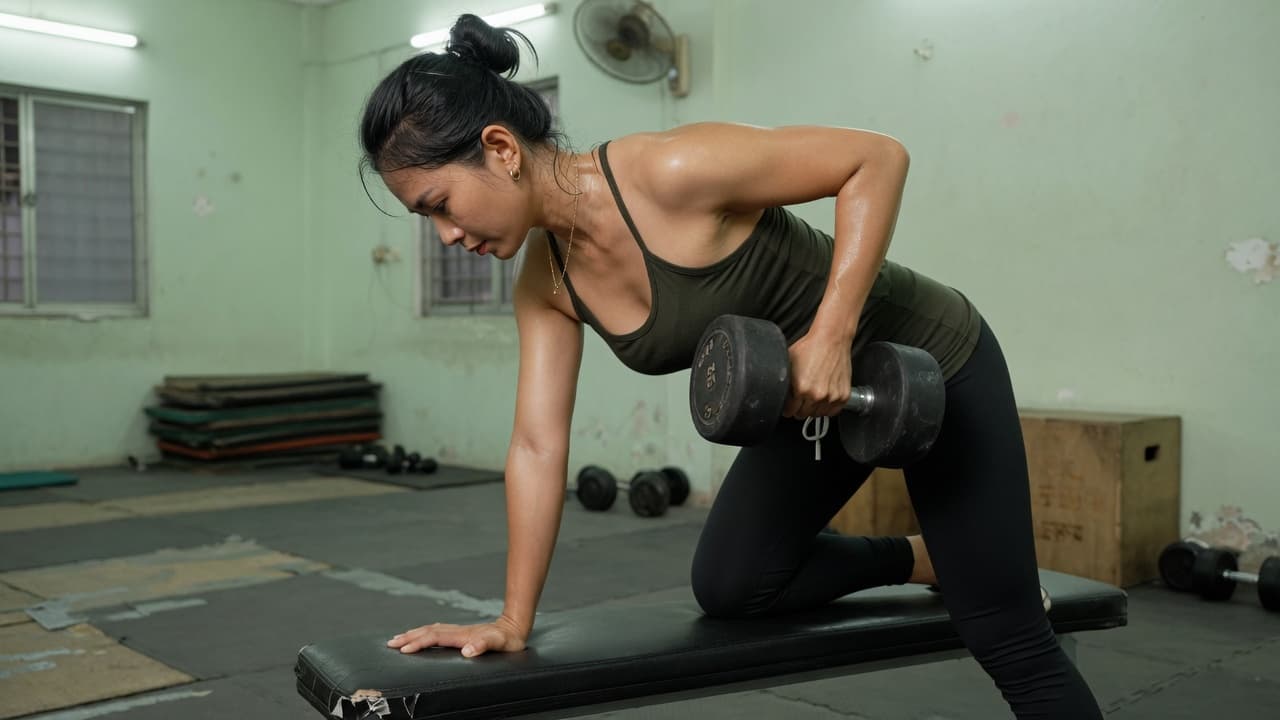
Start only after clear clearance from your obstetrician and/or a physical therapist. This article is not a rehab protocol, not a substitute for assessing diastasis recti or the pelvic floor, and not a “get your body back fast” postpartum program. If you still have unusual bleeding, pelvic-floor pain, leaking urine, abdominal doming when you strain, or have not completed follow-up milestones — see a clinician first; do not self-progress with the schedule below.
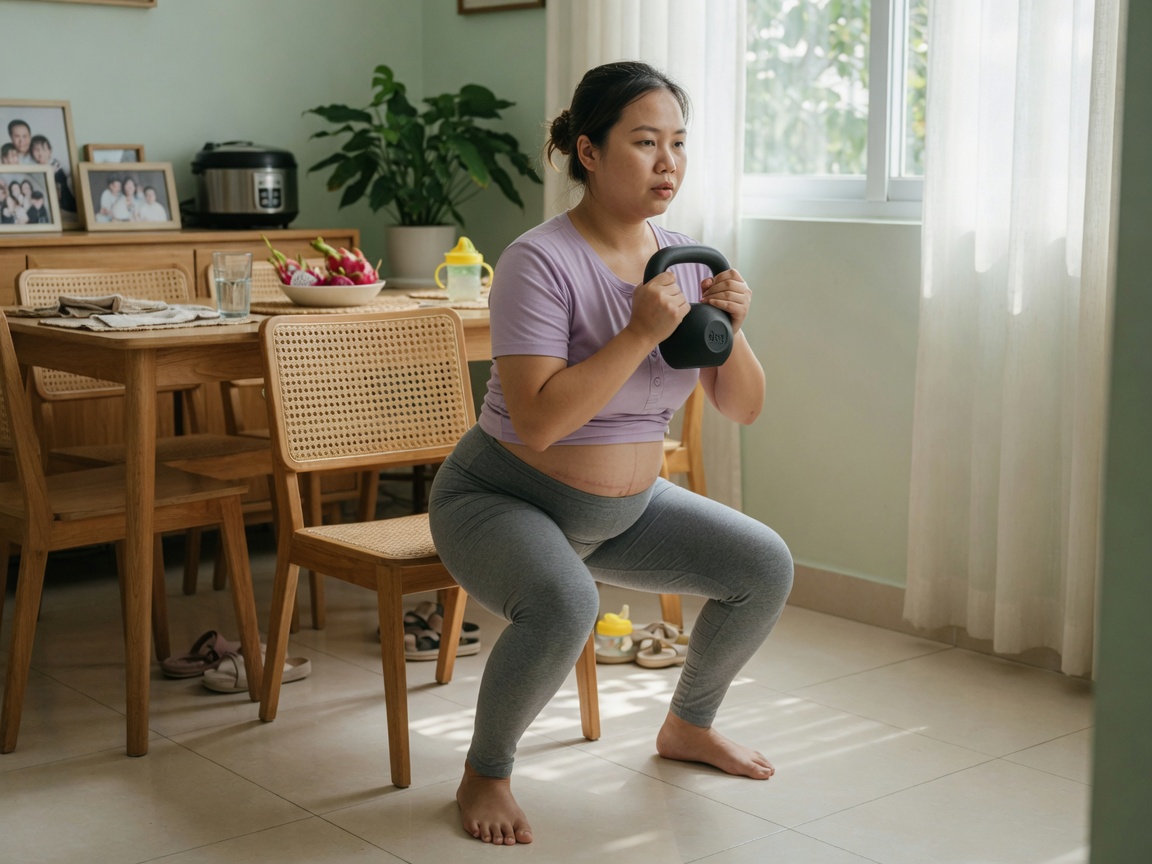
From about month four onward (a historical training reference only — not a doctor’s permission slip), many cleared people can rebuild light strength: walking, box goblet squats, band rows, dead bugs. The goal is relearning resistance and steady breathing — not PRs, not jumping, not max lifts. If you are returning to a gym after a long break, the mindset–equipment frame in first time at the gym for women still helps.
Safety principles (repeated on purpose)
- Have clearance from a doctor/physio before any resistance work.
- Diastasis and pelvic floor: assessment and progression belong to a clinician — do not “test” yourself with hard crunches.
- No jumping, burpees, high-speed running, or max deadlifts/squats in this phase.
- Sharp pain, pelvic heaviness, increased bleeding after training, dizziness: stop and contact a professional.
- Sleep and stress affect weight and adherence — a practical angle is in sleep, stress, and weight in women.
Postpartum core: not 500 crunches
Trunk stability here usually starts with breathing, ribcage–pelvis stacking, and short dead-bug / side-plank variations — not hundreds of sit-ups. General direction (not a physio replacement) is in core is not 500 crunches. If the abdominal wall domes into a “ridge” when you strain or lift your head, that is a clinician signal — not “one more set.”
Frame: 3 light strength days + walking
| Day | Content | Duration | Intensity |
|---|---|---|---|
| Monday | Strength A | 25–35 minutes | RPE 5–6; lots in reserve |
| Tuesday | Walk | 20–40 minutes | Talking pace |
| Wednesday | Strength B | 25–35 minutes | Band + very light dumbbells |
| Thursday | Walk / rest | — | Listen to your body and sleep |
| Friday | Strength C (short) | 20–30 minutes | Technique, no ego |
| Weekend | Rest / short walk | — | Do not “make up” with hard training |
Session A – light lower body with a box
- March in place or walk around the room: 3–5 minute warm-up.
- Goblet squat to a box/chair (light touch then stand): 2–3×6–8 — very light load or just a water bottle.
- Floor glute bridge unloaded or with tiny load: 2×8–10.
- Low box step-up (only if balance is solid): 2×6/leg.
- Slow dead bug: 2×4–6/side — steady breath, low back not arching out of control.
The box limits depth and gives a safe stop. Do not force “thighs parallel” if the pelvic floor or knees are not ready.
Session B – light pull and press
- Band row (solid door/column anchor): 3×8–10.
- Wall push-up or high-table push-up: 2–3×6–10.
- Light band pull-apart: 2×10–12.
- Very light floor press if lie-to-stand changes feel fine: 2×8.
- Side-lying breathing / rest position per physio guidance if you have it; otherwise just 1 minute of quiet breathing.
Rows help carrying–feeding posture (forward shoulders). Avoid neck shrugging. Broken band or weak anchor: switch to a very light gym row machine once cleared and you have a safe setup.
Session C – short full-body
- Sit-to-stand from a chair: 2×6–8
- Band row: 2×8–10
- Glute bridge: 2×8
- Dead bug: 2×4/side
- Slow walk 5–10 minutes to finish
Phase slogan: light, consistent, allowed to stop — not “repay months off” in one week.
Breastfeeding and calories: no crash diets
If you are breastfeeding, prioritize eating enough per your doctor/dietitian — do not cut deep to “get the shape back this week.” Low energy causes fatigue, can affect milk for some people, and wrecks even light sessions. Drink water steadily. This article does not give hard calorie numbers for nursing parents; any deficit needs personal clinical advice.
Not for this phase
- Jumping HIIT, box jumps, hard interval running.
- Long planks to failure if physio has not cleared variations.
- High-rep crunches/sit-ups to “erase belly fat.”
- Heavy floor deadlifts, big-plate hip thrusts, max squats.
- Waist trainers/corsets replacing stability work and sleep.
When to progress gradually?
Only while clearance still applies under follow-up, pelvic-floor/abdominal red flags are gone, sleep and fatigue are temporarily okay, and your clinician agrees: deepen squat range, add 1–2 kg, then consider a light first-month gym plan. Do not leap from band rows to a hard 5-day program in two weeks.
FAQ
Is month 4 when everyone can train again?
No. Month 4 is only a common conversation marker; the decision sits with your doctor/physio, birth type, complications, and current symptoms. Some people need longer; some are cleared earlier on their own plan — do not compare calendars with strangers online.
I have diastasis — can I do dead bugs?
They may be part of a physio-designed plan, or not appropriate yet. Do not self-diagnose separation severity or write your own program. See a clinician for stage-appropriate work.
What should I do first for postpartum belly fat?
Get clearance, sleep and eat enough (especially while nursing), walk, and use light strength to keep muscle. Fat loss happens when overall conditions allow — not from crunches or starvation. If weight and body-image anxiety are high, tell your doctor so you can get the right support.
This is general education only after medical clearance — not a pelvic-floor/diastasis rehab protocol, not obstetric advice, and not clinical nutrition guidance for nursing parents. Follow your obstetrician and physical therapist. Stop and contact care for rising pain, unusual bleeding, fever, breathlessness, or worsening pelvic-floor symptoms.