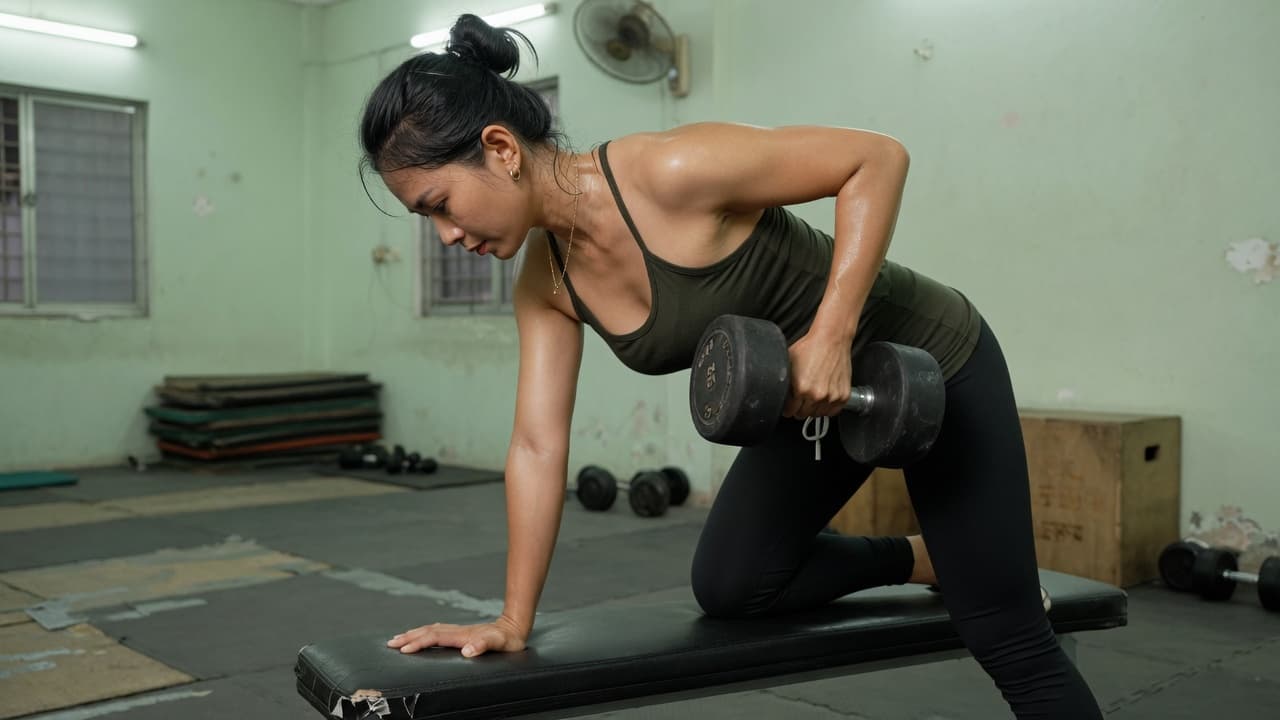
Beginners who want to build muscle often get lost in complicated body-part splits. A simple upper–lower model four days a week is easy to remember, hard enough to progress, and still leaves room for knees, shoulders, and the lower back to recover. This article gives you ready-made sets, reps, rest times, a weekly progression rule, and a sample week.
For the first 8–12 weeks, the goal is not “max pump every session.” Learn the big lifts, keep technique steady, then add load or reps. Once that base is solid, more complex programming can wait.
Why upper–lower works for beginners
Two upper and two lower sessions mean each major muscle group gets trained about twice a week. That frequency usually builds strength and skill faster than hitting each group once. You also avoid marathon “leg days” or stacked chest–back accessory lists that leave you tired without much progress.
- Upper days: horizontal push, horizontal/vertical pull, overhead press, light biceps/triceps.
- Lower days: squat or variation, hip hinge (RDL), single-leg work, short calves and core.
- Rest between heavy days: at least one empty day or easy walking.
If work only allows three sessions, see the 3-day full-body plan for busy people, then return to upper–lower when you can lock in a fourth slot.
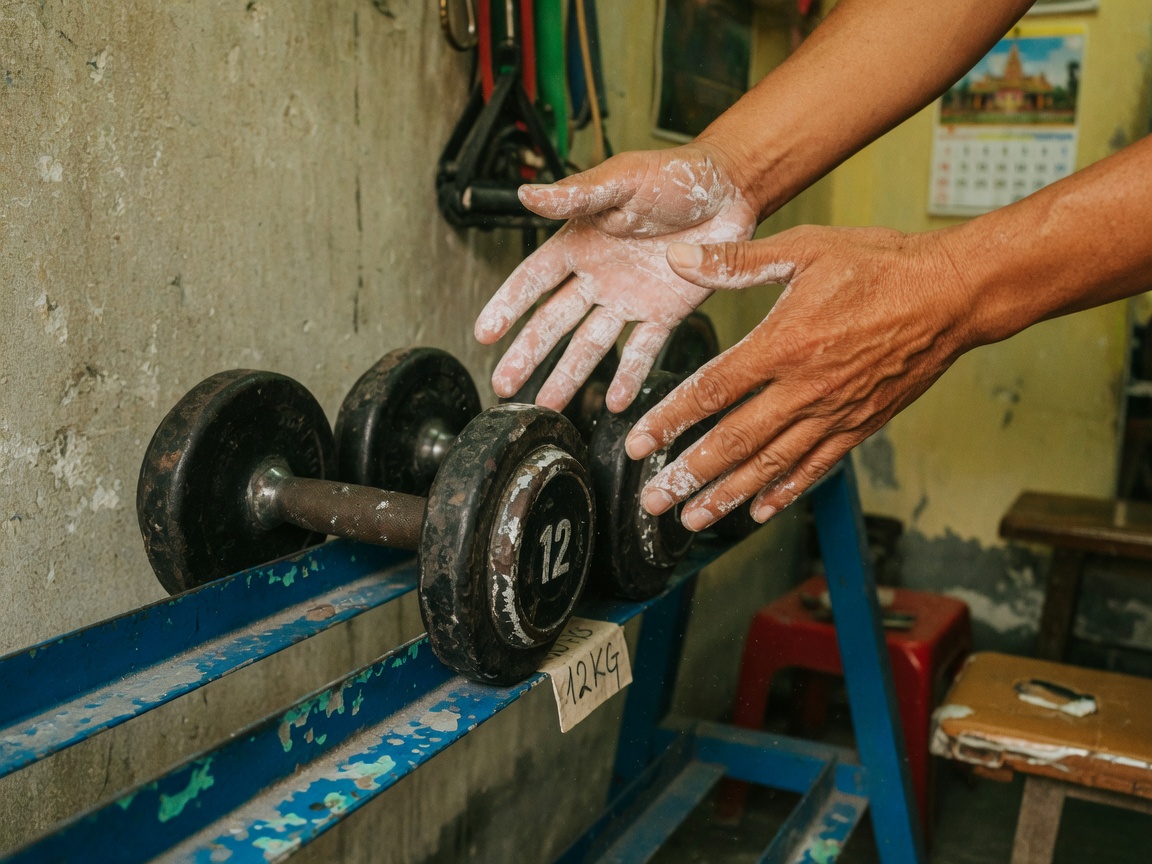
Sets, reps, and rest
Beginners should favor the 6–12 rep range on main lifts. Use this shared frame for both upper and lower:
- Main compounds: 3 sets × 6–10 reps, rest 90–150 seconds.
- Accessory lifts: 2–3 sets × 8–12 reps, rest 60–90 seconds.
- Small isolation (arms, calves, core): 2 sets × 10–15 reps, rest 45–60 seconds.
- Target RPE: stop with about 1–3 reps “in the tank” — no need to trash form for a burn.
Warm up 5–8 minutes: easy walk or bike, joint circles, then 1–2 light feeler sets before working sets. Breathe steadily; brace your core before heavy pushes or pulls.
Sample Upper and Lower sessions
Upper A
- Bench press (dumbbell or barbell): 3×6–10
- Seated row or bent-over row: 3×6–10
- Overhead press standing or seated: 3×8–10
- Pulldown or assisted pull-up: 2–3×8–12
- Light biceps + triceps supersets: 2×10–15 each
Lower A
- Goblet squat or barbell squat (depth you control): 3×6–10
- Romanian deadlift: 3×6–10
- Bulgarian split squat or walking lunge: 2–3×8–12 per leg
- Calf raise: 2×12–15
- Plank or dead bug: 2 sets × 20–40 seconds / 8–10 reps per side
Upper B and Lower B
Upper B changes press angle (slight incline) and row style (chest-supported if available). Lower B can use leg press or goblet squat if your lower back is still sore from RDLs, then add hip thrust or loaded bridge. You do not need 8–10 moves per session; 5–6 is enough while you are still learning form.
Sample weekly schedule
| Day | Session | Estimated time | Notes |
|---|---|---|---|
| Monday | Upper A | 50–65 minutes | Balance push and pull |
| Tuesday | Lower A | 50–65 minutes | Squat + RDL; rest fully between sets |
| Wednesday | Active recovery | 20–40 minutes | 6–8k steps, light mobility |
| Thursday | Upper B | 50–65 minutes | Change press/pull angles |
| Friday | Lower B | 50–65 minutes | Single-leg work + glute bridge |
| Sat–Sun | Rest / walk | — | Sleep enough; eat enough protein |
You can stack Mon–Tue–Thu–Fri if weekends are busy. Avoid two lower days back-to-back if knees or hamstrings are already cranky.
Progression: +2.5 kg or +1–2 reps
Keep a training log. On each main lift, when you finish all sets at the top of the rep range with clean form, add about 2.5 kg next week (or the smallest plate your gym allows) and return to the low end of the range. If you cannot add load yet, add 1–2 reps per set in the current week.
Example: bench 20 kg × 3×10 clean → next week 22.5 kg aiming for 6–8, then climb back toward 10. Do not add weight when shoulders dump forward, the back rounds out of control, or you need to bounce the bar.
Slow, steady progress over 12 weeks usually beats random “max days” followed by long layoffs from pain.
Food, sleep, and recovery
Building muscle needs a small surplus or at least maintenance calories plus enough protein. Start with familiar foods; see protein from Vietnamese food without mandatory whey. Sleeping 7–9 hours and managing stress feed next week’s strength — more in sleep and muscle recovery.
Rest days are not total stillness: walking, joint mobility, and a short nap if nights run short help more than extra HIIT when you are still new.
Common mistakes
- Too much isolation: four or five arm exercises before the big presses and pulls are solid.
- Rest too short on compounds: 45 seconds between heavy squats usually wrecks form.
- Changing the program every week: the body never adapts; keep the frame 6–8 weeks.
- Skipping the warm-up then jumping to heavy loads: especially risky on hip hinges and overhead presses.
- Comparing loads to long-time lifters: the real yardstick is your form plus your own log.
FAQ
I only have three days — can I still use this?
You can compress into full-body, or keep one upper and two lower (or the reverse) based on weak points. More practical: switch to a dedicated 3-day plan, then return to four days when your schedule settles.
How long until muscle growth shows?
Strength and skill often improve in 3–6 weeks. Clearer changes in arms, chest, and thighs usually take 8–12 weeks with enough food and sleep. Measure girths and take same-pose photos every 4 weeks instead of staring only at the scale.
Do I need a Smith machine or lots of isolation machines?
No. A barbell or dumbbells, a bench, and a simple cable/pulldown setup cover beginners. Machines help when you want a safer learning path, but do not delay training because the gym “doesn’t have enough machines.”
This article is general training information, not a medical diagnosis or prescription. If you have joint pain, dizziness, a chronic condition, or are pregnant, talk with a doctor or qualified professional before adding load.