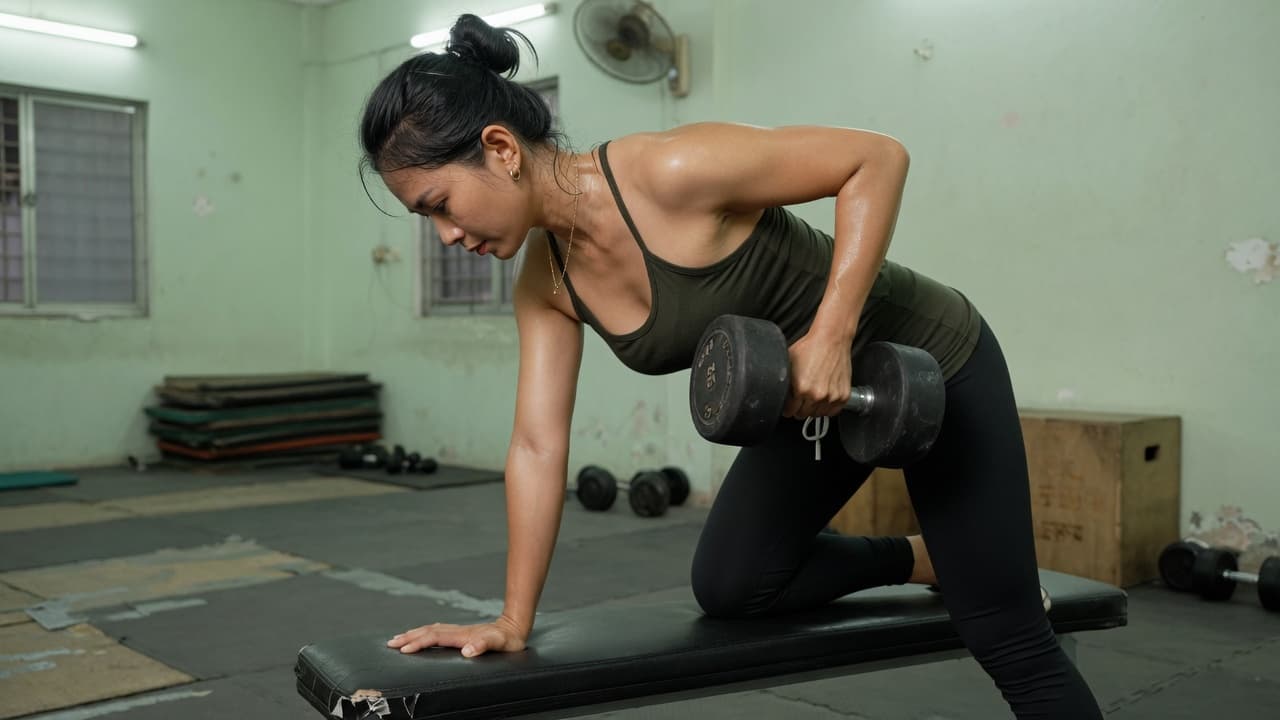
Low-back ache after lifting is common, but sharp pain, pain down the leg, or a “stuck” feeling when bending needs a different approach. Most discomfort ties to hinge/squat technique, an unstable core, sitting all day then suddenly lifting heavy, or adding load too fast. This article helps you read the signals, adjust training habits, and know when to seek care — not a rehab protocol for disc issues or acute injury.
How muscle soreness differs from warning pain
- Muscle soreness: tiredness along both sides of the spine, shows up after 12–24 hours, eases with light movement.
- Mild mechanical discomfort: bothersome after long sitting or bending, improves when you change position, does not radiate down the leg.
- Stop loading: sharp pain, leg numbness/tingling, foot weakness, rising night pain, or after a fall/impact.
When nerve involvement or acute injury is possible, prioritize medical assessment before “just training through it.”
Three common training causes
1. The hinge becomes a low-back fold
Deadlifts, RDLs, and kettlebell swings need a hip hinge: glutes travel back, spine stays roughly neutral. If you only fold the low back to reach the load, discs and soft tissue take repeated stress. Short cue: chest toward the floor under control, weight midfoot, drive the floor with the legs then squeeze the glutes to stand tall.
2. Forgotten brace
Before heavy sets, inhale into belly–ribs, squeeze lightly as if about to take a poke at the navel, keep pressure while lowering and pulling. Shoulders down–back; avoid extreme neck extension. Core is not “sucking everything in” until you shake.
3. Volume/load jumps too fast
Adding 20–30% weekly tonnage or big weight jumps while form is shaky is a recipe for lasting ache. Change one variable at a time: either load or sets — not both.
Low-back–friendly session checklist
| Item | Do this | Avoid this |
|---|---|---|
| Warmup | 5–8 minutes walking + hip circles + unloaded hinge | Jumping straight into heavy deadlifts |
| Hinge | Side-angle video, light load first | Pulling with a rounded back through full range |
| Squat | Hips sit back–down under control | Chest collapsing when too deep |
| Carrying | Keep the load close, short solid steps | Twisting while holding heavy |
Squat form is safer when you understand hip cues in squat form that spares the knees. On core days, prefer planks and controlled anti-rotation over hundreds of yanking sit-ups — more perspective in core is not 500 crunches.
Adjustments when the back is “sensitive”
- Shorten RDL range: only lower to mid-shin if you can keep a neutral spine.
- Swap barbell deadlifts for a trap bar or light kettlebell hinge temporarily.
- Prefer backed leg machines (moderate-angle leg press) over heavy squats for a few weeks.
- Drop good mornings and yanking sit-ups until things settle.
- Add 10–20 minutes of walking after sessions to reduce sitting-related stiffness.
Sleep and stress also change how pain feels. Short sleep lowers your discomfort threshold; do not blame only one deadlift set.
Habits outside the gym
- Stand up every 30–45 minutes if you sit at a computer long.
- When lifting things at home: hip–knee bend, keep it close, no twist.
- Stable-soled shoes for training; avoid heavy lifts on very soft soles.
- Do not force deep static low-back stretches right before maximal sets.
A short structured warmup is usually enough — suggested frame in 8-minute warmup before lifting.
When to see a professional early
- Pain radiating below the knee, rising numbness.
- Foot weakness, hard to rise on toes or walk on heels.
- Fever, unexplained weight loss with back pain.
- History of osteoporosis, cancer, or spinal trauma.
Returning after a break should start with very light loads, short ranges, and a 2–3 week build — not “making up the lost week” in one session.
FAQ
1. Should I wear a belt every set?
Belts help create abdominal pressure on heavy sets; they are not armor that cures pain. Learn bracing without a belt first; use a belt deliberately on heavy sets once you know how to breathe and brace.
2. Does absolute bed rest heal faster?
For mild mechanical pain, light movement and walking usually beat days in bed. Long absolute rest can increase stiffness and fear of movement. Acute suspected nerve pain: follow medical guidance.
3. What to prioritize when things just settled?
Walking, unloaded or very light hinges, short planks, glute bridges, and backed leg machines. Avoid plyometric jumps and loaded twists until control is solid.
General training principles only — not diagnosis or treatment of spinal conditions. See a doctor or physical therapist for lasting pain, leg radiation, or neurological signs.