Calves are often trained with bounce, short range, then written off as “bad genetics.” In practice, full-range calf raises — lower under control through the stretch, stand through the top — twice a week already give most non-stage bodybuilders a solid stimulus. This article fixes bouncing, covers standing and seated, and explains why daily spam helps less than dosing them well.
Acute Achilles pain, swelling, or sharp morning pain with the first steps — cut load and seek care before heavy raises.
Stop bouncing: tempo and a bottom pause
Bouncing uses the stretch reflex and shortens time under tension. Try:
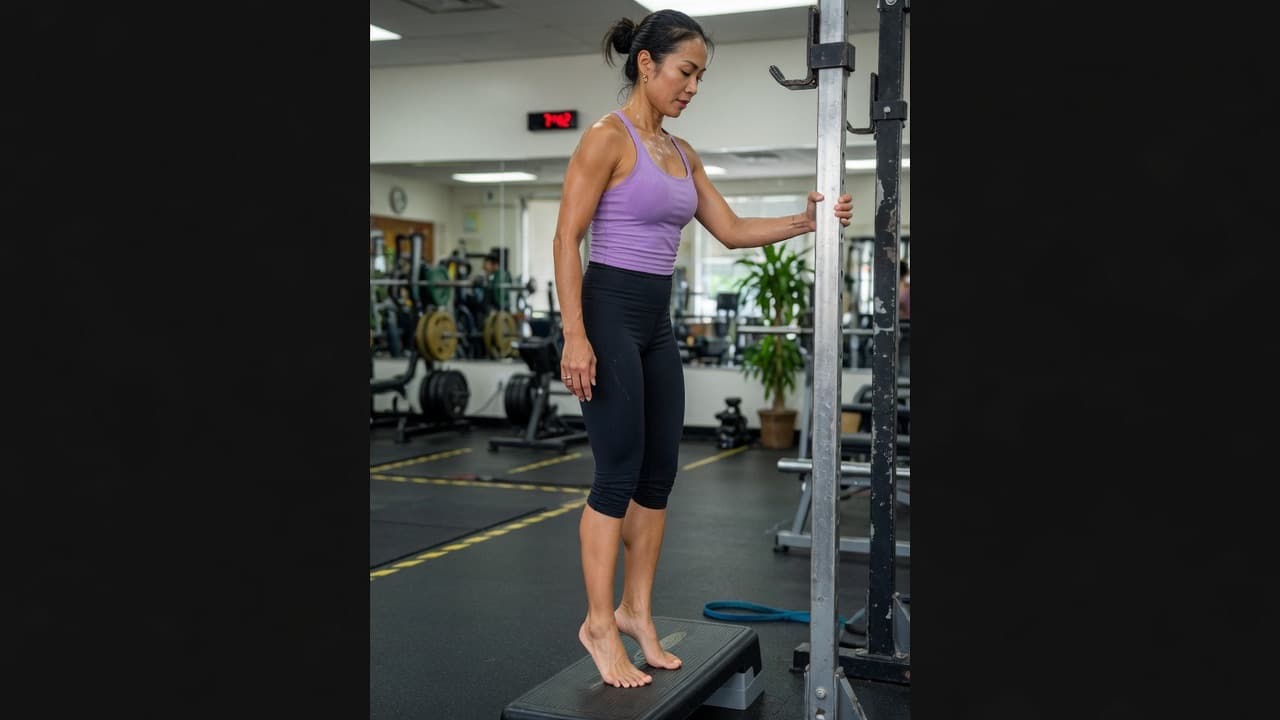
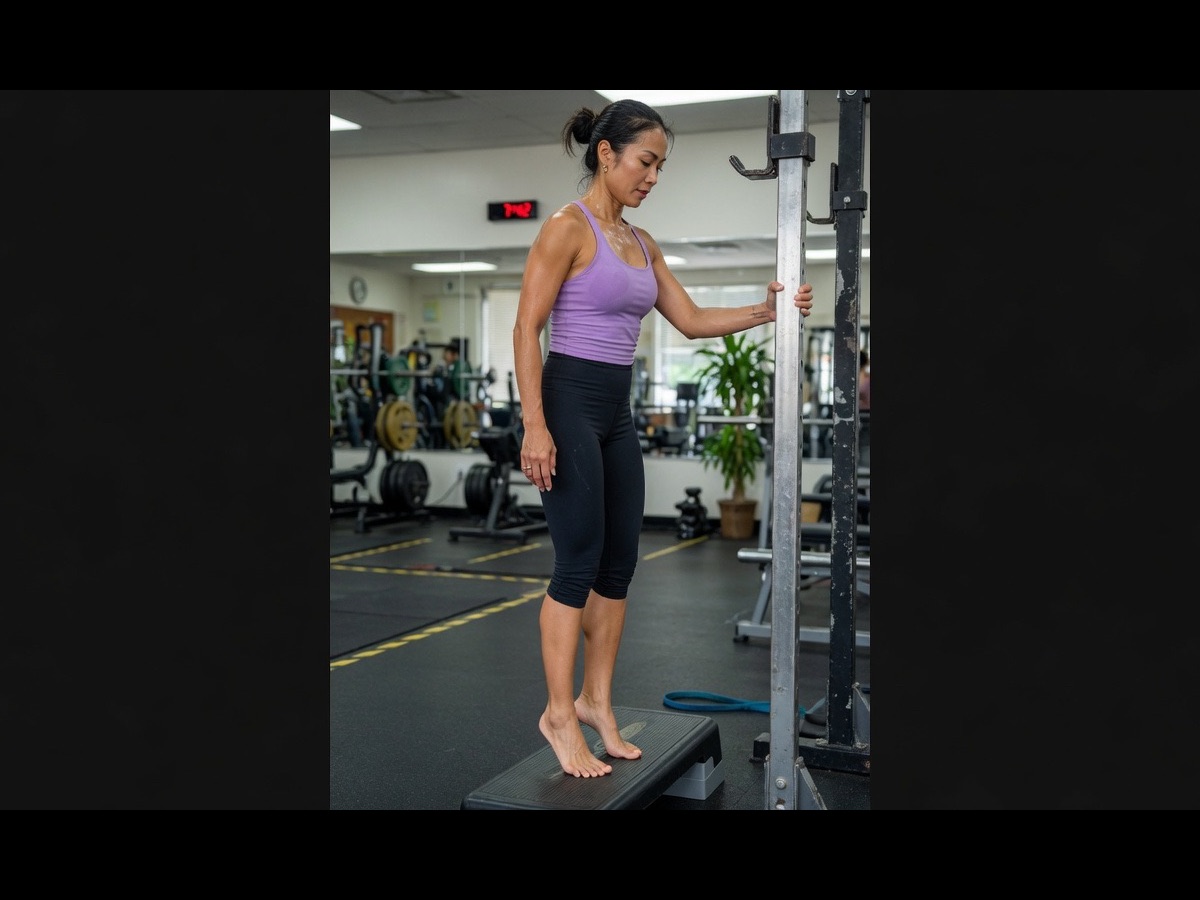
- Lower 2–3 seconds through a safe full range (heels down if standing on a step).
- Pause 1 second at the bottom — no bounce.
- Stand up 1–2 seconds to a controlled full toe rise.
- Optional 1-second top pause for extra contraction time.
If you need a bounce to finish the rep, the load is heavier than you can control — reduce it.
Standing and seated: two complementary parts
Standing (knees near straight) emphasizes the gastrocnemius more. Seated (knees bent) emphasizes the soleus more. Do not overcomplicate; rotating both in a week is enough.
| Variation | Sets × reps | Notes |
|---|---|---|
| Standing machine / step / light Smith | 2–3 × 8–15 | Single-leg when stable |
| Seated calf | 2–3 × 10–15 | Full lower; avoid tiny heel taps |
| Slow toe walks | 2 × 20–40 m | Light accessory — does not replace full-range raises |
2×/week is enough for most people
Calves take walking load all day so they recover fairly well, but tendon tissue still needs time to adapt to loaded raises. Two sessions in the week on leg days or at the end of lower — for example in PPL or upper–lower — usually suffice. Add a third only when soreness is mild and you want more volume; avoid seven days of tired bouncing on a machine.
- After main leg work (squat, hinge, split).
- Standing before or after seated depending on priority.
- Rest 60–90 seconds between sets.
Beginners can attach them to the 4-day plan. Lots of office walking does not replace full-range raises but helps circulation on rest days — leg training for office workers, rest day.
Single-leg, shoes, and the step
- Single-leg: once bilateral control is clean; helps balance sides.
- Step: only lower as deep as the Achilles stays free of sharp pain; deepen gradually.
- Shoes: stable sole; avoid overly soft shoes that erase foot feel if you wobble.
- Light hand support: hold lightly to focus on range — do not turn it into a torso pull with the arms.
Farmer carries also demand stiff ankles–grip while walking: farmer carry. Warm ankles with circles and a few unloaded raises before heavy sets: warmup.
Progress and expectations
Add reps to the top of the range, then small load bumps, or add one set. Measure calf circumference every 4 weeks at the same time of day — shape changes slower than thighs. Genetics affect tendon–belly length, but most people still improve strength and fullness with consistent full-range work.
- Do not rest-pause calves every session if the tendon is cranky — intensity boundaries in rest-pause.
- Pain mid-tendon (more than muscle belly soreness): shorten range and frequency 1–2 weeks.
FAQ
Do I need daily raises for bigger calves?
Not required. Two quality sessions with load progress often beat seven short bounce sessions. Some people tolerate higher frequency with light loads, but tendons must keep up.
Machine or free weight?
Machines make balance and safe loading easier. Free raises on a step teach control. Pick what you can do through full range and progress.
What if I cramp on raises?
Shorten range and load, warm up more, check fluids–electrolytes if cramps are frequent. Cramping does not mean the set was more effective.
General training technique only — not a diagnosis for Achilles or ankle problems. Seek care for lasting pain, swelling, or weak toe push-off.