Four-day upper–lower still works at an advanced level if you add accessories without wrecking the main lifts. The common mistake is stacking 8–10 isolation moves at the end of every session, so compounds lose quality and the bar stalls the next week. This article keeps two upper and two lower days, spells out where accessories fit, and how to rotate intensity across A/B weeks.
Audience: you have run basic upper–lower for a few cycles (see 4-day muscle-building plan for beginners), squat/hinge/push/pull feel solid, and you want more stimulus but only four fixed slots per week.
Principle: compounds first, accessories on a budget
Cap each session around 60–75 minutes. Suggested budget:
- 2 main lifts (heavy compounds): 3–5 sets, long rests.
- 2 medium accessories: 2–3 sets.
- 1–2 isolation or stability moves (rear delts, calves, core): 2 sets.
Add accessories only when that week’s main lifts already hit target reps with clean form. If press or squat is grinding, cut accessories first — not rest between main sets.

Upper A — horizontal press and horizontal pull
- Barbell/dumbbell bench: 4×5–8, rest 2–3 minutes. If the front of the shoulder often aches, use elbow angle and scapula cues from chest training without shoulder pain.
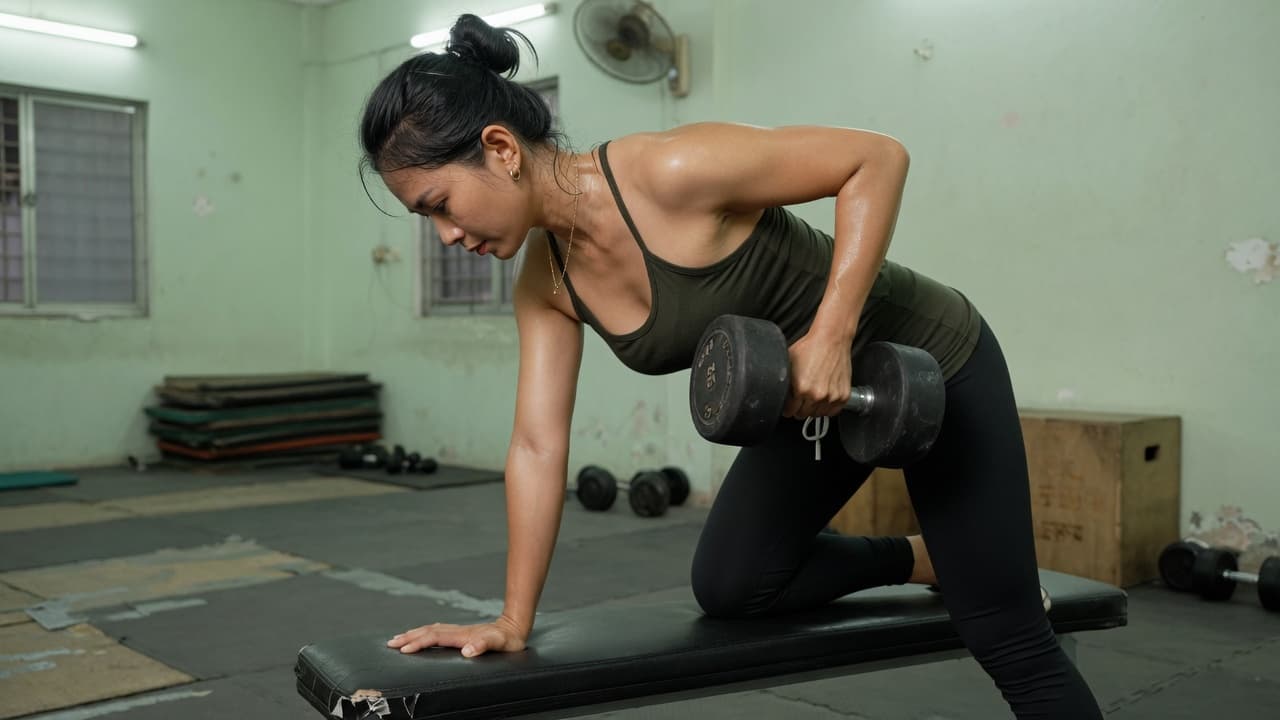
- Hang row or chest-supported row: 4×6–10.
- Slight incline or machine press: 3×8–12.
- Neutral-grip pulldown: 3×8–12.
- Pick one accessory: lateral raise or triceps — not both if time is tight.
- Face pull 2×12–15: face pull at the end of push.
Upper B — overhead press and vertical pull
- Overhead press: 4×5–8. Standing/brace cues in safe overhead press.
- Pull-up or heavy lat pulldown: 4×5–10.
- Chest press at a different angle (machine/dumbbell): 3×8–12.
- Row at a different angle: 3×8–12 — vs pulldown roles in hang row and lat pulldown.
- Biceps 2×10–15 if you have gas left; skip if grip and elbows are cooked.
Lower A — squat emphasis + accessory hinge
- Barbell squat or a controlled deep variation: 4×5–8. Knee–hip form: squat form that spares the knees.
- Romanian deadlift: 3×6–10.
- Bulgarian or step-up: 3×8–12/leg — Bulgarian progression.
- Calf raise: 2–3×10–15.
- Anti-rotation/anti-extension core 2 sets (dead bug/side plank), not 200 crunches.
Lower B — hinge emphasis + single-leg
- Deadlift variation or heavy hip hinge in a clean range: 3–4×4–6. If the hinge is unsure, return to learning the hip hinge.
- Leg press or goblet squat: 3×8–12.
- Walking lunge or split squat: 2–3×8–12/leg.
- Leg curl if a machine is available: 2×10–15.
- Calves + short farmer carry 2 rounds if the back allows — farmer carry.
| Day | Session | Accessories “allowed” once mains look clean |
|---|---|---|
| Monday | Upper A | Lateral raise / triceps / face pull |
| Tuesday | Lower A | Calves, short core |
| Thursday | Upper B | Biceps, reverse fly |
| Friday | Lower B | Hamstring curl, carry |
Rotating intensity across weeks
Heavy week: compounds near the top of the rep range, accessories at full dose. Easy week (every 4–6 weeks): cut load about 30–40% or drop one main set, keep the movement pattern. People who sit all day often benefit more from clean lower-body technique than chasing numbers — ideas from leg training for office workers.
When the calendar opens for six sessions, shift toward intermediate 6-day PPL instead of bolting extra isolation days onto upper–lower.
- Log load–reps–RPE; progress by week, not by “burn” feel.
- Rest 2–3 minutes on compounds; 60–90 seconds on accessories.
- Warm up 8 minutes before heavy sessions: warmup frame.
FAQ
Should I rest-pause every accessory?
No. Rest-pause helps selectively on isolation once form is clean; beginners and heavy compounds should skip it. Boundaries in when to use rest-pause.
Does advanced upper–lower need lots of machines?
Not required. Bar, dumbbells, bench, and cable are enough. Machines help when you want a stable path or less spinal load on a tired day.
Can I swap one lower day for cardio?
Occasionally if joints need a break, but do not make it habit if the goal is leg strength–muscle. Extra cardio belongs after lifting or on its own day; the “cardio kills muscle” debate is covered in does cardio break down muscle.
Educational training content only — not a substitute for medical advice. Stop loading up and seek care if you get sharp joint pain, numbness/weakness, or dizziness while training.