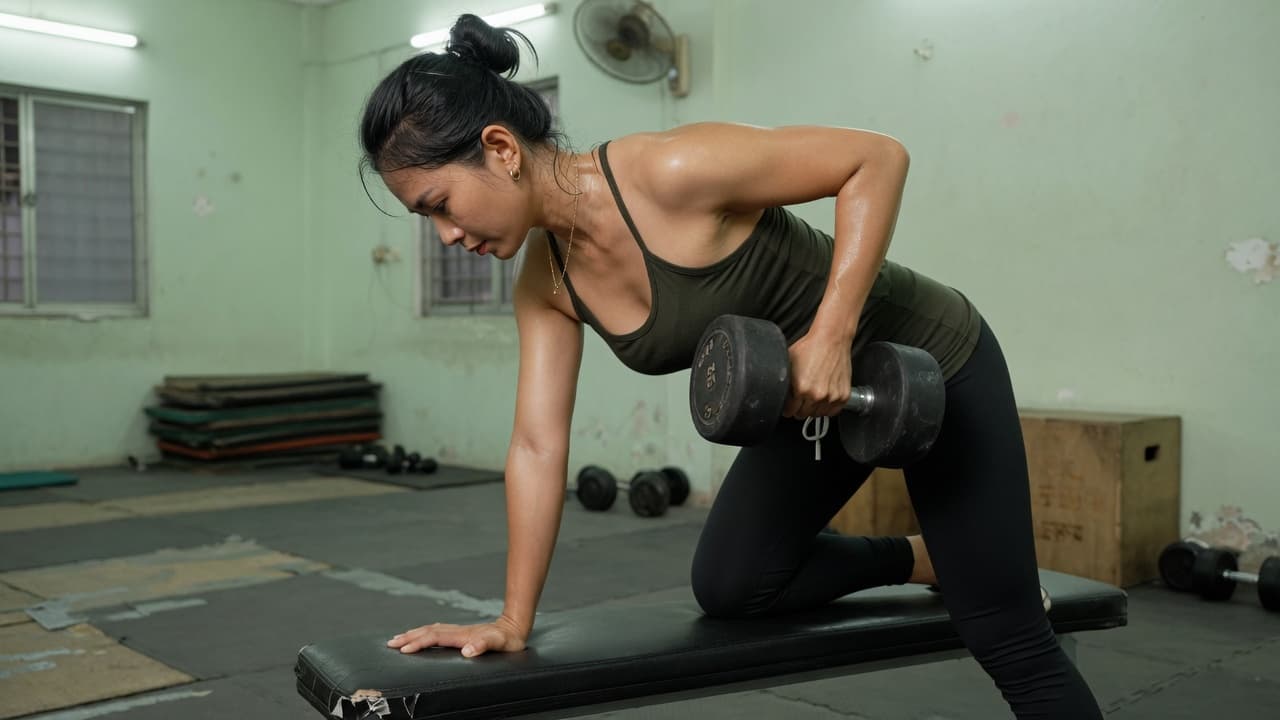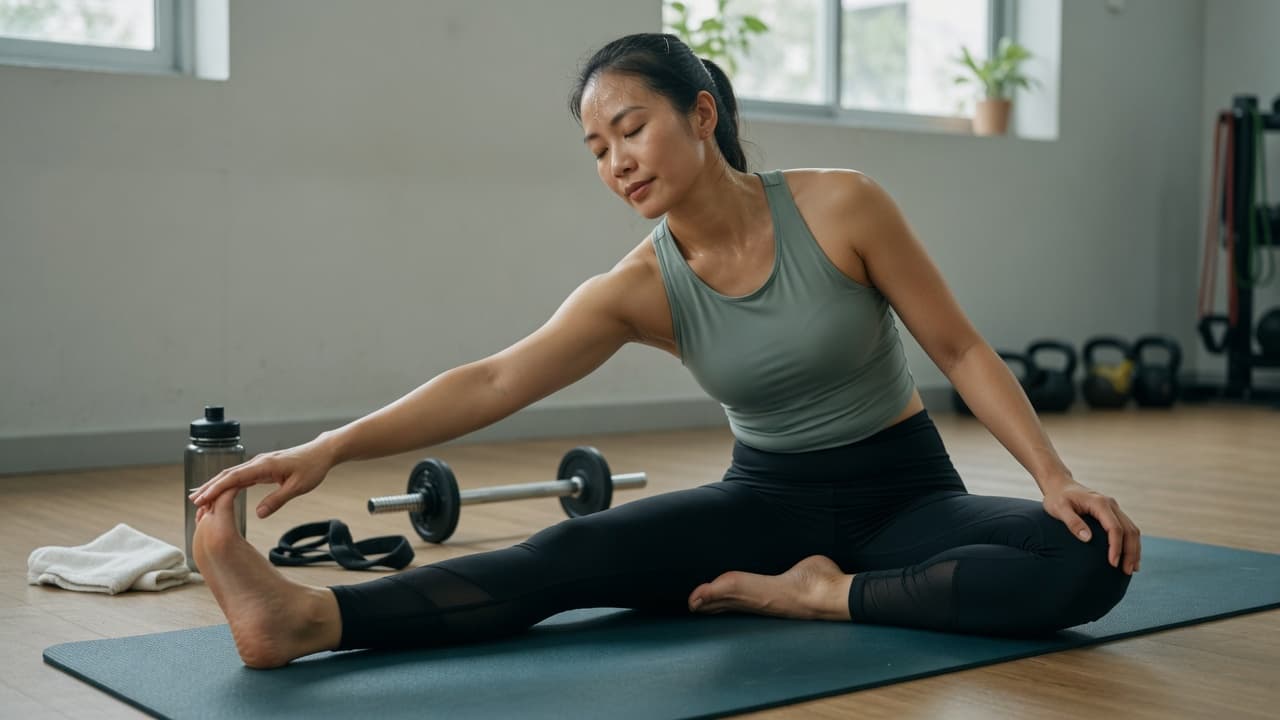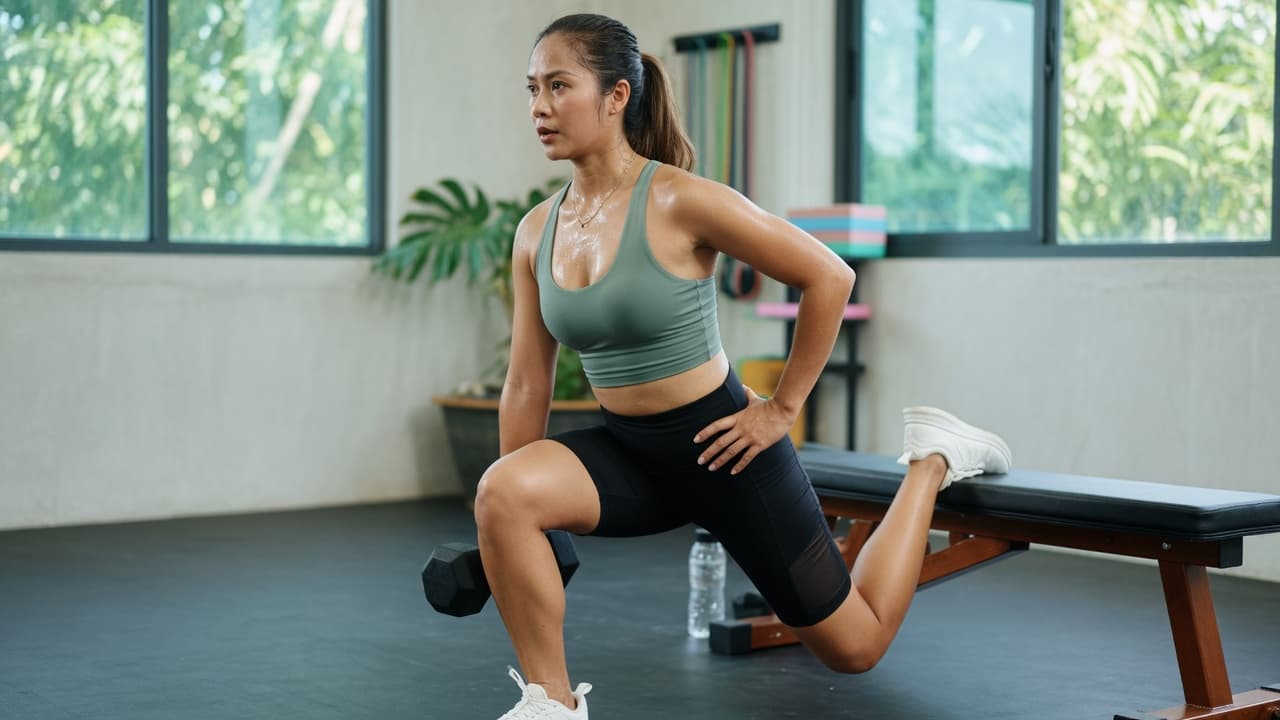
The Bulgarian split squat (rear foot elevated) is a strong tool to balance left–right differences, load one thigh–glute hard, and take some simultaneous bilateral stress off compared with a very heavy barbell squat. Many people quit early because they lose balance or get knee pain before progress shows. This article goes from bodyweight and balance, to goblet, to dumbbell loads — with form checkpoints.
If the knee is swollen or has sharp front-of-joint pain, get assessed first; this is not physical therapy.
Why it helps side-to-side imbalance
Most people have a stronger floor-pushing leg. Single-leg work forces the weaker side to do enough volume instead of always being “carried” by the strong side as in bilateral squats. Tracking reps–load per side helps close the gap over 6–10 weeks.
- Less spinal load than a heavy back squat at a similar leg stimulus.
- Flexible: gym or home with a sturdy chair.
- Transfers well to stairs, easy running, and uneven carrying.
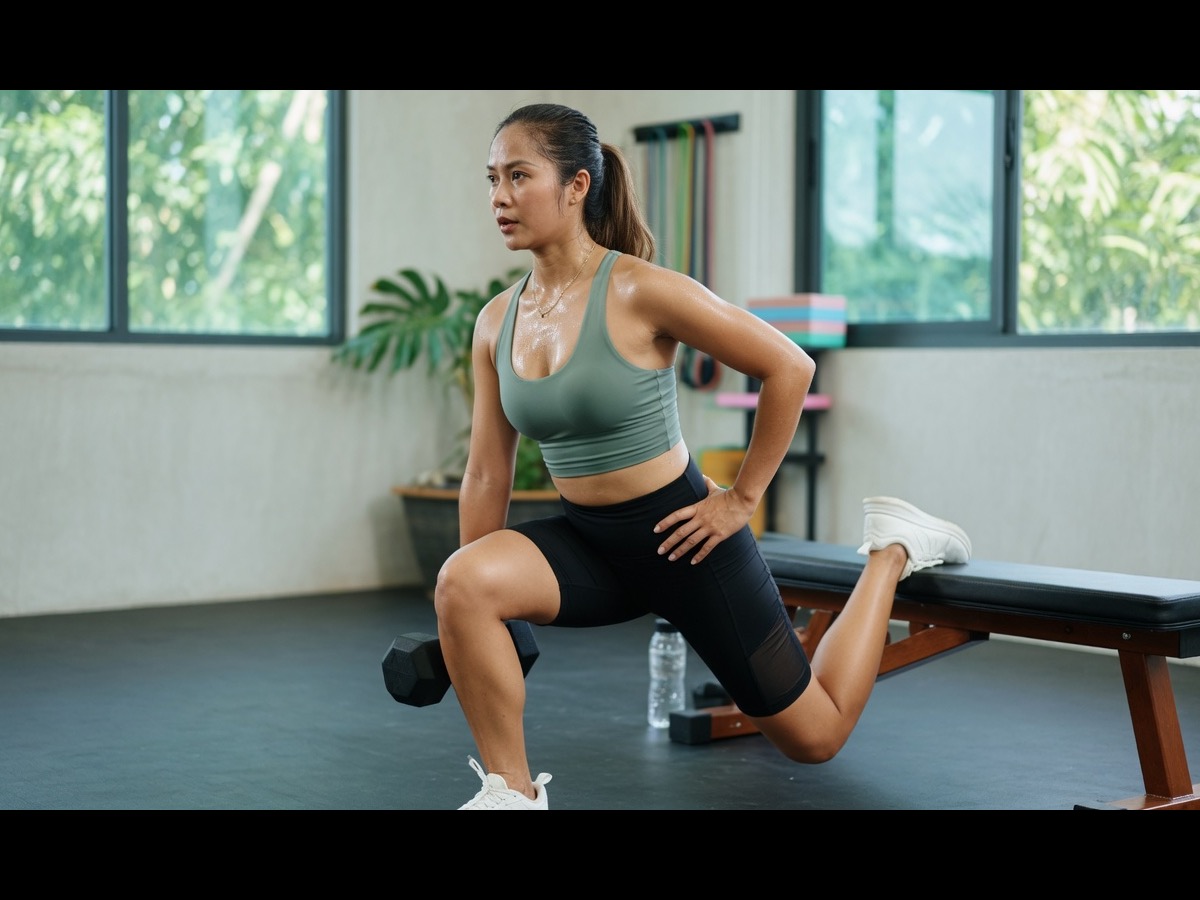
Step 1: bodyweight, moderately low bench
- Place the top of the rear foot on a stable bench; step the front foot out far enough to lower without the front knee shooting uncontrollably past the toes.
- Torso slightly forward, chest open, hands on hips or out front for balance.
- Lower straight: front knee tracks over the toes, front heel presses the floor.
- Stand up through the front leg — do not shove hard with the rear leg to cheat.
Dose: 2–3 sets × 6–8/leg, rest 90 seconds. Film from the side. When stable, move to step 2.
Cue: “heavy front heel – torso fixed – knee over toes – drive the floor with the front leg.”
Step 2: goblet (plate or dumbbell at the chest)
Goblet keeps the torso more upright and adds load before you hold two dumbbells at the sides. Pick a weight you can balance for 8–10 clean reps/leg.
- 3×8–12/leg.
- Train the weak side first, or match the strong side to the weak side’s completed reps while correcting imbalance.
- Front knee pain: shorten the step slightly or reduce depth; check for knee cave.
Step 3: dumbbells at the sides or held behind
When goblet is easy at the top of the range, switch to dumbbells hanging at the sides. Add 2–4 kg per side when you hit target reps two weeks in a row. You do not need to chase bilateral squat numbers.
| Stage | Load | Sets × reps | Graduate when |
|---|---|---|---|
| 1 | Bodyweight | 2–3 × 6–8 | No wobble, knee tracks toes |
| 2 | Light–moderate goblet | 3 × 8–12 | Both sides hit reps, no sharp pain |
| 3 | Dumbbells at sides | 3 × 6–10 | Slow load increases, form holds |
Place in a leg day
Put it after squats or leg press on the leg day of PPL, or after the main lower lift in advanced upper–lower and the beginner 4-day plan. Office workers with stiff hips should warm the hips–glutes first: 8-minute warmup, plus ideas in leg training for office workers.
Bilateral squat form is still the base: squat form that spares the knees. A strong hip hinge keeps the torso from collapsing on splits: hip hinge.
Faults and fixes
- Step too short: front knee takes too much moment — step out a bit.
- Step too long: hard to stand, hip flexor strain — shorten.
- Pushing with the rear leg: cut load, think “rear foot only rests.”
- Hip shifting sideways: slow down, keep the pelvis level.
FAQ
How high should the bench be?
A standard gym bench is usually fine. Too high makes control harder and overstretches the rear hip flexor. If it feels ugly, use a lower box first.
Can it replace bilateral squats?
Temporarily when the back needs less load, but most people still benefit from keeping one bilateral variation in the week. Bulgarian is a balance add-on, not a forever mandatory replacement.
How long until imbalance feels better?
Stability often feels better after 3–6 weeks at 2×/week. Strength gaps measured by load–reps may need 8–12 weeks. Log each side instead of guessing.
Movement education only — not a treatment prescription for knee–hip pain. Seek care for sharp pain, swelling, or joint instability when lowering on one leg.