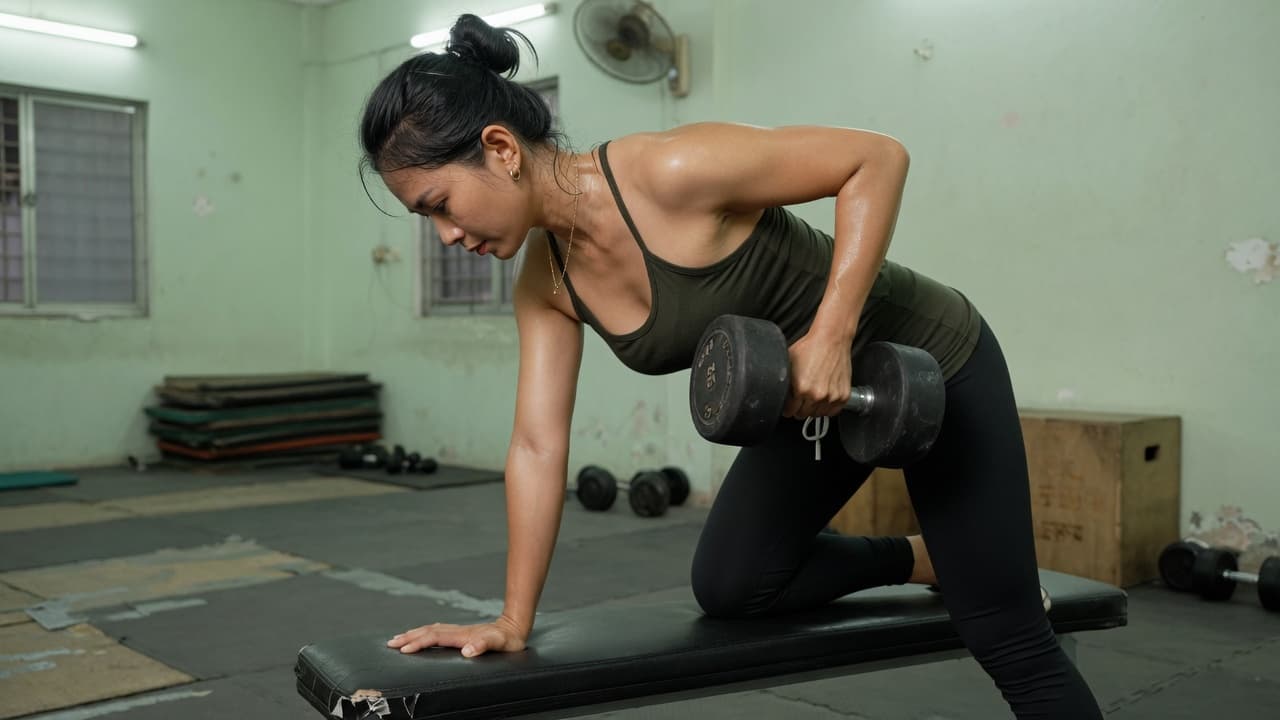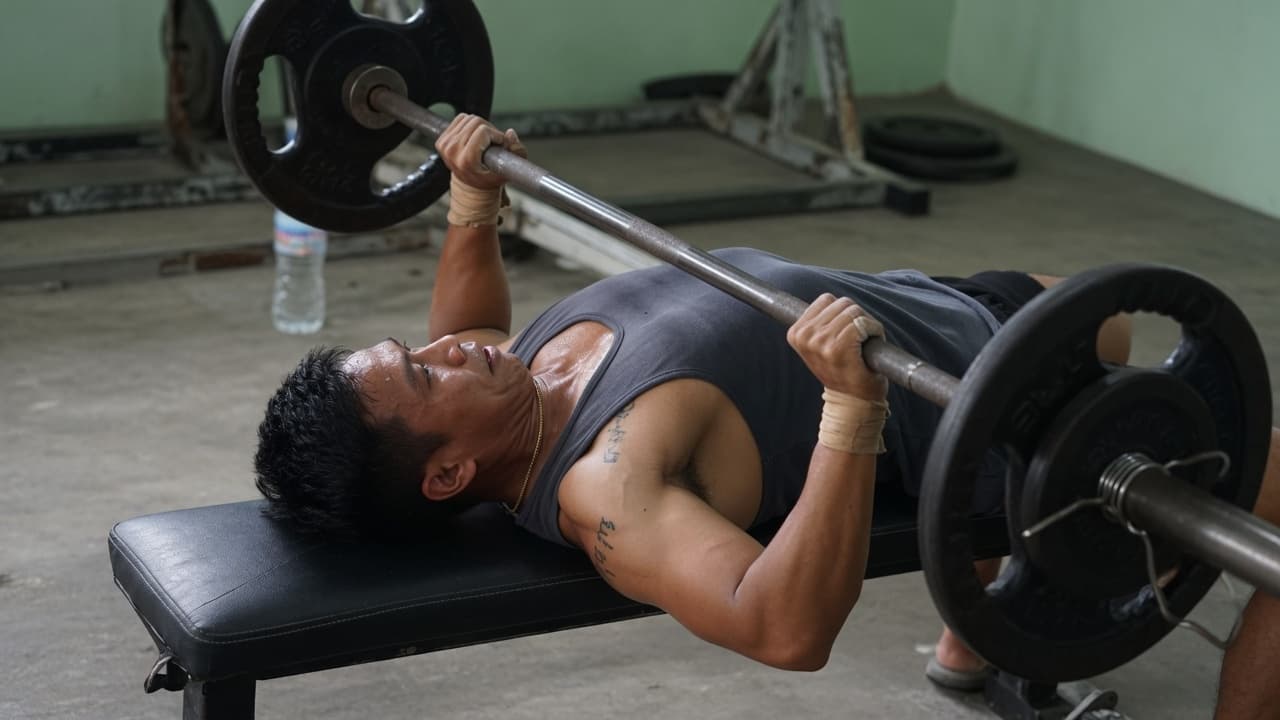
Sharp pain in the front of the shoulder during chest pressing usually comes from elbows flared too wide, unstable scapulae, or a bar/dumbbell variation that parks the joint in a bad range for your structure. This article focuses on three practical levers: fix elbow–wrist stack, “set the wing bones” before you lower, and prefer machine or dumbbells when a straight bar is unfriendly. This is not a rehab protocol for tendon tears or acute inflammation.
If the shoulder is swollen, clearly weak when you raise the arm, or night pain lasts, get a professional assessment before heavy pressing continues.
Elbow angle: not “90-degree bird wings” for everyone
Many people are told to lower the bar to the chest with arms square to the torso and elbows at shoulder height. For some structures, that drives the humeral head forward and crowds the subacromial space. Try tucking the elbows about 45–70 degrees from the torso — more chest–triceps press, less “hanging” from the joint.
- Wrists stacked over elbows when viewed from behind; avoid breaking the wrists back.
- Bar contacts mid-chest to slightly lower chest, not up near the neck.
- Lower under control for 2–3 seconds; no bounce off the chest.
Scapulae: the base before load is in your hands
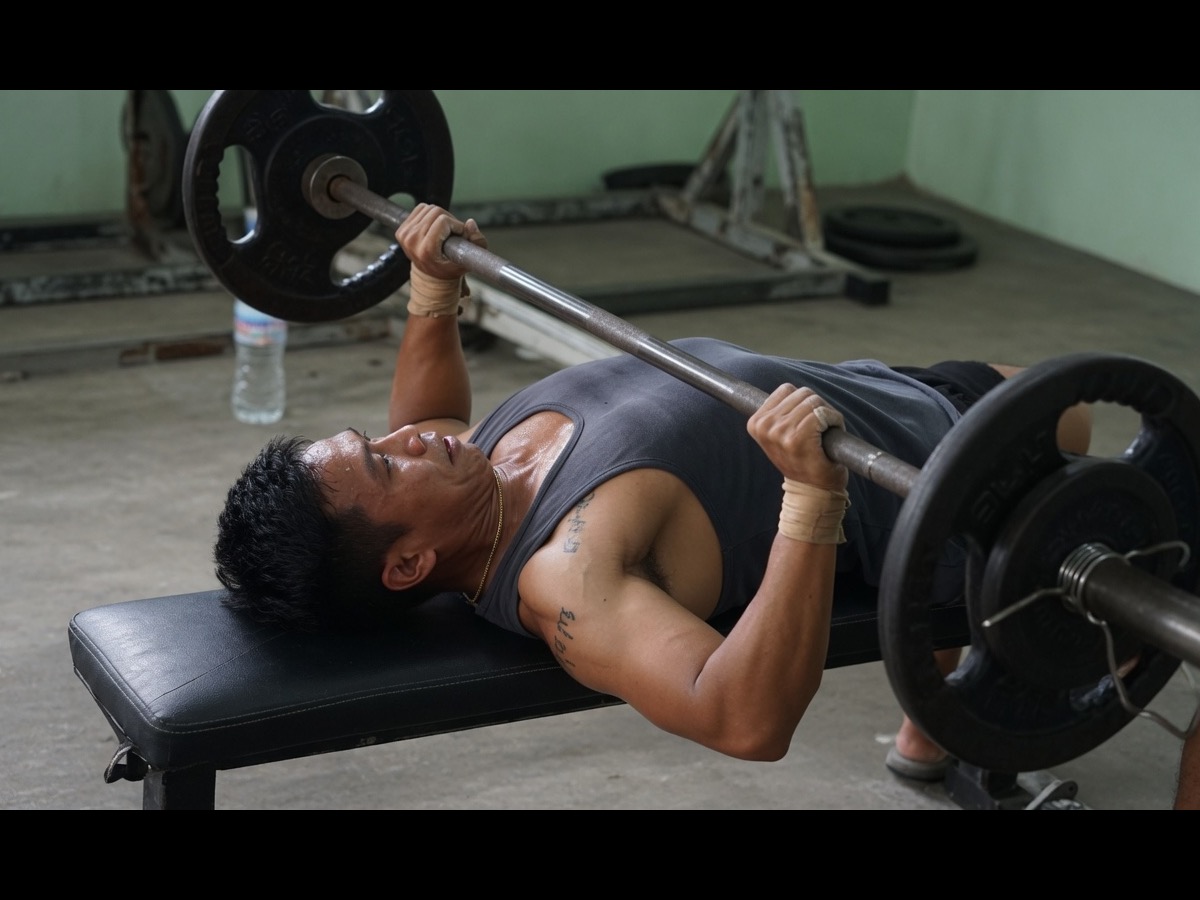
Lie on the bench, feet planted, gently draw the shoulder blades down and together as if tucking them into back pockets. Keep a natural low-back arch — do not over-extend for an artificial high chest if that hurts. Do not shrug the shoulders toward the ears while pressing.
Cue: “shoulder blades into pockets – chest open – elbows travel on a diagonal down – drive the bar up without letting the blades slide forward.”
Two sets of face pulls or band pull-aparts at the end of a push session remind the rear delts and scapular stabilizers — see face pull for front-shoulder relief. Warmups include controlled shoulder circles and very light presses: 8-minute warmup.
Barbell, dumbbells, or machine?
A straight bar locks both arms on one fixed path. If one shoulder tolerates less range, dumbbells let wrists and elbows self-adjust. A chest-press or incline machine with a back pad helps you learn a stable scapular feel before returning to the bar.
| Tool | When to prefer it | Notes |
|---|---|---|
| Dumbbells | Side-to-side shoulder mismatch, need wrist freedom | Do not drop so deep that the shoulders roll forward |
| Press machine | Learning the path, less stability demand | Set the seat so handles meet mid-chest |
| Barbell | Form already clean, want heavier load | Tuck elbows; drop ego when pain is sharp |
| Slight incline 15–30° | Want upper-chest emphasis | Too steep turns it into a shoulder press |
Variations and session order
- Shoulder–scapula warmup + 1–2 empty/light press sets.
- Main press (machine or dumbbells if currently sensitive).
- Secondary angle (slight incline or cable).
- Horizontal pull or face pull for balance — do not only press.
In a split, put clean chest technique on the push day of 6-day PPL or the upper day of advanced upper–lower. Beginners can start from the basic 4-day frame.
Signs to cut load immediately
- Sharp front-shoulder pain or pain radiating down the arm on the way down.
- Sudden one-sided weakness, bar tipping out of control.
- Clicking with pain (different from painless noise).
- Pain climbing set to set even after tucking elbows and shortening range.
Chest–triceps muscle soreness after a session is not the same as joint pain. Temporarily switch to machines, reduce depth, add face pulls and back work; overhead press also needs clean technique — safe overhead press — because it shares the shoulder chain.
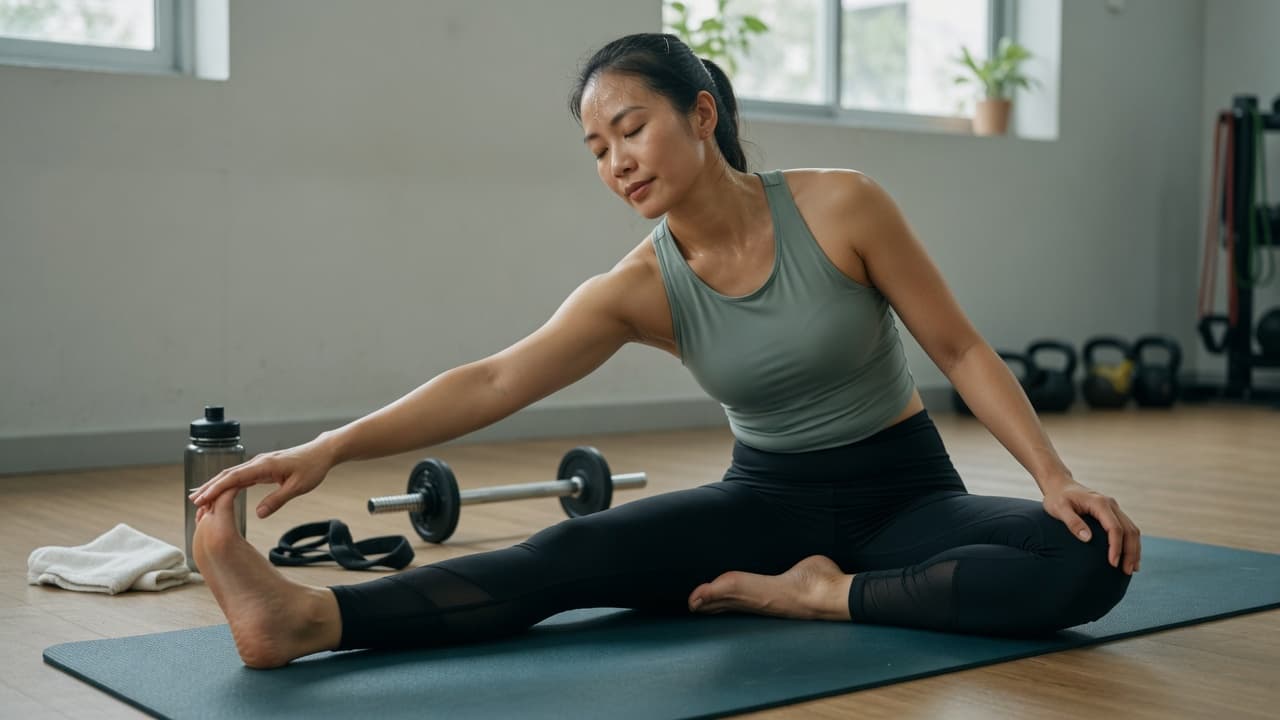
Enough back volume makes shoulder posture more durable: balance row and pulldown in hang row and lat pulldown. After sessions, light controlled chest–arm stretching can sit inside post-training stretching.
FAQ
Should I use a Smith machine to end shoulder pain?
A Smith can stabilize the path short-term, but it does not fix elbow angle or scapulae if you still flare and shrug. Use it as a bridge — still learn the cues.
Must the bar touch the chest?
Not if touching the chest forces a painful shoulder position. Stop in a clean range where the chest still loads and pain stays out; deepen gradually as soft tissue and control improve.
Can push-ups cause the same issue?
Yes, if elbows flare and the low back sags. Tuck elbows, keep a straight body; the wall-to-floor progression in push-up progression helps relearn with less load than a heavy bench.
This article covers general training technique only — not diagnosis or treatment of shoulder injuries. See a doctor or physical therapist for persistent pain, weakness, or a history of shoulder surgery.