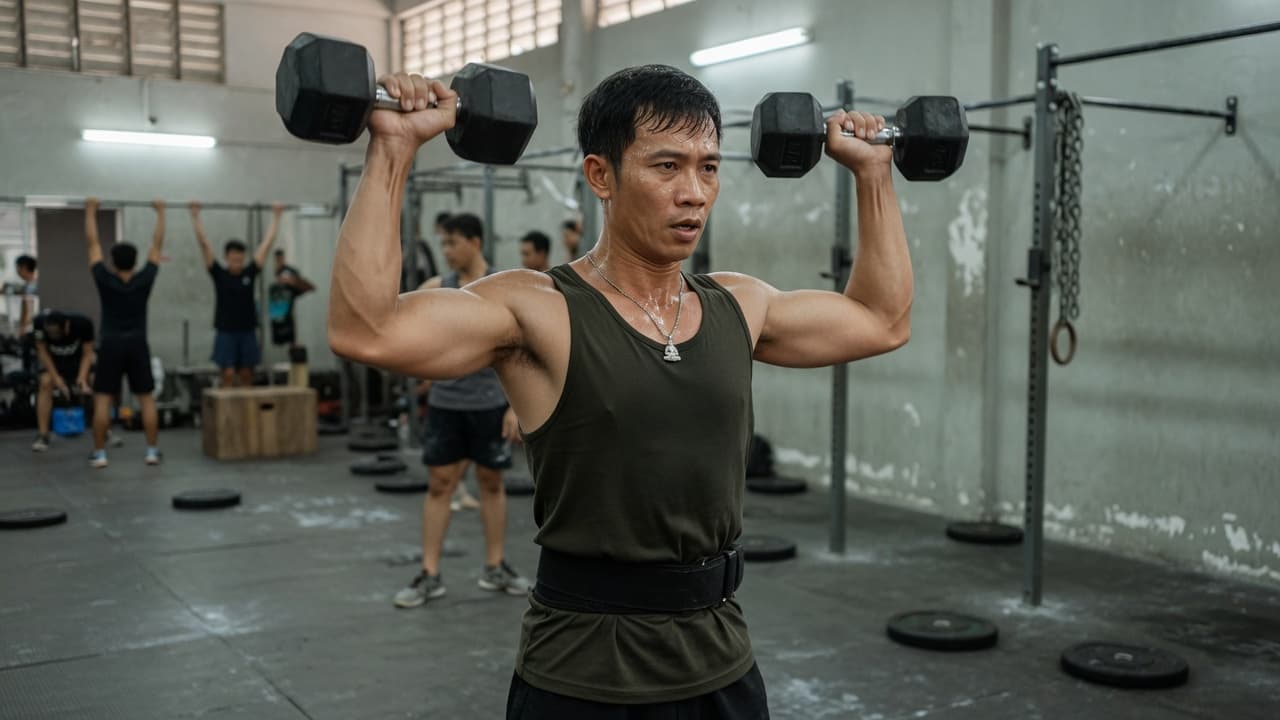
Standing overhead press trains the whole chain from feet to shoulders: brace the torso, lock hips–pelvis, and drive a bar or dumbbells up without compensating with an excessive low-back arch. Many people get low-back pain or a stuck shoulder because they skip these steps and jump straight to heavy loads. This article covers standing setup, breath–brace cues, and when to switch to seated or a machine variation.
Not a rehab protocol. Sharp shoulder pain, dizziness when looking up, or a history of spinal injury needs assessment before heavy pressing.
Standing setup: from the feet up
- Feet hip–shoulder width, press evenly through the feet.
- Bar at collarbone height or dumbbells at the shoulders; elbows slightly in front of the bar, not flared wide.
- Ribs gently down, pelvis neutral — think “stack” rather than arching for a high chest.
- Neck neutral; eyes on a fixed point ahead — do not crane up to follow the bar the whole way.
Brace and press path
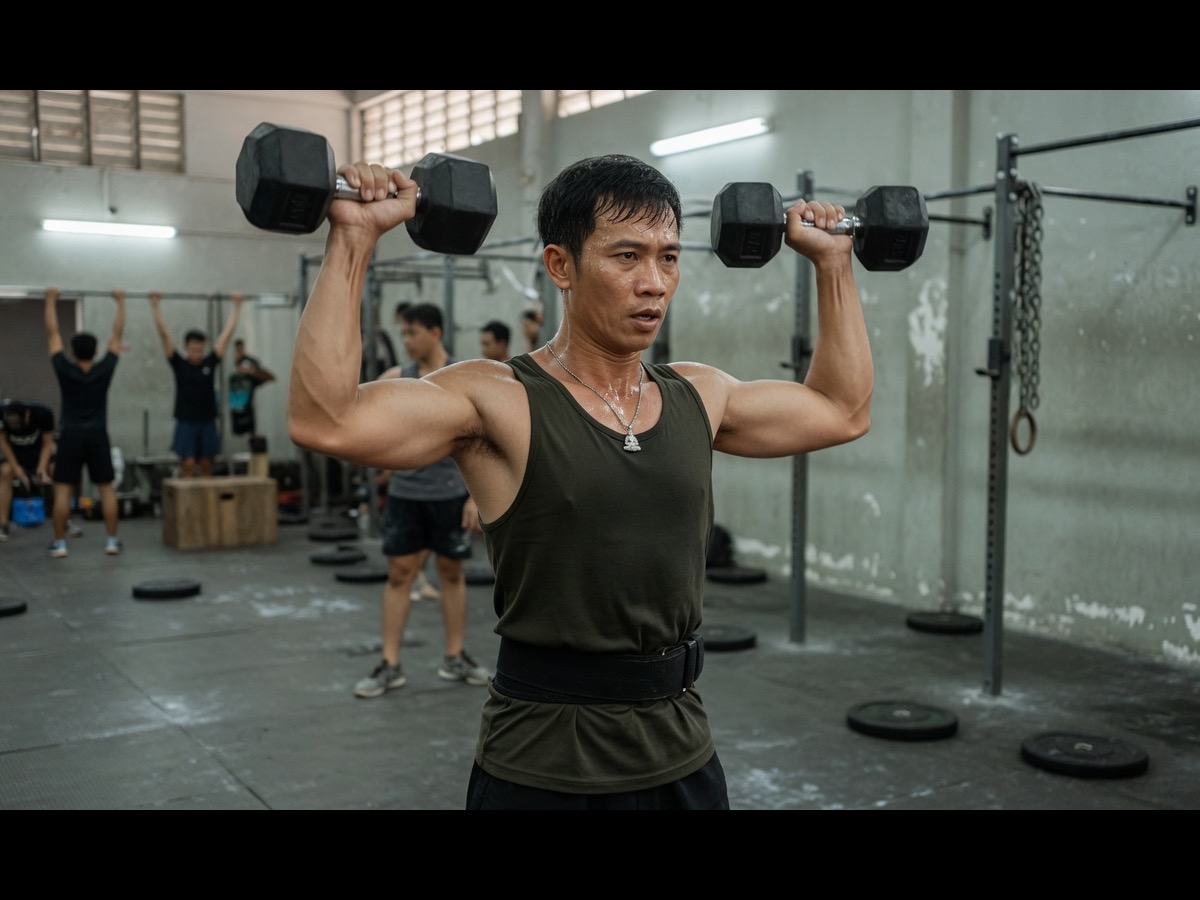
Inhale into belly–ribs, tighten as if about to take a light poke in the stomach, keep pressure through the hard part of the press, exhale near the top or after lockout. Drive the bar nearly straight overhead; once past the face, the head “moves through” slightly so the bar sits over shoulders–upper back — do not leave it forever out in front of the face.
Short cue: “inhale – lock the core – gently push the floor with the legs – drive the bar up – head through – squeeze glutes without over-arching.”
- Main sets: 3–4×5–8, rest 2–3 minutes.
- RPE 7–8 for intermediates; keep 1–2 reps in reserve.
- Do not turn it into a push jerk with big knee drive if the goal is strict shoulder–press strength (unless you are deliberately learning a drive variation).
When to go seated or use a machine
| Situation | Suggestion | Why |
|---|---|---|
| Low back always arches out of control | Seated with a backrest, lighter load | Temporarily lowers whole-body stability demand |
| Shoulder sticks at the top of the range | Dumbbells, clean range; or landmine | More wrist/path freedom than a straight bar |
| Still learning or fried late in the week | Shoulder press machine | Keeps stimulus, less technical demand |
| Standing form already clean | Return to standing | Better whole-body force transfer and load progress |
Seated is not “easier on the shoulders” if you still shrug and flare. It only reduces demand on the spine and balance. While seated, still brace the abs — do not let the low back peel off the pad into an empty arch.
Healthy shoulders around the press
Press alone does not balance the rear of the shoulder enough. Add face pulls at the end of push days (face pull), enough horizontal/vertical pulling in the week (hang row and lat pulldown), and fix chest-press angles if the front delts are irritated (chest training without shoulder pain).
In a plan, press usually sits on Push B or Upper B of PPL and advanced upper–lower. Beginners place light 3×8–10 in the basic 4-day plan. Warmups include shoulder circles and empty sets: 8-minute warmup.
Common faults
- Over-arching to “lock out”: cut load, squeeze glutes, think ribs down.
- Bar loops out front: weak mid-range or fear of the face — practice light and closer to the body.
- Shrug at the top: finish with ears between the arms, shoulders away from ears.
- Chaotic foot sway: slightly narrower stance, lower the weight, prioritize stillness.
Farmer carries and anti-lateral core work support the torso for standing press — farmer carry, core is not 500 crunches.
FAQ
Standing or seated — which builds shoulders better?
Both stimulate the delts. Standing adds torso stability and usually transfers better to overall strength; seated helps when you want more isolation or temporary back protection.
Must I lock the elbows hard at the top?
A soft, controlled lockout is enough for most physique–health goals. Avoid suddenly “snapping” the elbows or holding a painful hard lock if your joints are sensitive.
What if my neck hurts when pressing?
Check whether you are looking up at the bar. Keep the neck neutral, eyes forward–slightly up. Cut load; if pain radiates or the hands go numb, stop and get assessed.
General technique guidance only — not diagnosis or treatment. See a doctor or qualified professional before heavy pressing if you have shoulder–neck–back pain, unstable high blood pressure, or dizziness.